

 Team Hashtag
Memory Games for Preschoolers That Build Brain Power
Memory games for preschoolers are one of the best ways to build strong cognitive skills at an early age. At this stage, children learn quickly, and the right kind of play can make a big difference in how their brains develop. Memory isn’t something your child is simply born with; it’s a skill that grows stronger with regular practice and the right activities.
That’s why including memory games for preschoolers in your child’s daily routine is so important. These playful activities don’t feel like learning, yet they help children improve focus, recall, and thinking skills in a fun and stress-free way. When kids enjoy what they are doing, they naturally learn faster and better.
The best part is that memory games for preschoolers don’t require any special equipment or preparation. You can easily turn everyday moments into learning opportunities. Below are 5 simple and effective memory games for preschoolers that are backed by research and designed to strengthen your child’s brain through play.
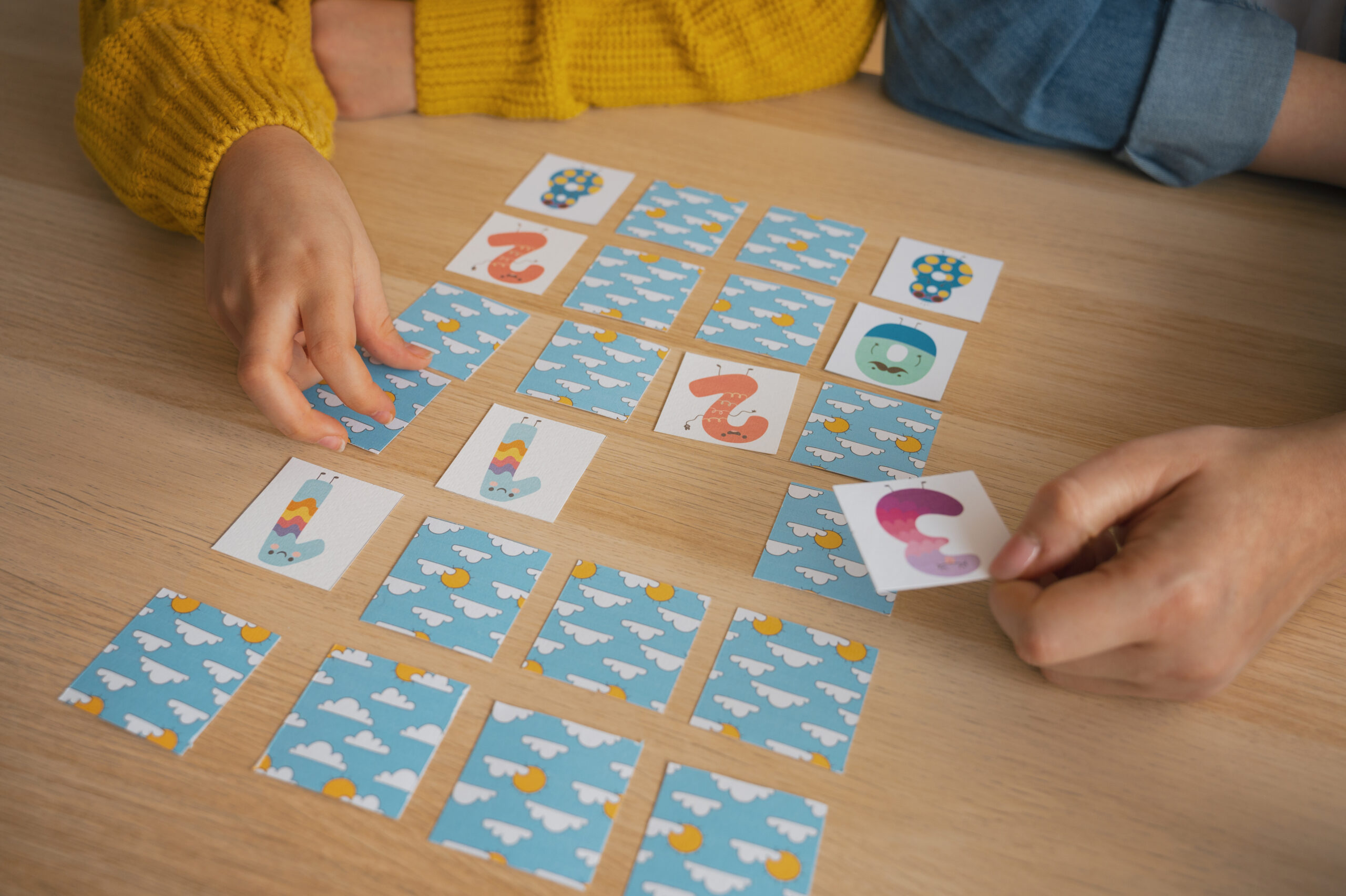
GAME 1: WHAT’S MISSING?
How to play: Select five common items and place them on a tray (spoon, toy car, ball, crayon, cup). Allow your child to observe the objects for 30 seconds. Then cover the tray with a cloth and remove an item. Remove the cover and ask: “What’s missing?”
Why it works: The game improves visual working memory, which is the capacity to remember an image and make comparisons between it and the real world. Working memory is the best indicator of academic achievement at the primary school level, as stated in a 2019 article from Intelligence.
Make it harder: Start with 3 objects and gradually increase to 8. Remove 2 objects instead of 1. Add a time limit for answering.
Age: 2.5 years and up
👉 If you liked these memory games, give your child a smarter learning start with our books and courses.
🛒 Shop Now: https://hashtageducation.in/collections
GAME 2: SIMON SAYS
How to play: Start with simple commands like: Simon says, touch your nose. As your child improves, add more steps: Simon says, touch your nose and jump twice. Then move to three-step instructions.
Why it works: This game builds auditory sequential memory (remembering instructions in order) and self-control. These are essential for classroom learning, where children must follow multi-step instructions.
Make it harder: Increase the number of steps. Add distractors by giving commands without “Simon says” to test impulse control.
Age: 2 years and up (simple), 3.5+ (multi-step)
GAME 3: KIM’S GAME
How to play: Show your child a detailed picture (park, classroom, or street scene). Let them observe it for 1 minute. Then hide the picture and ask questions like:
What colour was the car?
How many birds were there?
Was there a dog?
Why it works: This improves observation and long-term recall. It also helps with reading comprehension by teaching children to notice details.
Make it harder: Use more complex images, ask detailed questions, or increase the delay before asking questions.
Age: 3 years and up
GAME 4: STORY CHAIN
How to play: Start a story: I went to the market and bought a banana.
Your child repeats it and adds another item. Keep building the chain until someone forgets.
Why it works: This game builds sequential memory while boosting creativity. The storytelling format makes remembering easier and more fun.
Make it harder: Use uncommon items, add descriptive words, or play with multiple people.
Age: 3 years and up
GAME 5: PATTERN CLAP
How to play: Clap a simple pattern (clap-clap-pause-clap) and ask your child to repeat it. Gradually increase the complexity.
Why it works: Rhythmic memory activates different brain areas. Studies show music-based learning can improve memory performance by 15–20% in preschoolers (Journal of Experimental Child Psychology, 2020).
Make it harder: Add more beats, combine actions (clap-tap-stamp), or let your child create patterns.
Age: 2+ (simple), 4+ (complex)
THE BRAIN-BUILDING ROUTINE
Play one game per day:
Monday: What’s Missing?
Tuesday: Simon Says
Wednesday: Kim’s Game
Thursday: Story Chain
Friday: Pattern Clap
This rotation builds all types of memory (visual, auditory, sequential, observational, rhythmic) and keeps learning fun.
For digital learning, interactive puzzle games and structured courses can further strengthen memory and pattern recognition skills.
Read Also: Games that Support your Child’s Development
FREQUENTLY ASKED QUESTIONS
Q: How much time should we spend on memory games?
A: For memory games for preschoolers, 10–15 minutes per session is ideal. Short, focused sessions of memory games for preschoolers are more effective than long ones.
Q: My child gets frustrated when they cannot remember. What should I do?
A: When playing memory games for preschoolers, reduce the difficulty immediately. Start with fewer items or simpler steps. Always end memory games for preschoolers on a success to build confidence.
Q: Can these games help with school readiness?
A: Yes. Memory games for preschoolers build working memory, which is the strongest predictor of academic success in early primary school, stronger than IQ, socioeconomic status, or prior knowledge.
These memory games for preschoolers directly build the cognitive skill that matters most for your child’s learning and development.