


Summer Learning Activities That Make Preschoolers Happy
Summer Learning Activities That Make Learning Fun at Home Summer Learning Activities may be seen as quite a task by parents, particularly during the extended Indian holidays. For 6-8 weeks during the holiday, your children will be free from schooling, and it may not be easy for you to keep them engaged without them being on screen. However, there is hope in the sense that learning need not take place in a formal way even during the summer vacation period.The most effective Activities are those that are fun-filled, informal, and happen in your day-to-day routine. At this point, your children are likely to benefit more from learning in an enjoyable way. Why Summer Learning Activities Are Important Not all parents know that their kids lose their skills during summer holidays. This phenomenon is usually called the summer slide effect. Here comes the importance of Activities. Spending just 15-20 minutes on activities every day will allow you to help your child retain what he/she has learned at school. We want to emphasize that we do not intend to advance your kid in terms of his/her academic performance here. The purpose is only to help him/her strengthen some basic skills. Indoor Summer Learning Activities for Preschoolers 1. Daily Workbook Practice Allocate 15–20 minutes daily for workbook activities. The Summer Learning Activities will enable kids to remain in touch with their ABC’s and numbers. It should be fun; use sticker rewards or something similar to keep your child motivated. 2. Kitchen Learning Fun The kitchen offers plenty of learning opportunities. Have your child count the number of fruits, classify vegetables, or measure ingredients. These Summer Learning Activities help your child develop practical skills while turning everyday activities into fun tasks. Loved these ideas? Let’s bring them to life beyond the screen!Discover Blueberry workbooks & box sets designed for joyful, hands-on learning.🛒 Shop Now: https://hashtageducation.in/collections 3. Indoor Treasure Hunt Hide the flashcards and other items around the house and let your kid search for them.Summer Learning Activities provide exercise along with learning, making memory retention easier and enhancing recognition abilities. 4. Creative Craft Time Give your child paper, colours, and glue, and let them create freely. Craft-based Activities improve creativity, focus, and fine motor skills without feeling like structured learning. 5. Story Time Routine Reading together daily is one of the most effective activities. Ask questions, discuss pictures, and let your child imagine stories. This builds vocabulary and comprehension naturally. Outdoor Summer Learning Activities for Kids 6. Nature Observation Take your child for a morning or evening walk. Ask them to observe plants, birds, and their surroundings. These activities improve observation skills and curiosity. 7. Water Play Learning Water play is perfect for hot days. Use cups, bowls, and floating objects. These activities help children understand basic concepts like floating, pouring, and measuring. 8. Chalk Writing Practice Let your child draw letters, shapes, and patterns using chalk. These Summer Learning Activities build writing confidence in a fun and relaxed way. 9. Garden Learning Time If you have plants at home, involve your child in watering and observing growth. These Learning Activities teach responsibility and connect children with nature. 10. Evening Scavenger Hunt Create a simple list of things to find during a walk. These Activities make outdoor time more engaging and interactive. A Simple Daily Routine for Summer Learning Activities Creating a routine helps children stay consistent: Morning: Outdoor play or walk Mid-morning: Structured Activities Afternoon: Rest and quiet time Evening: Storytime and free play This balance ensures your child stays active without feeling overwhelmed. Avoid Overplanning Summer Learning Activities One common mistake parents make is over-scheduling. Too many Activities can make children tired or uninterested. Children also need free time to think, imagine, and explore on their own. A mix of 2–3 structured Learning Activities and plenty of free play is ideal. How Summer Learning Activities Build Essential Skills Regular Learning Activities help children: Build confidence Improve focus and attention Strengthen motor skills Develop curiosity and creativity These small daily efforts create a strong foundation for school readiness. Read Also: Early childhood education summer school gives children a great start to learning Common Questions About Activities How much time should my child spend? 15–20 minutes of daily Activities is enough for preschoolers. What is the best time for activities? Early morning and evening are best for Activities, especially during hot weather. Are summer camps necessary? Not necessarily. Home-based Learning Activities can be just as effective. Why Summer Learning Activities Create Lasting Growth in Children Summer is much more than just a break from school; it’s a valuable opportunity for connection, discovery, and meaningful learning. These moments spent together, whether through play, conversations, or simple activities, help shape your child’s confidence and curiosity. By following simple and consistent Summer Learning Activities, you can ensure your child continues to learn without feeling any pressure. The key is to make learning enjoyable and natural, so it becomes a part of everyday life rather than a task. When learning feels fun, children stay engaged, ask more questions, and develop a genuine love for exploring new things. These small, joyful experiences create strong foundations that support their growth in the long run. Remember, it’s not about doing more or adding extra pressure; it’s about doing the right things in the right way, with patience and consistency. Are You Incorporating Summer Learning Activities in Your Daily Life?
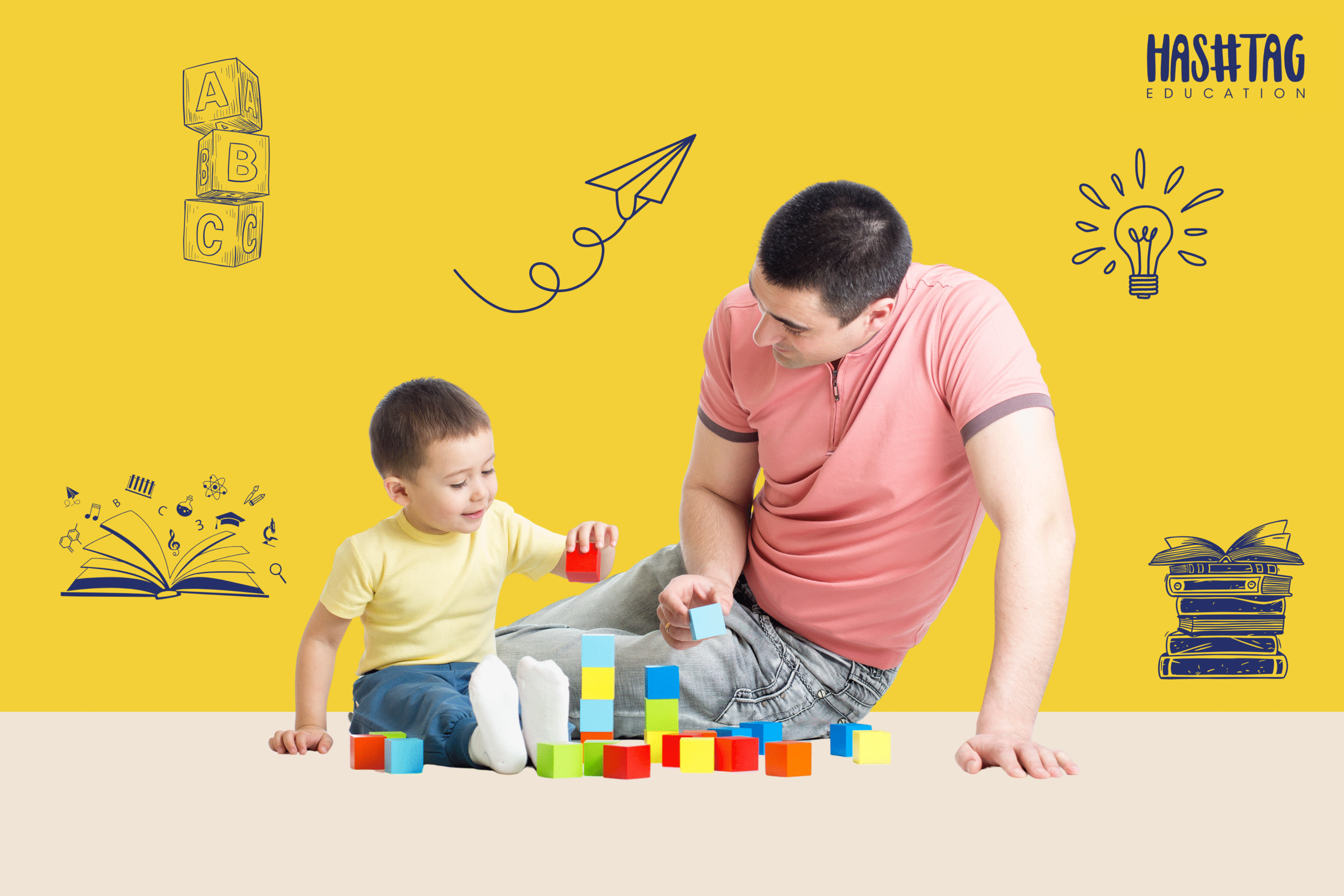
Playing with Your Child: 8 Powerful Educational Benefits of Shared Fun
Playing with your childIn today’s fast-paced world, it’s easy for parents to get caught up in trying to find “perfect” ways to support their child’s growth, from extra classes to structured activities to academic tools. But one of the most powerful, research-backed learning methods requires no sophistication at all: it merely requires your presence, a little time, and a willingness to play. Playing with your child is not just an act of joy; it is one of the most meaningful educational investments you can make. At Hashtag Education, we believe when parents and children share playful moments, they develop skills, confidence, creativity, and emotional strength that no classroom can replace. In this blog, we explore why shared play is essential, how it nurtures creativity, and how parents can turn everyday moments into rich learning experiences. The powerful impact of playing with your child Play is the natural language of childhood. For children, playing is thinking, imagining, exploring, and understanding the world. But when a parent joins in, the experience becomes deeper, richer, and more impactful. Shared play supports: With screen time on the rise and attention spans decreasing, shared play helps children reconnect with real experiences, real emotions, and real learning. 1. Joint Play Builds Creativity and Imagination One of the most important skills for the future involves creativity, which fuels innovation, problem solving, and adaptability. The seeds of creativity are sown early, and shared play acts as fertile soil where imagination thrives. When parents participate in play: For instance, building blocks may appear as simple toys, but they can teach children the way to design, experiment, and visualize. A parent playing alongside might ask: These little questions spark big ideas, teaching children that there is more than one way to investigate a problem. Shared play turns a mundane moment into a potent journey of creativity. 2. Play Strengthens Brain Development The brain creates trillions of neural pathways during early childhood. Those pathways play a role in attention, memory, emotion, and reasoning. Shared play stimulates those pathways in an important way. Activities include: When parents join in, they help children think deeper, notice patterns, and connect ideas. The engagement thereby reinforces both cognitive flexibility and problem-solving skills, so important throughout life. 3. Shared Play Builds Emotional Intelligence One of the most underrated benefits of parent-child play has to do with developing emotional intelligence. More specifically, through playing, children learn to: For instance, when a child is unable to put together a puzzle or loses their turn in a certain game, they often feel frustrated. The presence of a parent who is encouraging and asking them to try again can teach a child emotional regulation. Similarly, imaginative play-such as pretending to run a store, or taking care of a doll-allows children to conceptualize emotions, relationships, and social roles. Shared play times build emotionally confident children who are able to handle challenges with stability and maturity. 4. Play Strengthens Communication and Language Skills Language development does not occur solely through books or lessons; it grows through interaction. In parent-child play, conversations become much more natural, expressive, and meaningful. Activities that enhance language: A child begins to express ideas, explain actions, and develop a stronger vocabulary. Most importantly, they feel heard-a critical foundation for communication skills and self-esteem. 5. Shared Play Enhances Social Development Children learn social rules both in classrooms and in playful interactions. Through playful interactions with their parents, children will learn: It is through these moments that children develop social skills they will use throughout their lives. 6. Shared Play Strengthens Parent-Child Bonding Beyond the academic and developmental benefits, shared play creates emotional closeness. Children feel closely connected when parents: This forms the foundation of trust, openness, and psychological safety. A child who is secure at home will perform well academically, socially, and emotionally. Shared play can be the safest space where children express who they truly are. 7. Simple Indoor Activities That Inspire Creativity You don’t need complex setups. Even the most basic activities create rich learning opportunities: At Hashtag Education, we design indoor environments that turn classrooms into creative learning spaces filled with color, motion, imagination, and learning. 8. How Parents Can Make Play More Meaningful Here are some simple ways to enhance the educational value of shared play: Ask open-ended questions. Encourage exploration, not perfection. Mistakes are part of learning. Be present and avoid distractions. Even 15 minutes of focused play is powerful. Celebrate effort, not just results. This nurtures intrinsic motivation.