


Affirmations: 5 Ways Positive Affirmations Strengthen a Young Mind
Affirmations can be as simple as a small child standing in front of a mirror, repeating, “I am smart. I am kind. I can do this.” Simple words, yet filled with strength. They are not just catchphrases, but the very building blocks of emotional well-being, resilience, and confidence. Every word you say as a child has an impact. Positive, uplifting language has a lasting impact on children’s self-perception and relations with the outside world. Positive affirmations are effective because they help kids believe in their own abilities. At Hashtag Education, we think that we care for young minds more than just teaching ABCs and 123s. It’s about making them feel safe, able, and loved. Affirmations do just that. What Exactly Are Positive Affirmation? Children say brief, uplifting phrases to oneself as positive affirmations. Imagine of them as tiny seeds of trust that are sown in their minds: How Affirmations Promote Emotional Development Children benefit from affirmations in the long run, but they also teach them life skills. 1. They Shape Self-Belief Early On Children build their self-image at a very young age. If they hear “You’re capable” often enough, they’ll start to believe it. They are less uncertain regarding their strengths and identity when they hear affirmations. 2.They Build Emotional Strength Things are not always simple for even little children. It may be too much to handle a difficult problem, make new friends, or adapt to a new school. “I am strong enough to try again” and similar affirmations constantly remind them that bad times pass. 3. They Encourage Good Behavior and Kindness Kid behavior around others is also shaped by statement. Repeating such words as “I am a nice friend” or “I give with kindness” tends to make people happier and kinder. 4. They Ease Fears Kids do get scared or afraid sometimes. A reassuring reminder such as “I am safe, I am loved” might reassure them and help them deal better with their emotions. 5. They Inspire a Growth Mindset Instead of saying “I can’t do this,” children learn to say, “I can get better with practice.” That subtle shift allows them to embrace effort and perseverance, as well as triumph. How Mental Development Is Assisted by Affirmations Children who are being told affirmations learn life lessons along with feeling better in no time. Using these tools, kids learn not only to feel emotions but to know and communicate them in positive ways. Easy Ways to Practice Affirmations Here are a few simple (and enjoyable!)ways parents and educators can incorporate assertions into daily life: ✨ Morning Boost: Start the day with a cheerful affirmation. “Today is a new day. I’m ready to learn.”✨ Story time Links: Upon completion of a story with a courageous character, have children utter, “I am brave like the hero in the story.”✨ Affirmation Wall: Design a bright corner where kids can choose a daily affirmation.✨ Calm Corner: Put cards with soothing statements like”I can breathe and feel calm.”✨ Night routine: Say “I am loving” softly to say goodbye to the workday. I did my best now. These small rituals make children feel safe and secure. Age-Appropriate Affirmations Here are a few samples you can use immediately: Preschool (3–5 years): Early Primary (6–8 years): Upper Primary (9–12 years): Stories from Classrooms Teachers notice firsthand how affirmations change things. One teacher wrote about a shy student, who had once dreaded reading out loud, gradually starting to use the words “I can try again.” After a while, reading wasn’t so frightening and became more thrilling. That small words opened up the door to confidence. These real-life examples teach us: affirmations are more than words, they’re forceful tools for change. Making Affirmations Fun Children learn most when learning is enjoyable. These are some inventive ideas for helping affirmations stick: Sing them: Convert affirmations to songs or rhymes.Draw them: Ask kids to draw their favorite affirmations.Move with them: Match affirmations with movements, declare “I am strong” while flexing arms.Share them: Ask kids to share affirmations with friends, such as compliments. The more interactive the activity, the greater the impact. The Proof Supporting Affirmations in Hashtag Instruction Everything we develop at Hashtag Education is based on assisting kids in developing both intellectually and emotionally. Since we are aware that resilience, kindness, and confidence are just as crucial as knowing your ABCs and 123s, we have incorporated social-emotional learning into the design of our tools. For this reason, affirmations are a major part of our storybooks, flashcards, and activities in the classroom. They make learning enjoyable and meaningful in addition to being successful by bringing to life the play-based, child-centered approach that is suggested in NEP 2020 and NCF-FS 2022. Affirmations are an easy yet powerful way to do that. Final Thought What children say to themselves today will become the beliefs they hold tomorrow. By teaching affirmations early on, we can give them the courage to attempt, the resilience to grow, and the confidence to shine. So next time your child whispers, “I can do this,” smile, because you’ve given them one of the greatest gifts: belief in themselves. Check out our other blogs: 6 Everyday Learning Opportunities That Build a Lifelong Love for Education Making a Family Media Plan that Works Also check out our socials: Instagram
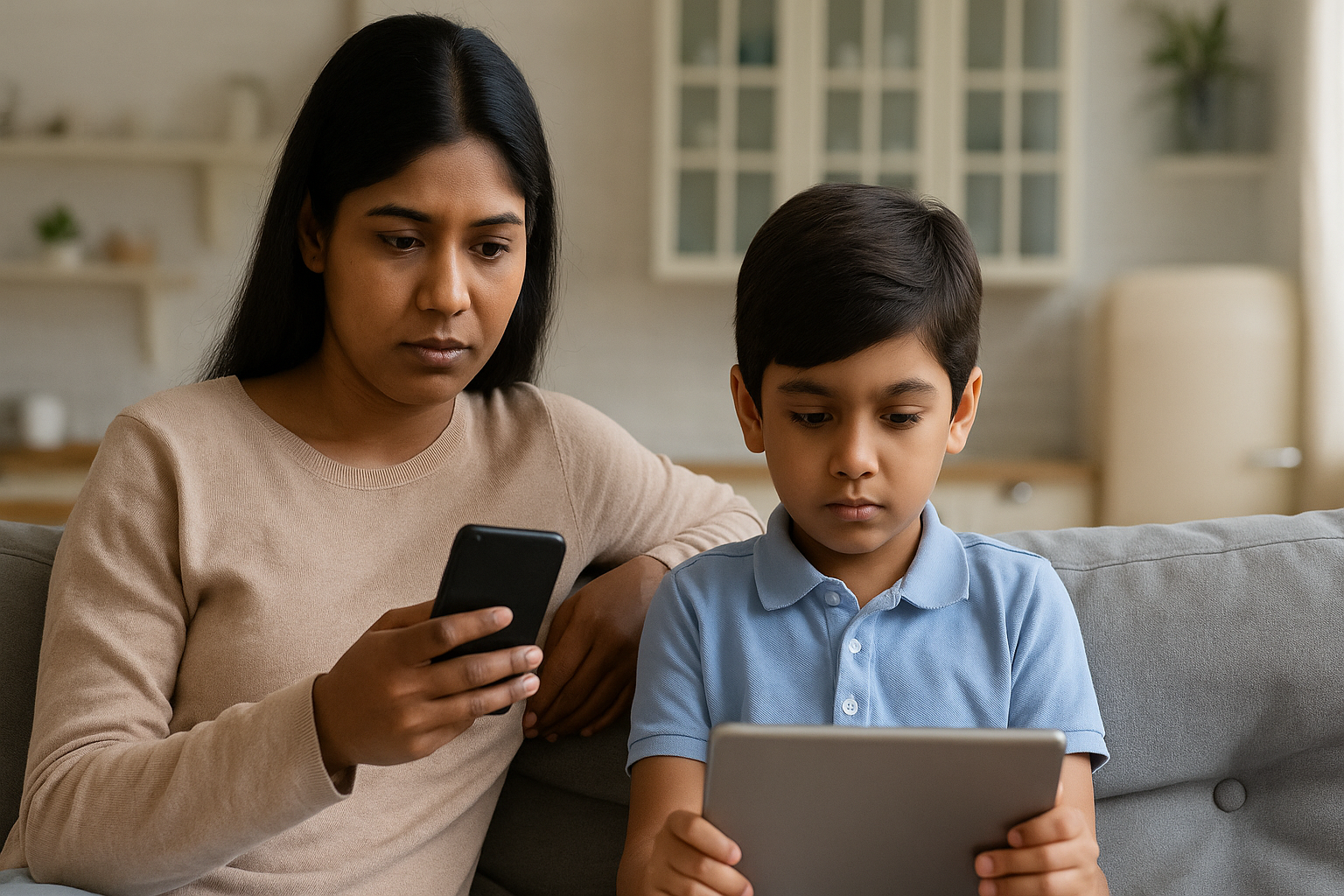
Digital Parenting Made Easy: 7 Tools for Healthy Screen Habits
Digital parenting isn’t just a buzzword anymore, it’s the reality of raising children in a world full of screens, apps, and endless online distractions. From school assignments on tablets to entertainment on YouTube and gaming apps, kids are growing up surrounded by technology. As parents, we’ve all been there. As kids we rely largely on current technology. They spend it learning, playing, and chatting with friends. And, as much as we love that students are able to learn and tap into knowledge like never before, we can’t help but wonder: how much screen time is too much? Are they safe on the internet? The good news: Technology is not an enemy. With the right tools and habits, we can support our children in developing a positive relationship with screens while avoiding endless battles and remorse. How? Let’s take a look. Why Screen Time Management Matters Our children grow up in a world where screens are integrated into their learning, leisure, and social activities. But excessive screen time may have a price. Sleep problems: That blue light emitted by screens can disrupt their sleep schedule. Eye strain and exhaustion: Ever caught someone rubbing their eyes after a long day of online schooling or gaming? Less exercise: Playtime in the great outdoors usually takes a backseat to gaming or swiping. Moods and focus issues: Excessive screen usage has been proved to impair attention span and mood. The solution isn’t to prohibit screens but to establish a healthy balance so they learn, play, and sleep without technology dominating their lives. Parental Control Software That Simplifies Life Fortunately, technology has solutions to its own problems. Consider these tools parents rave about: 1. Google Family Link Ideal for Android users. It allows you to limit screen time, grant or deny app access, and even lock the device during bedtime or home time. 2. Apple Screen Time. If your child uses iPads or iPhones, this feature is already included. It generates thorough use metrics and allows us to set app constraints and schedule breaks. 3. Microsoft Family Safety. Ideal for Windows and Xbox users. It records online activities, limits your game hours and sends monthly updates to your inbox. 4. Qustodio & Norton Family Both cross-platform apps with everything from website blocking to where-location tracking. Excellent for families with more than one device. 5.Bark Screen restrictions are only starting off.. Bark monitors for cyberbullying or inappropriate content without sacrificing kids’ privacy. Most of these are simple to install and provide parents with reassurance without having to be digital detectives. Easy Tips for Techno Parenting Apps are useful, but screen time is best controlled when accompanied by family routines that promote balance. Some simple ideas include: a) Make a Family Screen-Time Agreement Talk with kids and co-create rules: How much is sufficient screen time each day? Which spaces in the home are screen-free? (such as bedrooms or dining tables) What is the bedtime for devices? When children get to help set the rules, they will be more inclined to follow them. b) Substitute “No Screens” with Fun Options Rather than simply telling them “No TV anymore!” provide alternatives—bike rides, board games, art projects, or story time. Kids argue less once they have attractive choice. c) Support Quality Over Quantity Learning apps such as Khan Academy Kids or Duolingo convert screen time into learning time. Not how long kids spend on the internet, as what they do on it. d) Set Aside Time for Device-Free Moments Dinners, family activities, or bedtime can be device-free times. It gives everyone the opportunity to bond without distractions. e) Lead by example. Children notice everything. When we’re constantly checking emails or scrolling through social media, it’s difficult to tell them to put their screens away. Modeling balance is crucial. Teaching Digital Wellness Beyond Screen Time Managing screen limits is only part of the picture. Kids also need to understand how to use technology responsibly as they grow older. Teach them about online safety—why personal details should stay private. Talk about digital footprints—what goes online stays online. Practice mindfulness—short exercises, such as meditation in apps like Headspace or Calm, can teach them to unwind after screen usage. The goal is to help students not only follow the law, but also develop self-control and critical digital skills that will benefit them throughout their lives. Finding the Right Balance Parenting in the digital age can be challenging. But here’s the thing: it’s not about managing every click. It is about setting proper limits so that children can play with technology while still learning from it and having enough time left for real-world excursions. Begin small set screen-free periods, look into parental control software, and, most importantly, chat to your children about why balance is vital. Technology will never go away, but neither will your child’s well-being if you approach it correctly. As at the close of each day, we want kids to be content, fit, and ready for what follows next, not computer savvy. Also check out these blogs: 5 Powerful Insights Parenting Triggers Reveal About You (and How to Grow) Top 7 Powerful Benefits of Not Overlooking Your Child’s Emotional Awareness Top 7 Powerful Benefits of Not Overlooking Your Child’s Emotional Awareness Also check out our Social Media Page: INSTAGRAM