

 Team Hashtag
Brain Development Games for Toddlers: Easy Games That Shape Growing Minds
Brain development games for toddlers don’t need to come in a box with batteries and flashing lights. The years between one and four are when a child’s brain is forming more connections per second than at any other point in life, and the games that fuel this growth are often the simplest ones. A wooden spoon, a stack of cups, a basket of socks, these can do more for a young mind than the most expensive toys ever will. The trick is knowing which games build which skills, and weaving them into the everyday.
Why These Early Years Matter So Much
A toddler’s brain triples in size in the first few years. Every time a child stacks a block, hears a new word, or figures out where a missing toy went, fresh neural pathways form. These pathways become the foundation for everything that comes later, reading, math, friendships, problem-solving, and emotional control.
The good news is, kids don’t need formal lessons. They need varied input. Movement, sound, touch, words, and surprise all do the heavy lifting.
Brain Development Games for Toddlers That Build Thinking Skills
Toddlers learn by testing. Drop the spoon, see what happens. Push the ball, see where it rolls. Games that let them predict, experiment, and adjust are doing real cognitive work.
A few worth trying at home:
- Hide and find, hide a favourite toy under one of three cups and shuffle them. Toddlers love the suspense, and their memory sharpens with each round.
- Shape posting, an old shoebox with holes cut into the lid and a few wooden shapes. Endless quiet focus.
- Pattern stacks, line up red-blue-red-blue blocks and ask your child to add the next one. Start with two-colour patterns and build up.
- Sound match, fill pairs of small containers with rice, beans, or buttons. Shake them and let your toddler find matching pairs.
- Container play, give a basket of lids and matching jars. Twisting, turning, fitting, all serious brain work.
Loved these ideas? Let’s bring them to life beyond the screen!
Discover Blueberry workbooks & box sets designed for joyful, hands-on learning.
🛒 Shop Now: https://hashtageducation.in/collections/box-set
Cognitive Development Activities for Preschoolers
Cognitive development activities for preschoolers can go a step further than toddler games, because three and four year olds can hold ideas in their heads for longer and follow two-step instructions.
Try these:
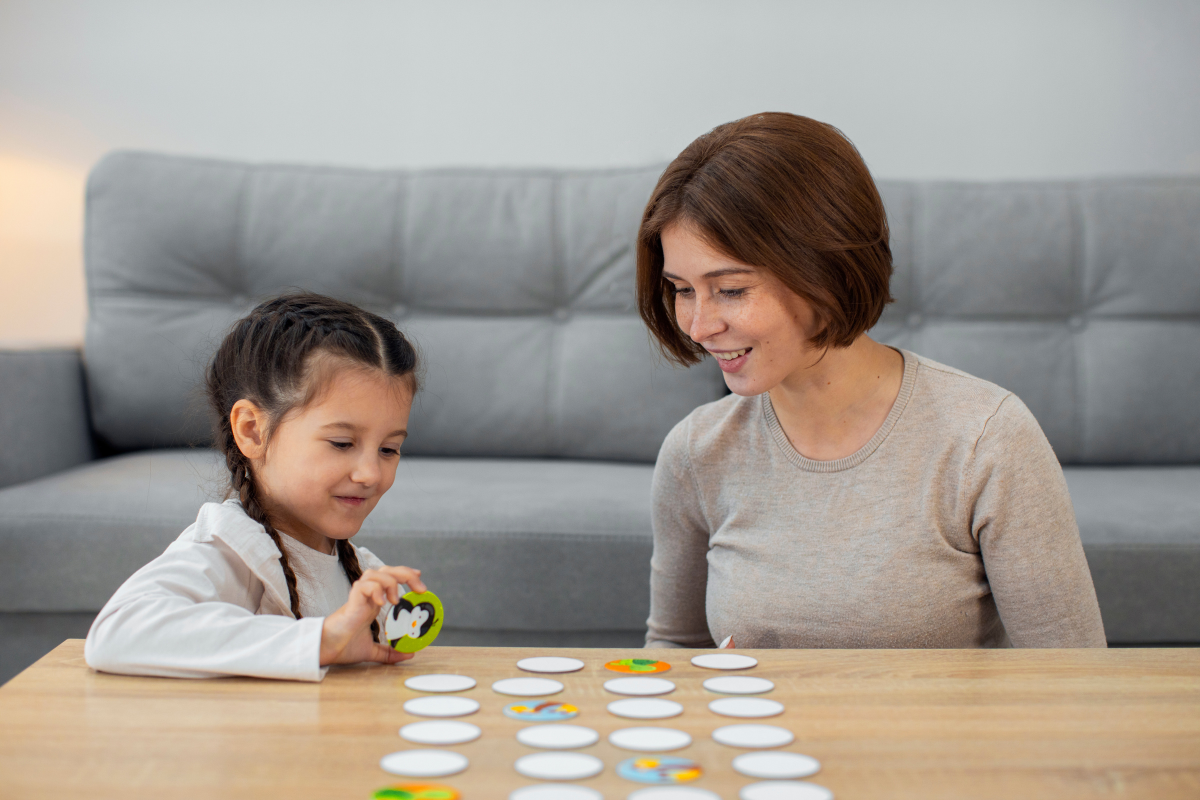
- Memory tray: Place six objects on a tray, look together, cover with a cloth, and see how many your child can recall. Add objects as they improve.
- Sorting by two rules: sort buttons by colour and size at the same time. This builds early logical thinking.
- Simple puzzles, 12 to 24 piece puzzles, teach planning and spatial reasoning.
- Story sequencing: Draw three pictures of a story on cards, mix them up, and have your child put them in order.
- Pretend cooking, recipes from memory, ingredients in order, serving guests. Sequencing, planning, and language all at once.
The best part is that none of this looks like learning to the child. It just looks like fun.
Looking for a playful vocabulary toy?
This spelling game supports early reading, word formation, and hands-on learning.
👉 Shop now: https://amzn.to/4umPRPR
Fine Motor Skill Games for Kids
Fine motor skill games for kids build the small hand and finger muscles that children will later use for holding pencils, buttoning shirts, and using scissors. These muscles need years of practice, and the practice should start gently.
Some favourites that actually work:
- Threading pasta, dry penne or rigatoni on a shoelace. Cheap, calming, and surprisingly absorbing.
- Tongs and pompoms, transferring soft pompoms from one bowl to another with kitchen tongs.
- Sticker peeling, just peeling stickers off a sheet and pressing them onto paper, builds pincer grip beautifully.
- Playdough, rolling, pinching, pressing, cutting. Almost every fine motor skill is in one squishy material.
- Water dropper transfer, coloured water in one bowl, an empty ice tray, and a dropper. Total focus, instant calm.
The aim isn’t speed or neatness. It’s just steady use of those small muscles.
Language Development Games for Toddlers
Language development games for toddlers don’t need props. They need a parent or caregiver who talks, listens, and waits. Toddlers learn words from the people who slow down enough to repeat them.
Easy ones to weave into the day:
- Narrating the everyday, “Now we’re washing the carrot. The carrot is orange and bumpy.” Sounds silly, but builds vocabulary fast.
- Picture book chats, instead of just reading, ask “What’s happening here?” and wait.
- Animal sound game, take turns making sounds and guessing the animal.
- Nursery rhymes, with their repetition and rhythm, weave language into memory.
- Object-naming basket: a small basket of mixed items, pulled out one at a time, named, described, and returned.
Brain development games for toddlers work best when they’re short, frequent, and woven into ordinary life. You don’t need a schedule, a kit, or a screen. You just need a few minutes, a few household objects, and the willingness to play along.