
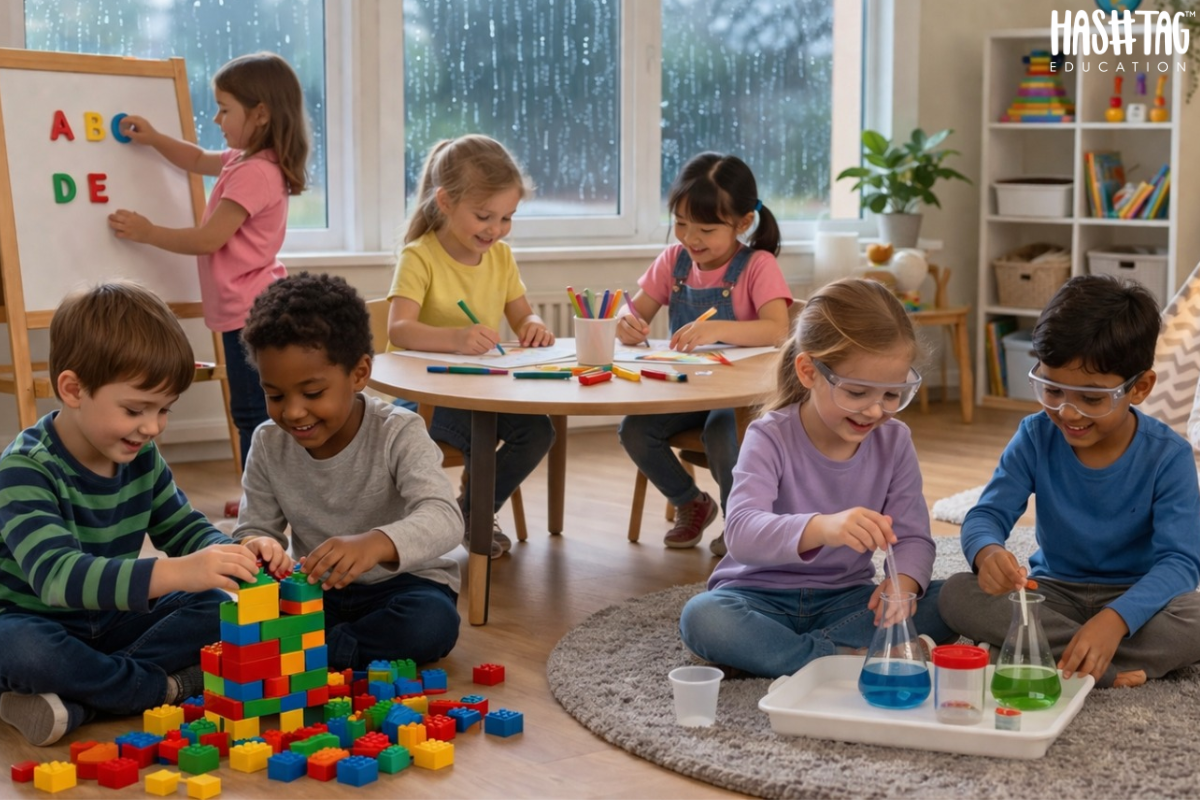
Rainy Day Activities: Fun Indoor Games for Preschoolers
Rainy Day Activities and Preschoolers Indoor Games That Keep Kids Learning Rainy day activities can truly be a lifesaver when your preschooler is stuck indoors and full of energy. We’ve all been there, restless kids, messy rooms, and that constant temptation to just hand over a screen. But instead, you can turn these moments into something fun and meaningful with simple summer learning activities and creative art activities. Preschoolers learn best through play, and that’s exactly what makes these moments so valuable. That’s why we’ve put together a list of rainy day activities that will keep your child active, playful, and happy. The best part? Most of these activities require very little effort. All you need are a few everyday household items and a little time to play along with your preschooler. Active Rainy Day Activities for Preschoolers (Burn Energy) 1. Indoor Obstacle Course One of the most exciting rainy day activities is creating an obstacle course at home. Use cushions, chairs, bedsheets, and pillows to design a mini adventure track. This type of preschool indoor game helps children: Build strength and coordination Follow instructions. Stay physically active indoors. 2. Freeze Dance Freeze dance is a classic rainy day activity that kids absolutely love. Play music and let your child dance freely. When the music stops, they must freeze. This is one of the simplest preschoolers’ indoor games to improve: Listening skills Self-control Rhythm and movement 3. Animal Walk Races Turn movement into fun with animal walk races. Ask your child to walk like a bear, jump like a frog, or waddle like a penguin. These rainy day activities improve: Motor skills Balance and coordination Imaginative play Creative Rainy Day Activities (Boost Imagination) 👉 If you liked these activities, explore our books and give your child a fun learning experience. 🛒 Shop Now: https://hashtageducation.in/collections 4. Cardboard Box City Let your child build houses, roads, and shops using cardboard boxes. This creative rainy day activity can keep them engaged for hours. These preschoolers’ indoor games help develop: Creativity Planning skills Storytelling ability 5. Kitchen Band Use pots, spoons, and containers to create a fun musical setup. This rainy day activity allows kids to explore sounds and rhythms. It helps children learn: Patterns and rhythm Cause and effect Creative expression 6. Dress-Up Storytelling Use scarves, caps, or costumes to create characters. Ask your child to act out a story. This is one of the most engaging preschoolers’ indoor games for: Language development Imagination Confidence Learning Rainy Day Activities (Build Brain Skills) 7. Treasure Hunt with Clues Hide a toy and give your child picture-based clues to find it. This interactive rainy day activity keeps kids thinking and moving. It teaches: Problem-solving Sequencing Understanding directions 8. Memory Card Game Create matching cards using paper or stickers. This is one of the most powerful preschoolers’ indoor games for brain development. It improves: Memory Concentration Attention to detail 9. Letter and Number Fishing Make paper fish with letters or numbers and let your child “fish” them using a simple stick and magnet. This rainy day activity helps with: Letter recognition Number skills Hand-eye coordination 10. Cooking Together Involve your child in simple cooking tasks like mixing or counting ingredients. This practical rainy day activity builds real-life skills. Children learn: Counting and measurement Sequencing Responsibility Quiet Rainy Day Activities (Wind Down Time) 11. Story Building Game Take turns creating a story together. This calm, rainy-day activity helps children express ideas and think creatively. It builds: Vocabulary Listening skills Imagination 12. Puzzle and Workbook Time End the day with quiet preschoolers’ indoor games like puzzles or colouring. This helps children relax after active play. These rainy day activities improve: Focus Patience Fine motor skills Simple Rainy Day Schedule for Preschoolers A structured day using rainy day activities can make things easier for parents: Morning: Active play (obstacle course, dance) Mid-morning: Creative play (art, music) Afternoon: Learning games (memory, treasure hunt) Evening: Quiet activities (stories, puzzles) This balance of preschoolers’ indoor games keeps children engaged without overwhelming them. Read Also: Indoor games that support your child’s development Why Rainy-Day Activities and Preschoolers’ Indoor Games Matter Rainy day activities provide a way for kids to keep active and engaged when confined to inside spaces. Preschoolers’ indoor games minimise screen time and promote practical learning. They support: Physical development Cognitive growth Emotional well-being Through regular practice, such activities will form a solid base for a lifetime of learning. There is no need for dull moments on a rainy day. With a good balance of rainy day activities and indoor games for preschoolers, your child can learn while having fun inside. Which of these rainy day activities will you try with your preschooler today?
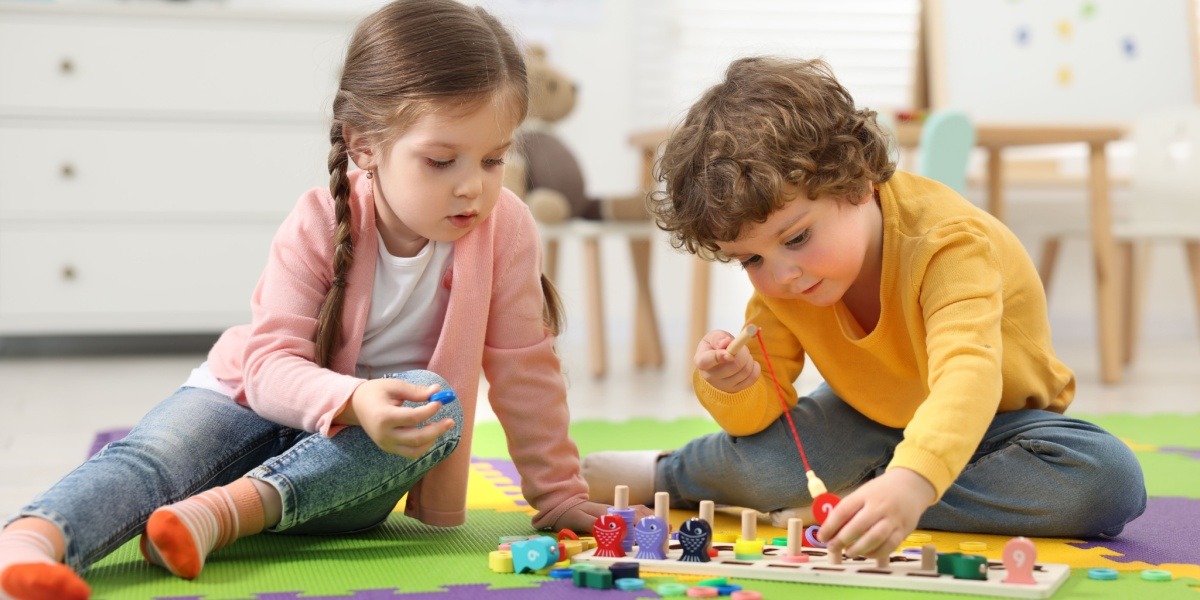
7 Amazing Sorting Games for Toddlers That Build Maths
Why Sorting and Matching Games for Toddlers Matter Sorting Games for Toddlers are one of the easiest and most effective ways to introduce early maths skills through play. At this young age, children learn better through hands-on activities rather than formal study methods. Everyday situations can easily be turned into meaningful learning experiences. These games help toddlers understand basic maths concepts such as classification, comparison, patterns, and one-to-one correspondence. By engaging in sorting and matching activities, children naturally build the foundation needed for advanced skills like counting and problem-solving. Another advantage is that sorting and matching games for toddlers are simple to organise and require very little equipment, making them perfect for daily learning at home. 7 Sorting and Matching Games for Toddlers You Can Try at Home 1. Colour Muffin Tin Game This game is very easy to prepare and is one of the simplest games for toddlers to learn matching and sorting. All you need to do is use a muffin tin, where coloured papers will be placed in each hole, then let your child match and sort small items such as beads or buttons by colour. 2. Sock Matching Game Time spent on laundry can become an interesting educational game. In this matching game for toddlers, children match pairs of socks. In this case, kids develop their visual discrimination abilities, memory, and concentration skills while engaging in a practical activity. 3. Shape Hunt Game In this sort-and-match game for toddlers, you will only have to go round your house and spot shapes from ordinary things. This will be like spotting circles in plates and rectangles in books. It will help children associate learning with practical life and develop their observational skills. 👉 If you liked this, explore our books and give your child a strong learning start.🛒 Shop Now: https://hashtageducation.in/collections 4. Big and Small Sorting Game This game helps teach toddlers about size differentiation. Provide your toddler with objects of various sizes and ask them to categorise the objects by dividing them into bigger and smaller ones. You can even introduce them to terms such as tall, short, more, and less. 5. Fruit and Vegetable Sorting Game The toddler fruit and vegetable sorting game makes use of actual produce. Request your toddler to segregate these according to their category. This could also be extended to segregation based on colour or type, thus improving classifying ability as well as vocabulary. 6. Pattern Train Game Pattern making is one of the main components of mathematical education. For this sorting-and-matching activity for toddlers, develop a pattern like red, blue, red, blue, and have your toddler replicate it. It will aid pattern-making skill development, which is crucial for logical thinking. 7. Number Parking Game This is a slightly more advanced sort-and-match game for toddlers. You will need toy cars and number cards. Have your toddler park the appropriate number of toy cars in each number box. Your toddler will learn about counting, number recognition, and simple addition skills through this exercise. How Sorting and Matching Games for Toddlers Build Maths Skills Sorting and matching games for toddlers have a very important purpose beyond entertainment; these activities play a vital part in developing brain power. They help children: Understand grouping and categorisation Recognise patterns and sequences Develop logical thinking Improve focus and memory As children play sorting and matching games for toddlers, they start noticing connections between objects; therefore, math begins to develop within them. Benefits of Sorting and Matching Games for Toddlers There are several benefits of including sorting and matching games for toddlers in daily routines: 1. Improves Cognitive Skills These games help children think, compare, and analyse. 2. Builds Fine Motor Skills Picking and placing objects strengthens the finger muscles needed for writing. 3. Enhances Problem-Solving Ability Children learn to identify patterns and make decisions. 4. Encourages Independent Learning Children start exploring and learning on their own. Read Also: 5 fun ideas for learning through play Tips to Make Sorting and Matching Games for Toddlers More Effective Here are some guidelines to ensure you make full use of sorting and matching games for toddlers: Keep sessions short (10–15 minutes) Use bright and engaging objects Encourage, don’t force learning Gradually increase difficulty Consistency is the key to success. With consistent play involving sorting and matching activities among toddlers, the child will be able to develop excellent basic skills. Extend Learning Beyond Sorting and Matching Games for Toddlers When your kid starts feeling confident in such activities that involve the sorting and matching of objects, you can move ahead with something more challenging. This can include: Interactive learning tools Activity-based workbooks Guided learning programs These help reinforce concepts learned through play and prepare children for formal education. The Importance of Early Learning Through Play Sorting and matching activities are crucial during the initial stages of a toddler’s growth. Such basic games can teach a child how to sort, compare, and pattern – all essential concepts in math and logic. In addition to developing cognitive skills, a child also enhances fine motor skills, concentration, and confidence when solving problems. The best thing about such games is that a child learns through play without feeling pressured. If parents integrate such activities into a toddler’s daily life, they establish a solid foundation for future learning without causing any stress to their little one. Are you including sorting and matching games in your toddler’s daily learning routine?

Hashtag Nature Series at 10% Off – Bring Nature to Your Desk
Hashtag Nature Series brings the calming beauty of nature right to your desk. There is something about nature that quiets the noise of a forest canopy after rain, sunlight breaking through canyon walls, and wildflowers crowding a hillside in colours nobody planned, yet everything matches. That stillness, that sense of order within chaos – what if your notebook could carry a piece of it? The Hashtag Nature Series is a collection of six registers that transform an everyday school or office essential into something you actually look forward to opening. Each notebook in the Hashtag Nature Series features a rich, painterly landscape inspired by real natural scenes, not generic clip art or stock photography, but artwork that feels worthy of being displayed as much as being used. Six Designs in the Hashtag Nature Series, Six Unique Moods Green – Dense tropical leaves layered in deep emerald and forest tones. This one feels like stepping into a rainforest. For the student who finds focus in calm, grounded energy. Blue – Tall, delicate wildflowers reaching upward against a moody dark background. There is something quietly ambitious about this cover – like a garden growing in places nobody expected. For the dreamer who writes things down to make them real. Yellow – A burst of golden blooms packed tightly together, warm and optimistic. This is the notebook that sits on your desk and makes a grey Monday feel a little brighter. For the person who believes colour changes everything. Sky Blue – A sweeping coastal landscape with layered rock formations and open sky. Wide, cinematic, and peaceful. This one feels like a deep breath. For the one who journals to decompress. Peach – A dramatic sunset sky in soft corals, lavenders, and amber, with clouds that look like they were painted by hand. Moody, warm, and genuinely beautiful. For the creative who sees inspiration in the sky above the traffic. Brown – Terracotta canyon walls with light cutting through narrow rock passages. Bold, earthy, and grounding. This one has serious energy, quiet confidence without being loud. For the note-taker who means business. Explore 3 Gorgeous Notebooks (Hashtag Colour Series Combo)👉 https://hashtageducation.in/collections/small-notebooks/products/notebook-combo-pack-set-of-3 What Is Inside Matters Too Each Nature Series register comes with 196 pages of single-line ruled, 56 GSM paper, enough for an entire semester, a full project, or several months of journaling. The pages are smooth enough for gel pens and ballpoints without feathering, and sturdy enough that ink does not bleed through to the back. At 21 x 29.7 cm (standard A4 size), these are full-sized registers built for serious writing, lecture notes, meeting minutes, long-form journaling, or exam preparation. The covers are not just pretty; they are sturdy and durable, designed to survive daily life inside a school bag or office tote. Limited-Time Offer on Hashtag Nature Series Every notebook in the Nature Series is currently 10% off, just ₹84.60 each, down from ₹94. For a 196-page, A4 register with artwork-quality covers and reliable paper, that is genuinely hard to beat at any price. At this price, it is almost unreasonable. Pick one that matches your mood. Or collect all six because at ₹84.60 each, the complete set costs less than ₹510 for six full registers. That is the kind of stationery haul that feels responsible and indulgent at the same time. Who Are These For? Students who refuse to carry boring registers to class. Journal keepers who believe the outside of the notebook sets the tone for what goes inside. Professionals who want their meeting notes to live in something worth keeping. Gift-givers looking for something affordable, beautiful, and actually useful. Or anyone who has ever stood in a stationery aisle, picked up a plain register, sighed, and wished it looked like this. The Quiet Ones Go First Nature-themed stationery has a way of disappearing from shelves without fanfare. There are no loud countdowns or flashing banners, just people who see them, appreciate them, and quietly add them to their cart before the next person does. The 10% discount is live now. The stock is finite. The semester is approaching. Shop the Hashtag Nature Series → ₹84.60 each Your desk could use a little more nature. Start here.
3 Gorgeous Notebooks That Make Kids Love Writing
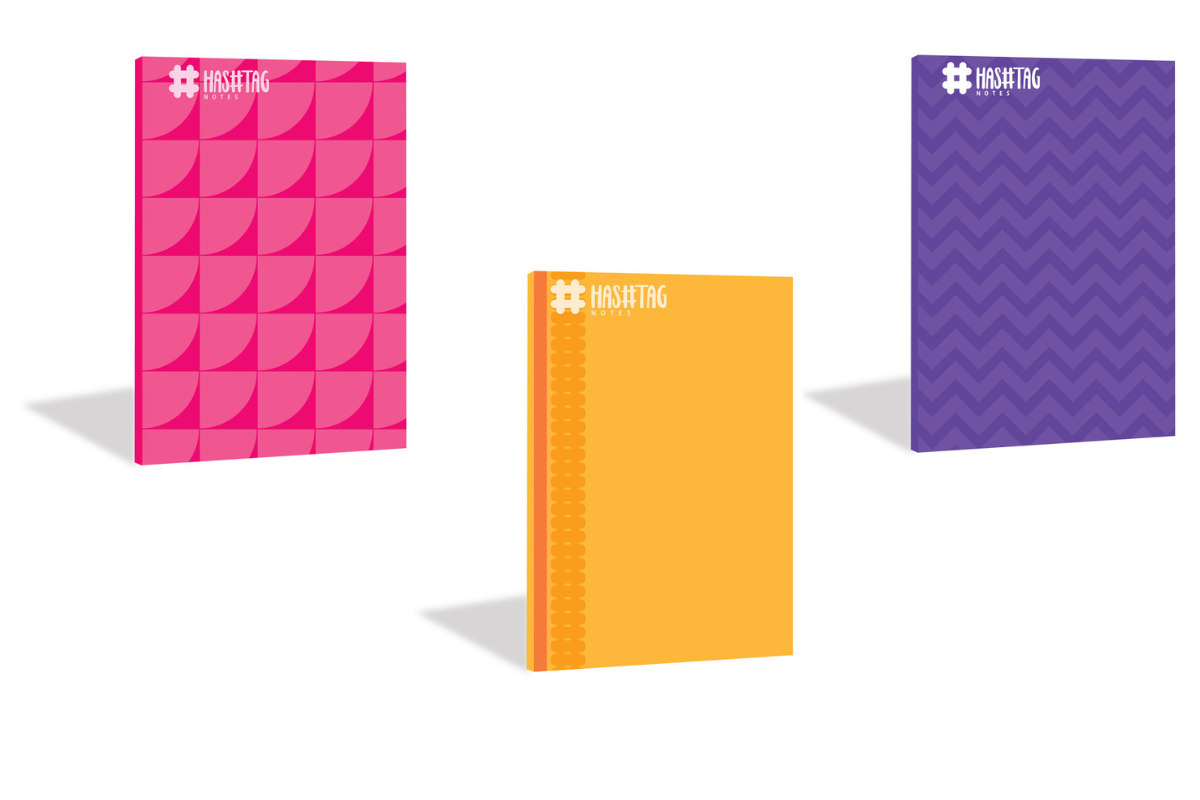
3 Gorgeous Notebooks that instantly make kids want to pick up a pen and start writing. Some things just make you feel good: bright colours, fresh school supplies, and opening a brand-new notebook with clean pages ready for learning. Now imagine giving your child three notebooks in colours that actually excite them to study. Meet the Hashtag Colour Series Combo Three beautifully designed notebooks in bold purple, sunny yellow, and vibrant pink, each one wrapped in a geometric textured cover that looks far more premium than it is. These 3 Gorgeous Notebooks are made especially for school-going kids, combining fun design with everyday usability. The patterns are modern, playful, and visually appealing, perfect for children who get bored with plain, dull notebooks. The textured covers not only look great but also feel sturdy, making them ideal for daily school use. Perfect for School Use These notebooks are ideal for: Classwork Homework Practice writing They help children stay organized while making learning more fun and visually engaging. At 18 x 24 cm, these notebooks are perfectly sized for school bags. They are easy to carry while still offering enough space for writing, homework, and classwork. 👉 If you liked this, explore our Hashtag Nature Series today. 🛒 Shop Now: https://hashtageducation.in/collections/long-notebooks The Offer That Won’t Last Originally priced at ₹123, this set of three is now available for just ₹99, a flat 19% discount. That means you’re paying only ₹33 per notebook for something that looks premium and lasts through daily school use. It’s a smart and affordable choice for parents. Who Are These 3 Gorgeous Notebooks For? School-going kids who need colourful notebooks Parents looking for affordable and attractive school supplies Children who enjoy creative and fun stationery These notebooks are specially designed to make learning more engaging for kids. This “New” tag and 19% discount will not stay forever. Once they are gone, they are gone. Shop the Hashtag Colour Series Combo → ₹99 for 3 Notebooks Your notes deserve better. Give them some colour.

KG Readiness Checklist to Avoid School Struggles Early
KG Readiness Checklist Every Parent Should Follow for a Smooth Start The KG readiness checklist, along with fine motor skills development, is perhaps the best tool you can use to get your child ready for kindergarten. Going into kindergarten (LKG) is a big step in your child’s life, where expectations increase with longer school hours and greater independence. The importance of a KG readiness checklist is that it helps you understand exactly what your child needs to learn before starting school. It is not a strict test; rather, it is a simple guideline for preparing your child. Every child grows at their own pace, and the value of a KG readiness checklist lies in helping you focus on what truly matters, without putting unnecessary pressure on your child. Language Skills in KG Readiness Checklist Language development is a key part of any KG checklist. At this stage, children are expected to: Building language skills is crucial for effective communication and understanding directions in class, which is an important aspect of the KG readiness checklist. Some excellent methods to develop language skills via a checklist include reading stories, communicating, and asking easy questions. Math Skills in KG Readiness Checklist Mathematics is another important part of the KG readiness checklist. Children should be able to: These concepts, contained in the KG checklist, assist children in developing basic problem-solving abilities. Counting or sorting toys is an example of a simple tasks that make learning mathematics easy and enjoyable. Motor Skills in KG Readiness Checklist Motor skills are often overlooked, but are essential in a KG checklist. Children should be able to: Fine motor skills in this checklist help children perform writing tasks comfortably. Activities like drawing, colouring, and clay play can improve these skills effectively. If you found this helpful, give your child the perfect learning start with Blueberry workbooks & box sets. 🛒 Shop Now: https://hashtageducation.in/collections/box-set Social Skills in KG Readiness Checklist Social and emotional development is a crucial part of the KG checklist. Children should: These skills help children settle into school easily. Encouraging playtime with other children helps build confidence and social understanding. Self-Care Skills in KG Readiness Checklist Self-care is an important part of the KG checklist that parents often ignore. Children should be able to: These habits in the checklist help children become independent and confident in school. Practising daily routines at home can make a big difference. How to Prepare Your Child Using the KG Readiness Checklist Using a KG checklist, parents can prepare their child step by step. Focus on: A KG checklist enables you to develop a well-balanced learning atmosphere without causing stress. Benefits of KG Readiness Checklist – Confidence Building Confidence-building is one of the most important advantages of a KG checklist. When children are prepared, they: A well-followed KG checklist ensures that children enjoy learning instead of feeling overwhelmed. Read Also: Early childhood education Do Not Panic While Using the KG Readiness Checklist When parents notice the list of KG readiness, they become concerned. It is crucial to remember that perfection is not expected in the development of the child. The schools will cater to kids on all levels. The list of KG readiness will assist you in preparing the child, but does not guarantee results or failure. Conclusion This is a simple yet highly effective tool to prepare your child for school. It gives you information on what your child should have and the proper steps to take for your child to be well-prepared for school. In order for the process to be effective, ensure that you get everything right and give yourself enough time for the same. Is Your Child Well-Prepared for School Through the Proper KG Readiness Checklist?
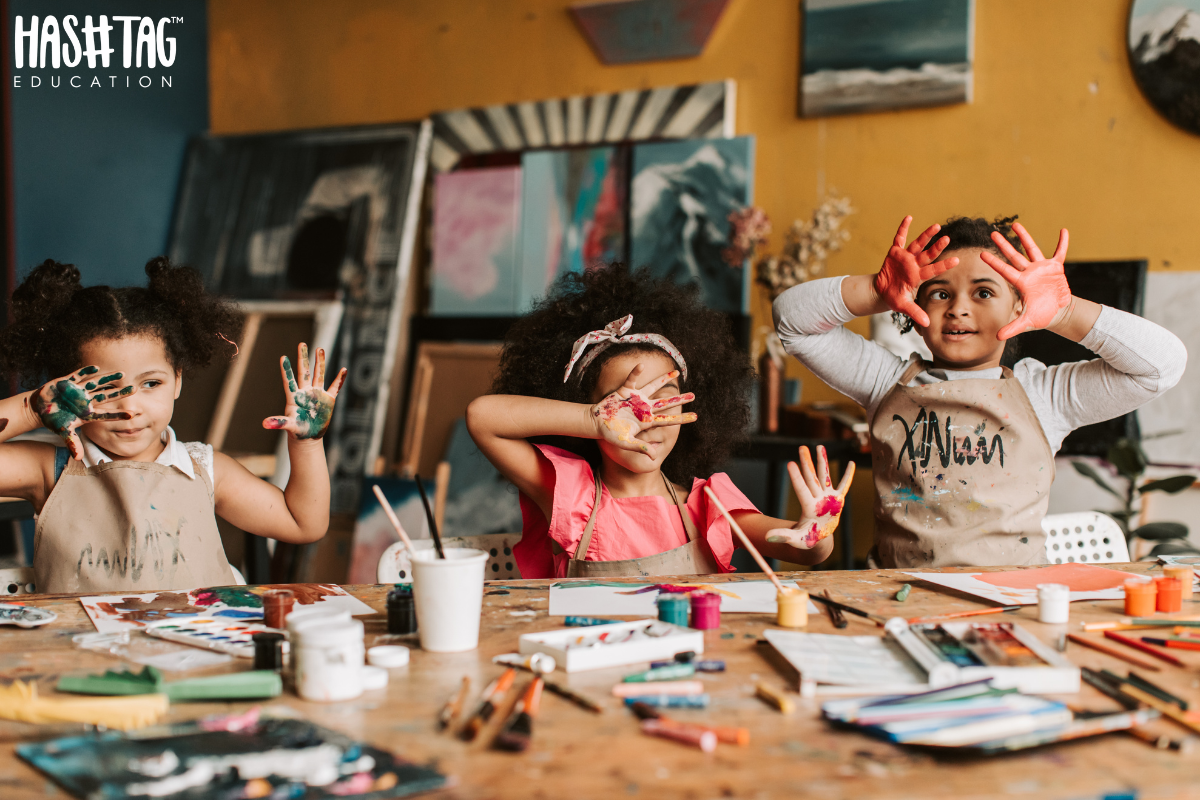
Creative Art Activities for Children That Spark Joyful Learning
Creative Art Activities for Children That Build Creativity and Confidence Creative art activities for children are perhaps the best means through which to foster learning at an early stage, in an enjoyable manner. Children are innately drawn to artistic expression, whether by way of drawing, painting, or other activities of the sort, which enable them to freely express themselves. For parents who typically stress the importance of academic learning, it is essential to understand that such creative art activities offer more than just entertainment. Not only do they foster creativity and attention, but they also enable skill development. The greatest advantage of such activities is that they are easy and inexpensive to organise, as basic supplies such as paper, colours, and household objects will suffice. Why Creative Art Activities for Children Are Important Creative art activities greatly contribute to the comprehensive development of their personality. Such activities foster creativity, critical thinking, and personal problem-solving among children. When children engage in creative art activities for children, they: Improve fine motor skills Build confidence Express emotions Develop focus and patience What is more important is that engaging kids in artistic pursuits makes learning fun, which keeps kids curious. Easy Creative Art Activities for Children at Home Here are some simple and fun creative art activities for children you can try at home: 1. Finger Painting Fun One of the most fun art activities for kids is finger painting. Allow your child to experience various colors through the use of their hands. This activity enhances sensory development and creativity. 2. Paper Tearing and Pasting Provide your child with some colored paper to cut and glue into various designs. These creative activities for children are useful in building finger muscles and increasing coordination. Loved these ideas? Let’s bring them to life beyond the screen!Discover Blueberry workbooks & box sets designed for joyful, hands-on learning.🛒 Shop Now: https://hashtageducation.in/collections 3. Leaf Printing Art Gather leaves and make prints using them by using the paint. This is the most creative art activity for kids as they get connected with nature while doing this. 4. DIY Craft with Waste Materials Old newspapers, boxes, or bottles can be used to make art. Children’s Creative Activities help develop creativity and sustainability. 5. Colour Sorting Collage Ask your child to create a collage using one colour theme. This activity makes creative activities both fun and educational. 6. Clay and Playdough Art Let your child shape clay into different forms. These creative activities improve hand strength and imagination. 7. Drawing and Free Sketching Give your child time to draw freely without correction. These creative art activities for children help them express their ideas confidently. 8. Handprint and Footprint Art Create animals or shapes using handprints. These creative activities are fun and memorable. 9. Sticker Art and Decoration Use stickers to create patterns or decorate drawings. These creative activities for children improve precision and focus. 10. Chalk Drawing Outdoors Use chalk on the floor or wall to draw big shapes. These creative activities build confidence and motor skills. How Creative Art Activities for Children Support Learning Creative activities for children are not just about fun; they also support learning in many ways. Through these activities, children learn: Colours and shapes Patterns and design Problem-solving skills Communication and expression Regular creative activities help children develop both academically and emotionally. Tips to Make Creative Art Activities for Children More Effective To get the best results from creative art activities, keep these tips in mind: Let children explore freely without correction Focus on effort, not perfection Keep activities simple and fun Provide safe and age-appropriate materials Encourage creativity and imagination When children feel free, creative activities become more meaningful. Read Also: Art and creative poster competition for schools “Who is my hero?” Common Mistakes to Avoid in Creative Art Activities for Children While doing creative art activities for children, avoid: Over-guiding or correcting Expecting perfect results Using complicated setups Limiting creativity Remember, the goal of creative art activities for children is exploration, not perfection. Conclusion of Creative Art Activities for Kids Creative art activities for kids are one of the easiest ways to make sure that you are helping your child develop. Such activities can boost your child’s creativity and improve his/her abilities. It all comes down to the fact that there is no need for complicated equipment, but rather for imagination and dedication. When kids do something that they really like, they learn in a natural way. That’s the whole point of creative art activities for kids. Do You Practice Creative Art Activities for Kids in Your Everyday Life?
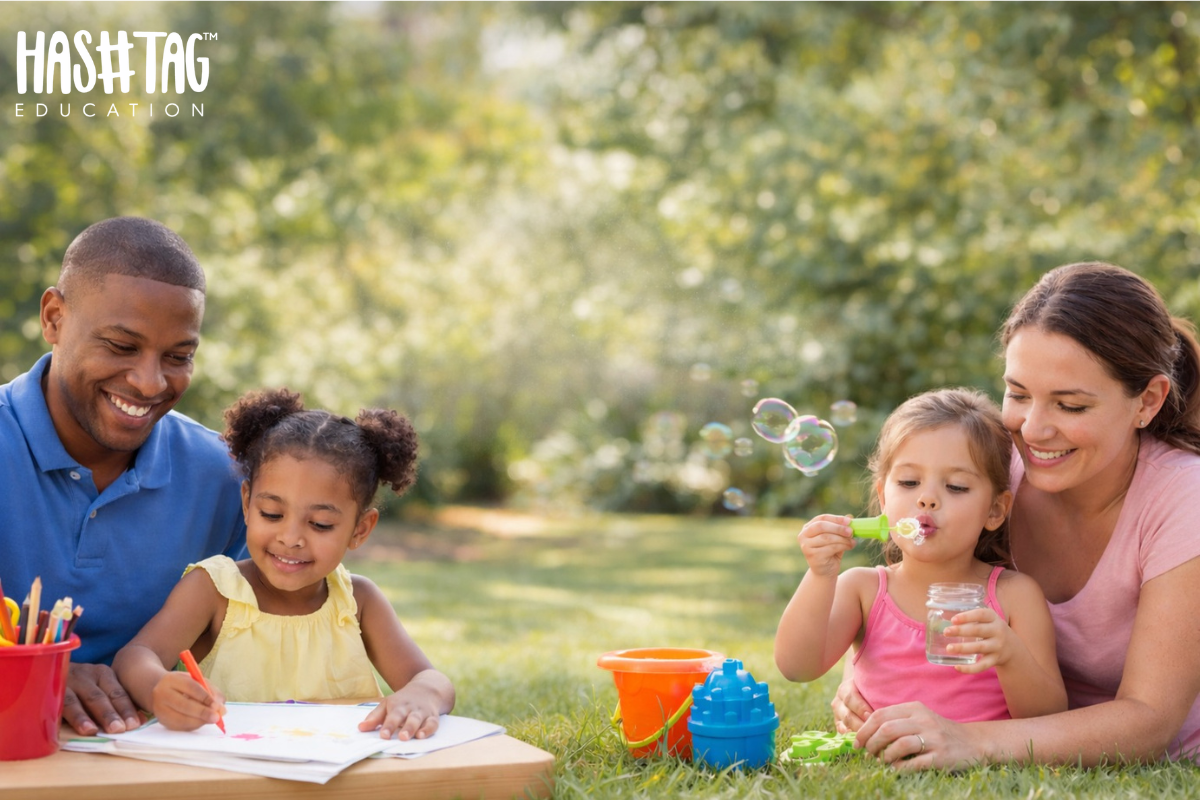
Summer Learning Activities That Make Preschoolers Happy
Summer Learning Activities That Make Learning Fun at Home Summer Learning Activities may be seen as quite a task by parents, particularly during the extended Indian holidays. For 6-8 weeks during the holiday, your children will be free from schooling, and it may not be easy for you to keep them engaged without them being on screen. However, there is hope in the sense that learning need not take place in a formal way even during the summer vacation period.The most effective Activities are those that are fun-filled, informal, and happen in your day-to-day routine. At this point, your children are likely to benefit more from learning in an enjoyable way. Why Summer Learning Activities Are Important Not all parents know that their kids lose their skills during summer holidays. This phenomenon is usually called the summer slide effect. Here comes the importance of Activities. Spending just 15-20 minutes on activities every day will allow you to help your child retain what he/she has learned at school. We want to emphasize that we do not intend to advance your kid in terms of his/her academic performance here. The purpose is only to help him/her strengthen some basic skills. Indoor Summer Learning Activities for Preschoolers 1. Daily Workbook Practice Allocate 15–20 minutes daily for workbook activities. The Summer Learning Activities will enable kids to remain in touch with their ABC’s and numbers. It should be fun; use sticker rewards or something similar to keep your child motivated. 2. Kitchen Learning Fun The kitchen offers plenty of learning opportunities. Have your child count the number of fruits, classify vegetables, or measure ingredients. These Summer Learning Activities help your child develop practical skills while turning everyday activities into fun tasks. Loved these ideas? Let’s bring them to life beyond the screen!Discover Blueberry workbooks & box sets designed for joyful, hands-on learning.🛒 Shop Now: https://hashtageducation.in/collections 3. Indoor Treasure Hunt Hide the flashcards and other items around the house and let your kid search for them.Summer Learning Activities provide exercise along with learning, making memory retention easier and enhancing recognition abilities. 4. Creative Craft Time Give your child paper, colours, and glue, and let them create freely. Craft-based Activities improve creativity, focus, and fine motor skills without feeling like structured learning. 5. Story Time Routine Reading together daily is one of the most effective activities. Ask questions, discuss pictures, and let your child imagine stories. This builds vocabulary and comprehension naturally. Outdoor Summer Learning Activities for Kids 6. Nature Observation Take your child for a morning or evening walk. Ask them to observe plants, birds, and their surroundings. These activities improve observation skills and curiosity. 7. Water Play Learning Water play is perfect for hot days. Use cups, bowls, and floating objects. These activities help children understand basic concepts like floating, pouring, and measuring. 8. Chalk Writing Practice Let your child draw letters, shapes, and patterns using chalk. These Summer Learning Activities build writing confidence in a fun and relaxed way. 9. Garden Learning Time If you have plants at home, involve your child in watering and observing growth. These Learning Activities teach responsibility and connect children with nature. 10. Evening Scavenger Hunt Create a simple list of things to find during a walk. These Activities make outdoor time more engaging and interactive. A Simple Daily Routine for Summer Learning Activities Creating a routine helps children stay consistent: Morning: Outdoor play or walk Mid-morning: Structured Activities Afternoon: Rest and quiet time Evening: Storytime and free play This balance ensures your child stays active without feeling overwhelmed. Avoid Overplanning Summer Learning Activities One common mistake parents make is over-scheduling. Too many Activities can make children tired or uninterested. Children also need free time to think, imagine, and explore on their own. A mix of 2–3 structured Learning Activities and plenty of free play is ideal. How Summer Learning Activities Build Essential Skills Regular Learning Activities help children: Build confidence Improve focus and attention Strengthen motor skills Develop curiosity and creativity These small daily efforts create a strong foundation for school readiness. Read Also: Early childhood education summer school gives children a great start to learning Common Questions About Activities How much time should my child spend? 15–20 minutes of daily Activities is enough for preschoolers. What is the best time for activities? Early morning and evening are best for Activities, especially during hot weather. Are summer camps necessary? Not necessarily. Home-based Learning Activities can be just as effective. Why Summer Learning Activities Create Lasting Growth in Children Summer is much more than just a break from school; it’s a valuable opportunity for connection, discovery, and meaningful learning. These moments spent together, whether through play, conversations, or simple activities, help shape your child’s confidence and curiosity. By following simple and consistent Summer Learning Activities, you can ensure your child continues to learn without feeling any pressure. The key is to make learning enjoyable and natural, so it becomes a part of everyday life rather than a task. When learning feels fun, children stay engaged, ask more questions, and develop a genuine love for exploring new things. These small, joyful experiences create strong foundations that support their growth in the long run. Remember, it’s not about doing more or adding extra pressure; it’s about doing the right things in the right way, with patience and consistency. Are You Incorporating Summer Learning Activities in Your Daily Life?
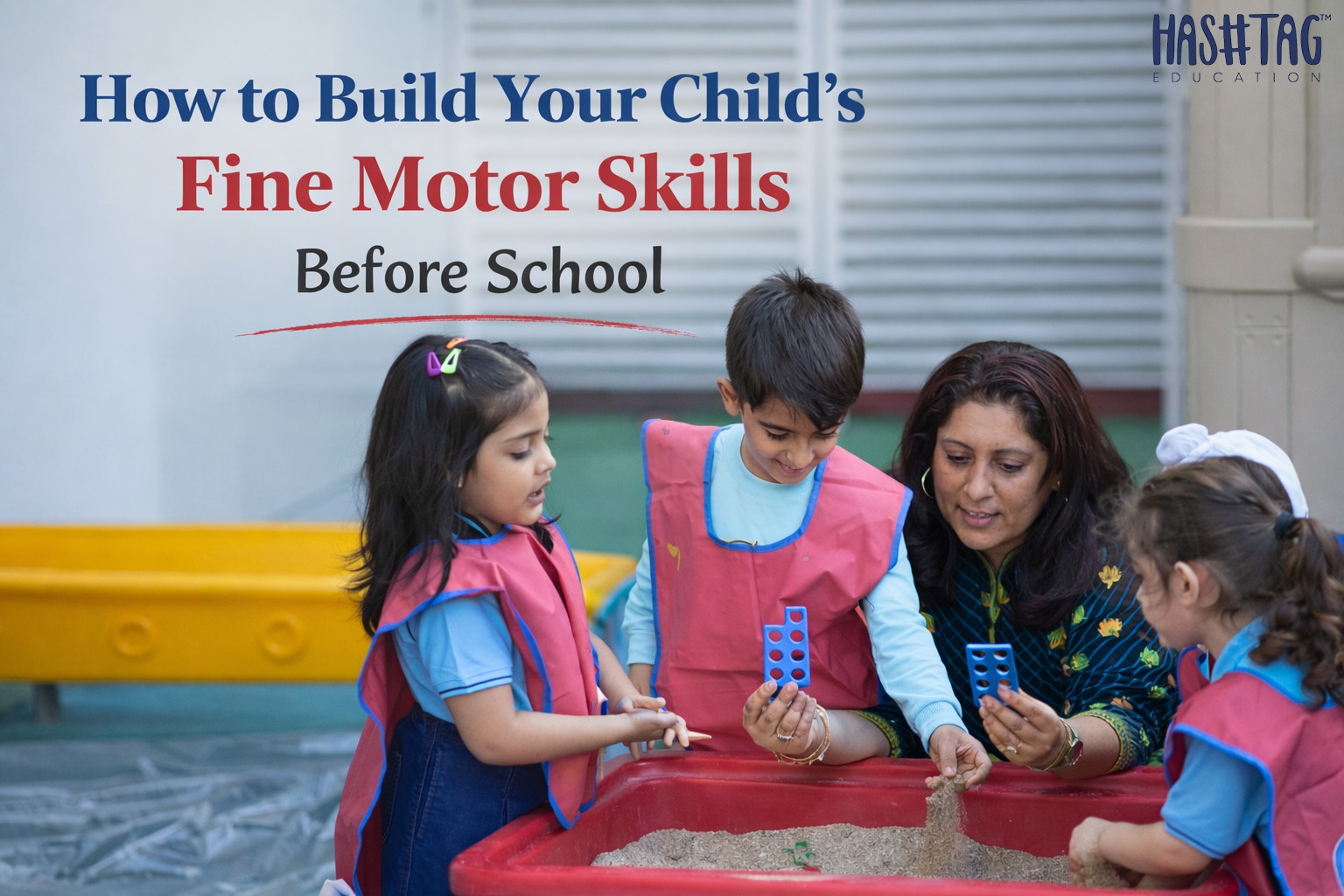
How to Build Your Child’s Fine Motor Skills Before School
Fine Motor Skills for Kids: Build Strong Hands Before School Starts Writing is not the beginning of developing fine motor skills. Children need to perform many smaller actions with their hands even before they start writing. For example, grabbing little objects, playing with clay, or turning book pages. All those small actions help develop the muscles necessary for writing. The earlier kids have good fine motor skills before entering kindergarten, the easier it will be for them to write, and they won’t struggle with that anymore. What are Fine Motor Skills? First, it is essential to understand what fine motor skills are. Fine motor skills include all hand movements, such as holding a spoon, putting on a sweater, or writing letters using a pencil. It is necessary to distinguish between gross motor skills and fine motor skills. Gross motor skills include larger movements like running, jumping, or climbing. The development period for fine motor skills falls between 1 and 6 years, but the key period is 2-5 years. Why It Matters For School Readiness If a child is starting school but has insufficient fine motor skills development, the child will have problems with writing, easily tire while writing, produce poor writing, and become demotivated. Educators have repeatedly noted that the primary difference between a school-ready and non-school-ready child is not in alphabet knowledge but in the ability to write easily. Age-by-Age Fine Motor Skills Development Ages 1–2: Establishing a foundation. This period is dedicated to learning how to grasp, release, and transfer objects from one hand to another. Activities: stacking 2–3 blocks, picking up small foods (Cheerios, peas) using a pincer grip, turning pages of board books, and scribbling with thick crayons. Ages 2–3: Developing strength in hands. At this point, your child is ready to perform more intricate activities. Activities: tearing paper into strips (fosters finger muscle strength), squishing and rolling playdough, finger painting with thick paints, and using our Dino English Workbook for finger tracing exercises. Loved these ideas? Let’s bring them to life beyond the screen!Discover Blueberry workbooks & box sets designed for joyful, hands-on learning.🛒 Shop Now: https://hashtageducation.in/collections Age 3-4: Controlling actions. Accuracy is achieved. Tasks: cutting along thick lines using child-safe scissors; colouring inside large lines; tracing dotted lines and simple shapes; using tweezers to grasp tiny items; assembling with smaller blocks and construction kits. We feature our Blueberry Level B books, which offer tracing and handwriting exercises suitable for this age group. Age 4-5: Preparing to write. Fine motor skills have become refined enough to form letters properly. Tasks: Forming letters correctly (start at the top); colouring inside small lines; cutting out complicated shapes; engaging in elaborate arts and crafts projects using glue and small components; working with our Blueberry Level C books, which include cursive letter patterns. Gradations in the Grasp of the pencil Don’t rush the child into using a mature grasp of the pencil. The development of pencil grasp proceeds gradually through different stages. 1-2 years old: fisted grasp (the whole hand is clenched around the pencil). It’s perfectly natural and acceptable. 2-3 years old: digital pronate grasp (finger posture, movements from the shoulder and elbow joints); don’t interfere in any way. Read Also: 10 Fun Learning Activities for 2-Year-Olds You Can Do at Home 3-4 years old: four-finger grasp (with four fingers plus a thumb); approaching the mature grasp position. 4-5 years old: tripod grasp (thumb plus two fingers); mature pencil grasp. Triangular pencils and special grips may facilitate this transition. 5 daily activites of develop fine motor skills without using any specific appliances Buttoning and unbuttoning clothes while getting dressed. Opening and shutting containers and jars. Pulling off stickers and sticking them carefully. Squeezing water out of a sponge while bathing. Using a child-friendly knife to spread butter or jam on bread. What should raise alarm signals? While each kid progresses differently, if your three-year-old cannot grasp a crayon, does not seem to have an interest in sketching or doodling, finds it difficult to grab tiny items, or shuns tasks involving the hands, then you should visit a paediatric occupational therapist for professional advice. Read Also: Activity ideas for playing and learning with your children Frequently asked questions Q: At what age should I expect my child to grasp a pencil correctly? A: The proper tripod grasp (thumb, index, and middle fingers) usually emerges around the ages of 4 to 5 years. Before that age range, less mature grasps are entirely typical and should not be pushed. Q: Does excessive tablet usage impact fine motor development? A: Yes. Swiping and pressing buttons require a completely different set of muscle groups compared to grasping, pinching, and writing. Children who spend too much time using tablets exhibit weaker hand control when entering school. Q: Which workbooks help develop fine motor skills? A: Choose workbooks that offer tracing exercises starting from basic straight lines to advanced shapes and letter forms. Our Blueberry series features precisely such a developmental progression at all three levels.
10 Fun Learning Activities for 2-Year-Olds at Home Now
10 Fun Learning Activities for 2-Year-Olds You Can Try at Home 10 Fun Learning Activities for 2-year-olds do not have to be difficult or require expensive materials. At this age, children are naturally curious and love to explore everything around them. The best way to support their growth is through fun learning activities that feel like play rather than structured learning. Simple tasks like sorting colours, playing with water, or exploring textures help build important skills like coordination, attention, and early thinking. With just a little time and everyday household items, you can create a space where your child learns happily and naturally through fun learning activities. Here are 10 fun learning activities for 2-year-olds that teach real skills using items you probably already have at home. ACTIVITY 1: COLOUR SORTING Materials: muffin tin and colourful items such as buttons, pom-poms, blocks, and crayons. How to play: Place coloured papers in each of the muffin slots and then let your kid sort the colours. Skills gained: colour recognition, classification, and fine motor skills. ACTIVITY 2: WATER POURING CENTRE Materials: plastic tray, cups, water pitcher, and water. How to play: Let your child pour water from one cup to another. You can use food colouring to make it more interesting. Skills gained: eye-hand coordination, attention span, and cause-and-effect relationships. ACTIVITY 3: SENSORY BIN DISCOVERY Materials needed: a big tub containing rice, pasta, or dried lentils, and also little toys, spoons, and cups. Activity: Allow your child to dig, scoop, pour, and discover objects in the bin. Skills developed: sensory processing, fine motor skills, vocabulary development. ACTIVITY 4: STICKY NOTES LETTER SEARCH Materials required: sticky notes and a marker. Activity: Write each letter on the sticky note and paste it somewhere within reach of the child. Call out a letter, and your child must locate it and remove it from its place. Skills developed: letter identification, auditory comprehension, gross motor skills. ACTIVITY 5: PLAYDOUGH SHAPEMAKING Ingredients: Play-Doh (homemade or commercially bought). Procedure: roll snakes, squeeze balls, flatten circles, and even attempt to make letters. Benefits: hand muscles for penmanship, creativity, and visual shape perception. If you enjoyed these fun learning activities, explore more engaging tools for your child.Continue the learning journey with our products.🛒 Shop Now: https://hashtageducation.in/collections ACTIVITY 6: PICTURE BOOK DISCUSSIONS Ingredients: Instead of just reading the story, sit with your child and talk about the pictures. Ask simple questions like “What is this?”, “What colour is it?”, or “What do you think is happening here?” These fun learning activities help build vocabulary, improve observation skills, and encourage children to think and express their ideas in their own words. ACTIVITY 7: STRINGING AND LACING Materials: Wooden beads or cut straws, and a shoelace or heavy thread. Activity: Your toddler should string the beads or pieces of straws onto the thread. Skills developed: Fine motor control, hand-eye coordination, and perseverance. ACTIVITY 8: BASIC PUZZLES Materials: Wooden puzzles with handles (4 to 6 pieces). Activity: Begin with sorting shapes and proceed to assembling pictures. In case of frustration with a particular puzzle, revert to a simpler one. Skills developed: Critical thinking, spatial skills, and perseverance. ACTIVITY 9: TRACE Materials: a workbook that offers tracing exercises or simple tracing lines drawn on paper. How to do it: help your child trace lines, curves, and zigzags. Begin with straight lines before doing curves. The tracing exercises offered in our Blueberry Level Workbooks are specifically made for kids of this age. Skills developed: pre-writing, pencil grip, and concentration. ACTIVITY 10: NATURE WALK & GATHERING Materials required: a plastic bag and nature. How to do it: go for a walk in your surroundings and gather items such as leaves, stones, flowers, and twigs. Sort them according to their colour and kind once back at home. Skills gained: observation, sorting, and vocabulary (knowing the names of the gathered objects). Why Fun Learning Activities Matter At this age, children learn best through play. These fun learning activities help build essential skills without pressure. They also make learning enjoyable and meaningful. WHERE TO FROM HERE? Once your child is comfortable with these 10 fun learning activities for 2-year-olds, you can slowly introduce structured learning through guided workbooks. COMMON QUESTIONS Q: How much time should be spent on educational activities for a 2-year-old? Approximately 10-15 minutes per learning session would be ideal. 2-3 sessions could be conducted with breaks in between for play. Q: Is it good for my child to watch something on the TV screen for educational purposes? According to the Indian Academy of Paediatrics, the recommended maximum screen time for children under 2 years is zero. From 2-3 years of age, it should not exceed 30 minutes a day. Read Also: Play-based learning activities for children aged 3 to 10 Q: Does not show any interest in workbooks. Is it fine? Yes, start with play-based fun learning activities and introduce them slowly.
Fun Learning Activities at Home: Try These 5 Easy Ideas
Fun Learning Activities That Make Learning Easy at Home You might think that fun learning activities at home require a lot of planning and effort. However, the best learning opportunities sometimes take place when children are in a casual and joyful state. When children feel free to explore, play, and dream, they start to learn without even knowing it. As parents, we always feel the necessity to plan and create learning opportunities for our children. However, children sometimes do not require such planning. What they actually require is to be engaged, to interact, and to be creative. A few learning activities at home will turn every moment into a learning experience. What’s more? Your child will enjoy every moment without feeling a single burden. 5 Fun Learning Activities at Home for Kids Here are five fun learning activities at home for kids that can easily become part of your daily routine: 1. Storytelling and Pretend Play Children are natural storytellers and love listening to stories. But they love telling their own stories even more. You can sit with your child and build a story together or have your child play different roles with toys or objects. These fun learning activities at home are effective for improving your child’s imagination skills and can greatly contribute to their development. It is also a way for children to express their thoughts and feelings in a creative way. Storytelling can greatly contribute to communication skills and learning. 2. Drawing and Creative Time You can give your child paper and crayons or colors and let them draw whatever they want. You should not interfere or correct them. Let them be creative. Drawing is one of the most fun and relaxing learning activities at home. It will allow your child to express what they feel. Besides, it will also allow them to be independent and confident. Ready to make learning more meaningful at home?Blueberry workbooks & box sets help children learn, create, and grow with joy.🛒 Shop Now: https://hashtageducation.in/collections 3. Counting and Sorting Games You don’t have to go out and buy things to conduct counting and sorting games. You can use things you have at home. For instance, you can use fruits or toys. Your child will be able to learn the numbers using the things they love. These fun learning activities at home will allow your child to learn the basics of mathematics in a creative and fun manner. Besides, it will also allow them to exercise their observation skills. 4. Puzzles and Matching Games These games are also great at keeping children engaged. These might seem to be just playing, but they require a lot of brainwork. These fun learning activities at home will also enhance the memory power and patience of the child. They will learn to concentrate on the task and feel a sense of achievement when they complete it. 5. Outdoor Exploration If there is access to an outdoor area, take your child out. Ask them to observe the plants, birds, or even the sky. Ask your child simple questions such as, “What do you see?” or “Why do you think this happens?” These will become wonderful, fun learning activities at home, and the child will start to understand things. They will start to develop a natural interest in learning. Why Fun Learning Activities at Home Matter Children don’t need to be told they need to learn; they need the right environment. When you include fun learning activities at home in your daily routine, children will learn that it is not only okay to learn, but it is actually fun. Learning activities at home help children build their confidence, enhance their thinking skills, and develop their inquisitive nature. Children will learn to explore, think critically, and solve problems independently. All these small learning experiences will eventually lay the foundation for their academic and personal development. Learning is actually fun. When children learn in a fun way, they will be motivated to learn more. Read Also: 5 fun ideas for learning through play Creating Meaningful Learning Moments at Home You don’t need a perfect setup to support your child’s development. The most important thing is your presence and participation. Even a few minutes of focused interaction can make a big difference. When children feel supported and encouraged, they become more confident and willing to take on new challenges. These fun learning activities at home are not just for learning. These fun learning activities are for creating a strong bond between you and your child while helping your child develop. A Thought for Parents Are you spending time on these fun learning activities at home every day? Sometimes, even small moments of playtime, talking, and exploring together can have a big impact on your child’s future.