
Interactive Learning Games India: 10 Powerful Yet Overlooked Smart Picks
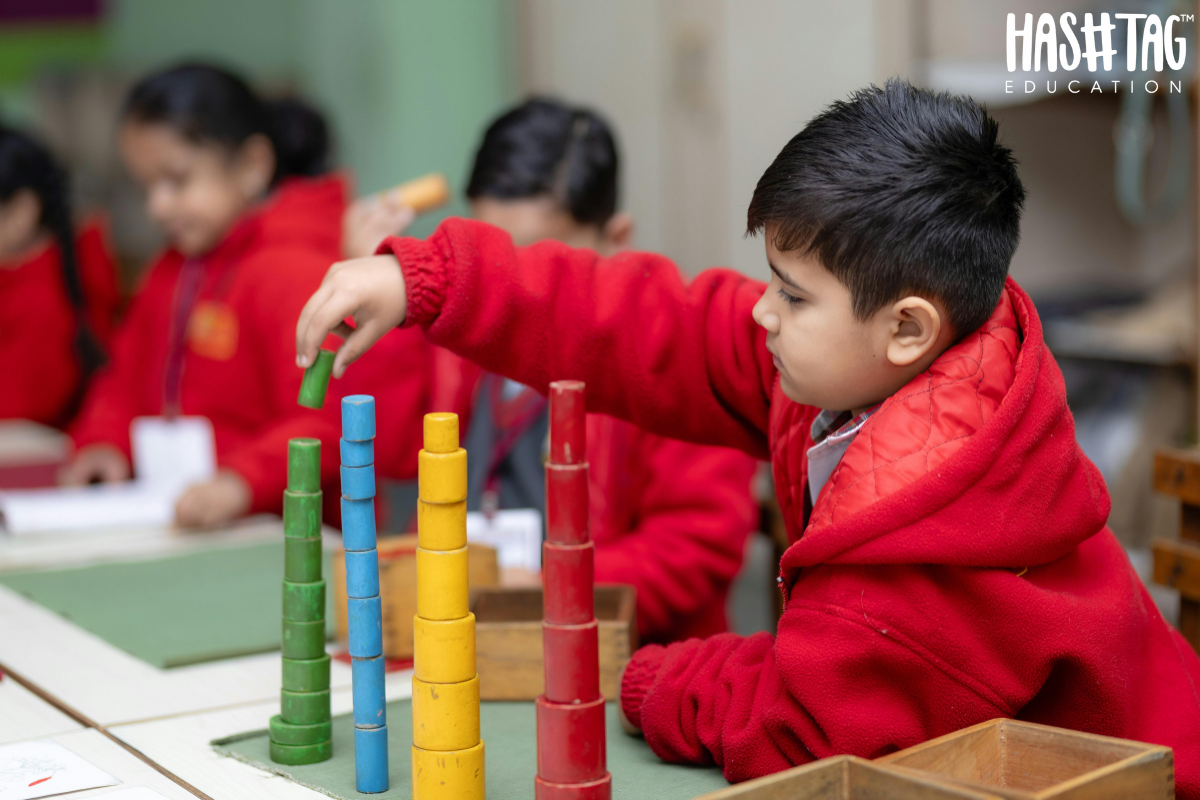
Interactive Learning Games India: 10 Games That Actually Teach Interactive learning games for preschoolers online in India are everywhere app stores overflow with thousands of options, and every preschool platform claims to offer educational games. But parents who download randomly quickly discover that most interactive learning games for preschoolers online in India are either disguised advertisements, dopamine-driven engagement traps with no learning value, or poorly designed activities that confuse rather than teach. The difference between a genuinely educational game and a time-wasting app comes down to three factors: intentional design (each game targets a specific skill), appropriate difficulty (calibrated to the child’s developmental stage), and meaningful feedback (the child learns from mistakes rather than just being told wrong). Here are 10 types of interactive learning games for preschoolers in India that meet all three criteria, along with what each one actually teaches your child. What Makes a Game Educational vs Just Entertaining Before we list the games, let us establish the criteria. A genuinely educational interactive learning games experience for preschoolers should target a specific developmental skill (not just keep the child busy), increase in difficulty as the child progresses (adaptive challenge), provide feedback that helps the child understand errors (not just a buzzer sound), have a clear beginning and end (not infinite scrolling), and avoid ads, in-app purchases, and auto-play features. Our Treasure Chest interactive learning games are designed against all five criteria. Each of these interactive learning games is mapped to a specific learning outcome in our curriculum. 10 Types of Interactive Learning Games That Build Real Skills Game Type 1: Sorting and Classification Games What the child sees: drag colourful objects into matching groups. What the child learns: categorical thinking, visual discrimination, and the foundation of mathematical sets. Why it matters: Sorting is a pre-mathematical skill. A child who can sort objects by colour at age 3 develops stronger algebraic thinking by age 7 because both skills require recognising patterns and rules within groups. Game Type 2: Pattern Completion Games What the child sees: a sequence of shapes or colours with a missing piece. What the child learns: pattern recognition, prediction, and logical reasoning. Why it matters: patterns are the basis of mathematics, music, language, and scientific thinking. A child who can complete red-blue-red-blue-? At age 3, is building the neural infrastructure for understanding multiplication tables at age 7. Game Type 3: Phonics Matching Games What the child sees: pictures paired with letter sounds. Match the picture to its starting sound. What the child learns: phonemic awareness, the ability to hear and identify individual sounds within words. Why it matters: Phonemic awareness is the single strongest predictor of reading success in every language. Games that connect sounds to visual objects make this abstract skill concrete and memorable. Ready to make learning more meaningful at home?Blueberry workbooks & box sets help children learn, create, and grow with joy.🛒 Shop Now: https://hashtageducation.in/collections Game Type 4: Counting and Quantity Games What the child sees: count the objects on screen and tap the correct number. What the child learns: one-to-one correspondence, number recognition, and number sense. Why it matters: Understanding that the symbol 5 represents five actual objects is the bridge between rote counting and mathematical comprehension. Games that connect visual quantities to number symbols build this bridge effectively. Game Type 5: Memory and Concentration Games What the child sees: flip cards to find matching pairs. What the child learns: working memory, sustained attention, and visual recall. Why it matters: Working memory is the mental workspace that all academic learning depends on. A child with strong working memory can follow multi-step instructions, hold ideas while processing new ones, and solve problems that require comparing information. Game Type 6: Sequencing Games What the child sees: arrange pictures in the correct order to tell a story. What the child learns: temporal ordering, narrative structure, and logical sequencing. Why it matters: sequencing is foundational to reading comprehension (understanding what happens first, next, and last), mathematical word problems, and scientific procedures. Read Also: Play-Based Learning Activities for Toddlers: 9 Powerful Yet Ignored Ideas Game Type 7: Shape and Spatial Games What the child sees: fit shapes into matching spaces, rotate pieces, build structures. What the child learns: spatial awareness, geometric understanding, and mental rotation. Why it matters: Spatial skills at age 4 are a stronger predictor of later STEM achievement than early maths or reading scores. Children who practise spatial thinking through games and puzzles develop stronger engineering, architecture, and mathematical reasoning. Game Type 8: Vocabulary Building Games What the child sees: pictures of objects with spoken names. Tap the correct picture when you hear the word. What the child learns: receptive vocabulary (understanding spoken words) and the connection between spoken and visual language. Why it matters: Vocabulary size at school entry is one of the strongest predictors of academic success across all subjects. Children learn vocabulary fastest when words are connected to visual images in a meaningful context. Game Type 9: Creative Expression Games What the child sees: digital colouring, drawing, or music-making tools. What the child learns: creative thinking, fine motor control (even on a touchscreen), colour awareness, and self-expression. Why it matters: Creativity is not a luxury; it is a foundational cognitive skill. Children who regularly engage in creative activities develop more flexible thinking, stronger problem-solving, and greater resilience when faced with novel challenges. Game Type 10: Comparison and Measurement Games What the child sees: Which is bigger? Which is taller? Which has more? Which is heavier? What the child learns: comparative thinking, measurement concepts, and mathematical vocabulary (more, less, bigger, smaller, taller, shorter, heavier, lighter). Why it matters: Comparison is the bridge between concrete observation and abstract mathematical reasoning. Before a child can understand that 7 is greater than 3, they need to understand that this pile has more than that pile. How to Use Interactive Learning Games Effectively Limit game sessions to 10 to 15 minutes for children aged 3 to 5. Sit with your child during gameplay and
How to Teach 2 Year Old at Home Without Pressure: 8 Powerful Gentle Ways
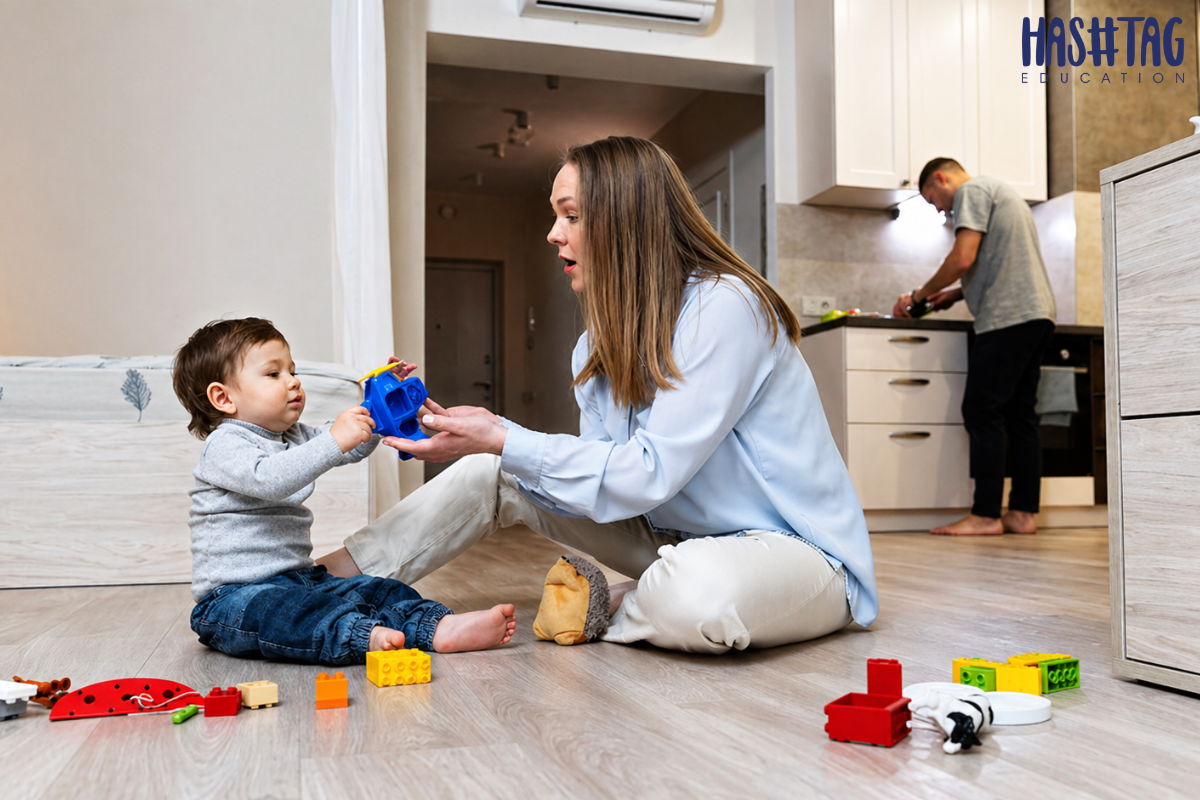
How to Teach 2 Year Old at Home Without Pressure: India: A Gentle Guide for Parents How to teach 2 year old at home without pressure in India is a question that reveals a beautiful paradox in modern Indian parenting. Parents desperately want their children to learn, yet increasingly recognise that traditional methods of pressure, repetition, and early academic drilling often do more harm than good. If you are searching for how to teach 2 year old at home without pressure, you are already ahead of most parents. You understand that learning and pressure should never coexist in a toddler’s world. The challenge is practical: what does pressure-free teaching actually look like? How do you ensure your 2-year-old is developing on track without resorting to flashcard drills, alphabet recitation, and forced sitting? This guide on how to teach 2 year old at home without pressure in India gives you 8 specific, gentle approaches backed by developmental research. Why Pressure Backfires at Age 2 When thinking about how to teach 2 year old at home without pressure India, it’s important to first understand what a child’s brain can realistically handle at this age. A 2-year-old’s brain is not designed for formal instruction. The prefrontal cortex, the part responsible for attention, rule-following, and impulse control, is still developing. Expecting a toddler to sit still, focus on a worksheet, and give correct answers is asking their brain to do something it simply isn’t ready for. This is exactly why the approach behind how to teach 2 year old at home without pressure in India matters so much. When you push a child beyond their developmental capacity, the brain goes into stress mode. Cortisol floods in, slowing down memory (hippocampus) and activating fear (amygdala). The child doesn’t learn the alphabet; they learn that learning feels stressful. And that feeling can stay for years. Research from the National Institute of Mental Health and Neurosciences in Bangalore reinforces this idea. Children raised with pressure-free learning routines scored 23% higher in school readiness. This clearly shows how to teach 2 year old at home without pressure is not just a parenting preference; it’s backed by science and leads to better long-term outcomes. 8 Pressure-Free Ways to Teach Your 2-Year-Old Way 1: Narrate Everything The simplest and most powerful teaching tool is your voice. Narrate your actions throughout the day. Now I am washing the red tomatoes. One, two, three tomatoes. They feel smooth and cool. Can you feel them? This running commentary exposes your child to vocabulary, sentence structure, counting, colour names, textures, and temperatures, all without any formal instruction. Research shows that children who hear 2,000 or more words per hour develop vocabularies that are 30% larger by age 3 compared to children in quieter environments. You do not need flashcards. You need to talk. Way 2: Follow Their Interest If your child is obsessed with cars, teach through cars. Count the wheels. Name the colours. Line them up by size. Compare big and small. Create a car-wash sensory bin. Read books about vehicles. This is a great example of how to teach 2 year old at home without pressure, because following a child’s natural interest ensures intrinsic motivation they want to learn because the topic fascinates them, not because an adult is making them. Ready to make learning more meaningful at home?Blueberry workbooks & box sets help children learn, create, and grow with joy.🛒 Shop Now: https://hashtageducation.in/collections/box-set Way 3: Embrace Messy Play Finger painting, playdough squishing, water pouring, sand digging, rice bin exploring, and messy play is where the deepest learning happens at age 2. The multi-sensory input creates stronger neural connections than any screen or worksheet. Yes, it requires cleanup. The cleanup takes 5 minutes. The neural development it produces lasts a lifetime. Way 4: Read Together Daily Not as a lesson. Not with comprehension questions. Just as a warm, close, shared experience. Point to pictures. Name things. Make animal sounds. Let your child turn pages even if they skip half the book. The goal is not reading instruction. It is creating a positive emotional association with books that will drive independent reading motivation for years to come. Our Dino series picture books are designed for exactly this age, with bold illustrations, minimal text, and thick pages sized for toddler hands. Read Also: Indian Festivals Activities for Kids: 9 Powerful Yet Ignored Ways Way 5: Sing Songs and Rhymes Musical learning is one of the most effective and least pressured forms of education. Nursery rhymes teach counting (One Two Three Four Five, Once I Caught a Fish Alive), vocabulary (Twinkle Twinkle Little Star introduces words like wonder, diamond, and sky), phonological awareness (rhyming patterns build the sound discrimination needed for reading), and memory (melody creates stronger recall than spoken repetition). Our Go Learn Rhymes and Stories courses use this approach with age-appropriate, animated musical content. Way 6: Let Them Help With Real Tasks A 2-year-old can put clothes in the laundry basket, wipe a table with a sponge, put toys back in a box, water a plant, and hand you items while cooking. These are not chores; they are practical life activities that build motor skills, sequencing ability, responsibility, and confidence. A child who helps feels capable. A child who is excluded from real tasks feels that their contribution does not matter. Way 7: Play Together on the Floor Get down to their level. Build a block tower and let them knock it down (cause and effect). Roll a ball back and forth (turn-taking). Hide a toy under a cup and find it (object permanence). Chase each other around the room (gross motor development). Floor play is where attachment, learning, and joy intersect. Ten minutes of fully present floor play teaches more than an hour of instructional video. Way 8: Use Workbooks as Play, Not Tests Our Blueberry Level A and Dino series workbooks are designed for parent-guided interaction at this age. Sit together. Open a page. Point to the pictures. Trace the
Online Learning Courses for Nursery Kids India: 7 Smart Powerful Checks
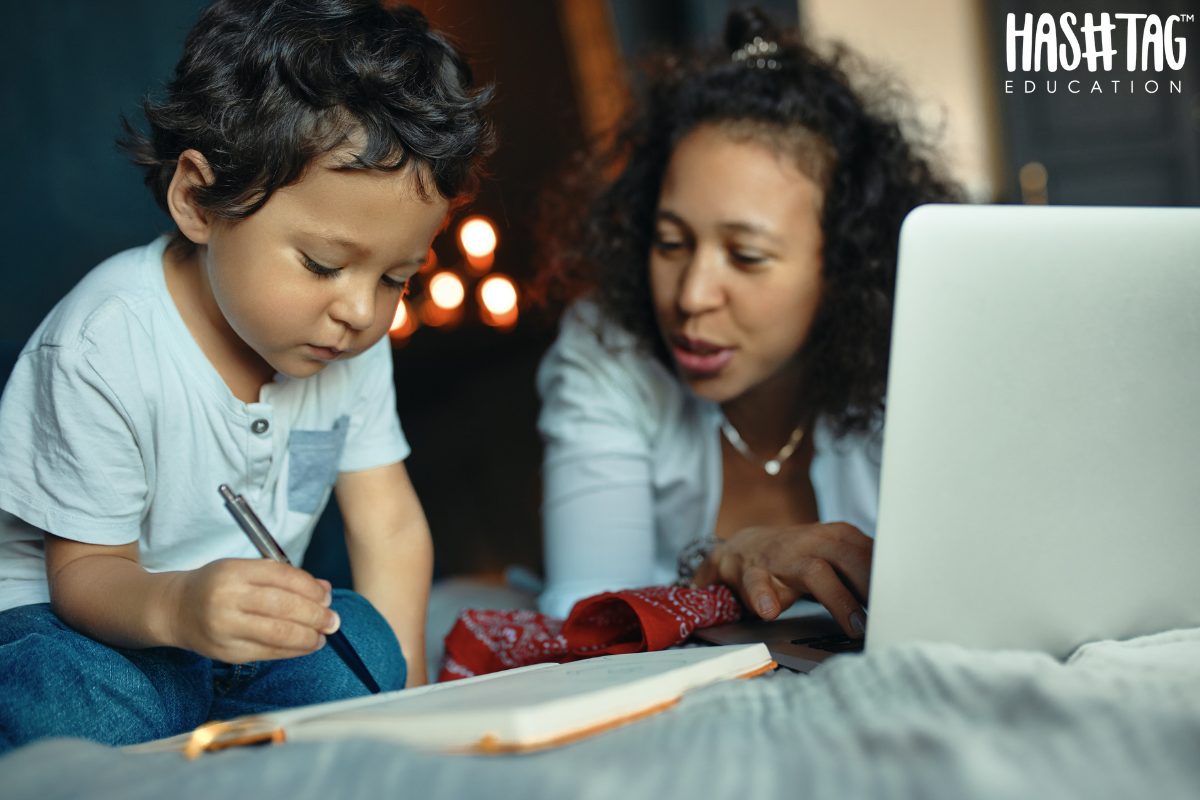
Online Learning Courses for Nursery Kids India: What to Check Online Learning Courses for Nursery Kids India have exploded in number since 2020, and the market is projected to reach USD 15 billion by 2035, according to Expert Market Research. But when it comes to Online Learning Courses for Nursery Kids, quantity does not always mean quality. For every thoughtfully designed learning platform, dozens of apps are little more than animated flashcard drills disguised as interactive learning. The difference matters enormously for your 2 to 3-year-old, because the wrong digital learning experience can create screen dependency, reduce attention spans, and build negative associations with education. This is why choosing the right Online Learning Courses for Nursery Kids becomes so important. This guide helps you evaluate any platform, including ours, using 7 evidence-based criteria that separate genuine educational value from marketing polish and help you make better decisions around Online Learning Courses for Nursery Kids. The Current Landscape of Online Preschool Education in India The Indian preschool market is undergoing a fundamental transformation. NEP 2020 officially recognises the foundational stage (ages 3 to 8) as part of the formal education framework, and parents are increasingly seeking structured learning options that extend beyond the classroom. The COVID-19 pandemic accelerated digital adoption among even traditionally screen-averse families, and that shift has proven permanent. But the critical question remains: what makes an online course genuinely beneficial for a nursery-age child versus merely entertaining? Read Also: Play-Based Learning Activities for Toddlers: 9 Powerful Yet Ignored Ideas 7 Things to Check Before Enrolling Check 1: Is It Curriculum-Aligned or Random? The most important question. A genuine online learning course for Nursery Kids should follow a clear, structured curriculum covering language (English and Hindi), early maths (counting, shapes, patterns), environmental awareness, creative expression, and social-emotional skills. When choosing Online Learning Courses for Nursery Kids, make sure each module builds step by step. If activities feel random, it’s entertainment, not real learning. Many Online Learning Courses for Nursery Kids miss this balance, focusing only on engagement. The best ones combine structure with play. Our Go Learn platform is built as structured Online Learning Courses for Nursery Kids, with progression that matches each child’s developmental stage. Check 2: Is the Content Play-Based or Drill-Based? Watch a sample lesson carefully. If it shows a letter and asks the child to repeat it 10 times, that is drill-based learning, effective for rote memorisation but damaging for long-term motivation. If it introduces a letter through a story, a game, a song, and a hands-on activity, that is play-based learning aligned with both NEP 2020 and global best practices in early childhood education. Inspired by these ideas? Let your child practice them in a fun way!Explore Blueberry workbooks that turn concepts into engaging activities.🛒 Shop Now: https://hashtageducation.in/collections/box-set Check 3: What Is the Recommended Screen Time Per Session? Any platform that expects a nursery-age child to sit in front of a screen for 30 or more minutes at a stretch is not designed by early childhood educators. The World Health Organisation recommends a maximum of 1 hour of total screen time per day for ages 2 to 5. Quality online courses for nursery kids should have modules of 10 to 15 minutes maximum, with clear stopping points that encourage the child to move to offline activities. Check 4: Does It Require Parental Co-Viewing? This is a crucial differentiator. The best online learning platforms for young children are designed for parent-child interaction, not passive solo viewing. If a platform markets itself as something your child can do alone while you cook dinner, it is optimising for parental convenience, not educational effectiveness. At nursery age, the adult’s role as a co-viewer and discussion partner is what transforms screen time from passive consumption to active learning. Check 5: Does It Connect to Physical Learning? Digital learning is most effective when it reinforces and extends physical, hands-on activities. The best platforms suggest offline follow-up activities, connect to physical workbooks or materials, and provide downloadable worksheets for paper-based practice. Our platform is specifically designed to complement the Blueberry workbooks online courses, which reinforce what children practise on paper, creating a complete learning loop. Check 6: Is the Content Culturally Relevant? An Indian nursery child should learn through Indian contexts, Indian festivals, Indian languages, Indian food, Indian animals, Indian family structures. International platforms often use Western cultural references that Indian children do not recognise, creating a disconnect between learning content and lived experience. Check whether the platform uses culturally relevant examples and offers bilingual Hindi-English content. Check 7: What Is the Assessment Method? Avoid platforms that test nursery children with formal quizzes, scores, or pass-fail assessments. NEP 2020 explicitly discourages formal assessment before age 8. Quality platforms use observation-based progress tracking, milestone markers, and parent reports that show developmental progress without creating performance pressure. Red Flags That Should Make You Walk Away Any platform that promises your child will read by age 3 is using unrealistic marketing. Any platform that requires more than 20 minutes of continuous screen time for children under 4 is not designed by educators. Any platform that has no human-designed curriculum and relies entirely on AI-generated content is cutting corners on educational quality. Any platform that does not clearly state its pedagogical approach is likely making it up as they go. How Our Platform Measures Up We built learning.hashtageducation.in against every criterion on this list. Our courses follow a structured, curriculum-aligned progression across 4 age groups. Content is play-based with interactive games, animated stories, and guided activities. Sessions are designed for 10 to 15 minutes with offline activity suggestions. Parental co-viewing is encouraged and supported. The platform connects directly to our Blueberry physical workbook series. All content uses the Indian cultural context with bilingual English-Hindi options. And assessment is milestone-based, not exam-based. Read Also: Activities for children to learn at home Making the Right Choice Online learning courses for nursery kids in India are not all created equal, and the platform you choose can shape
Play Based Learning Activities for Toddlers: 9 Powerful Yet Ignored Ideas
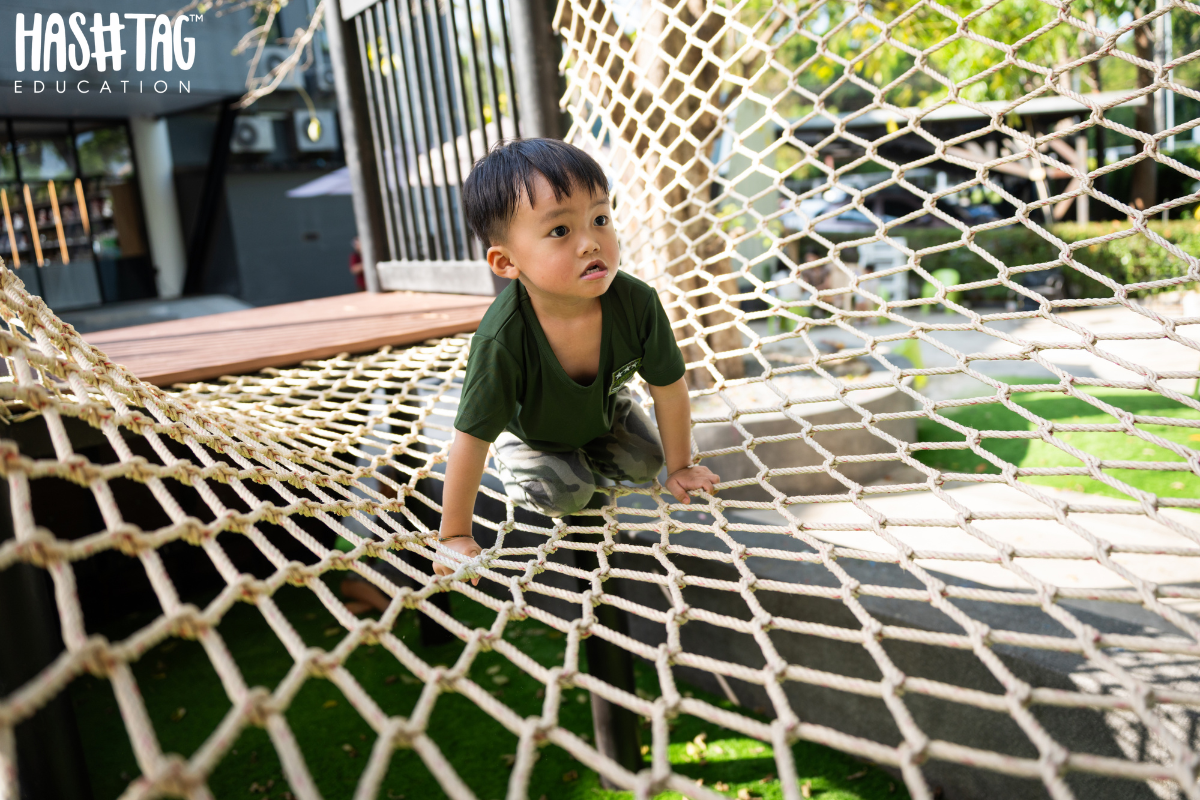
Play Based Learning Activities for Toddlers: The Complete Parent Guide Play based learning activities for toddlers have become one of the most searched topics among new-age Indian parents, and for good reason. In fact, Play Based Learning Activities for Toddlers at Home in India are now being widely recommended by educators and child development experts. The National Education Policy 2020 officially recognises play as the primary vehicle for early childhood development, and developmental psychologists have spent decades confirming what every observant parent already knows: children learn more deeply, more joyfully, and more permanently when they learn through play. But here is the challenge. Most Indian parents understand the concept of play-based learning in theory, yet struggle to implement it at home. The gap between knowing that play matters and knowing how to structure play for learning is where most families get stuck. This guide bridges that gap with 9 specific, research-backed activities you can start today using items you already have at home. Why Play Based Learning Works Better Than Drilling The science is straightforward. When a child is playing, their brain releases dopamine, the neurochemical associated with motivation, curiosity, and memory formation. When a child is being drilled or pressured, their brain releases cortisol, the stress hormone that actively inhibits learning and memory. This is not an opinion. This is neuroscience confirmed by institutions including NIMHANS Bangalore and AIIMS Delhi. Play based learning does not mean unstructured chaos. It means intentionally designed activities where the child experiences learning as play while the parent or educator knows exactly which developmental skill is being built. Our premium courses at learning.hashtageducation.in are designed on exactly this principle; every interactive module feels like a game to the child but follows a structured curriculum progression underneath. 9 Activities You Can Start Today Activity 1: The Sorting Station Gather 15 to 20 objects from around the house: buttons, spoons, clips, coins, and bottle caps. Give your child muffin tins or small bowls. Ask them to sort by colour, then by size, then by material. Sorting is the cognitive foundation of mathematical classification. A child who can sort objects by attributes at age 2 develops stronger pattern recognition at age 5. This single activity builds visual discrimination, categorical thinking, fine motor control, and concentration. Activity 2: Sensory Bin Exploration Fill a large container with dried rice or dal. Bury small toys, letters, or coins inside. Let your child dig, scoop, pour, and discover. Sensory play activates multiple neural pathways simultaneously: touch, sight, sound, and proprioception. Children who regularly engage in sensory activities show measurably better attention spans and emotional regulation compared to children who primarily engage with screens. Activity 3: Story Building With Props Gather 5 random household objects: a shoe, a cup, a leaf, a toy car, a spoon. Challenge your child to create a story that includes all 5 objects. This builds narrative thinking, vocabulary, creative expression, and sequencing, the exact skills that reading comprehension and written composition will later require. If your child is under 3, you build the story and let them add one element. If they are over 3, let them lead. Activity 4: Water Transfer Station Set up cups, bowls, a small jug, sponges, and a turkey baster on a tray. Let your child transfer water between containers using different tools. Water play is one of the most effective activities for developing hand-eye coordination, grip strength, and concentration. The varying tools (pouring from a jug versus squeezing a sponge versus using a baster) work different muscle groups that all contribute to pencil control later. Activity 5: Kitchen Counting During meal preparation, involve your child in counting. We need 4 tomatoes. Can you count them into the bowl? How many chapatis are on the plate? If I take one, how many are left? Kitchen counting teaches one-to-one correspondence, subtraction concepts, and estimation in a context that feels meaningful because the result is dinner. Activity 6: Obstacle Course Challenge Use cushions, chairs, blankets, and boxes to create a simple indoor obstacle course. Crawl under the table, jump over the cushion, walk along the tape line on the floor, throw the ball into the bucket. Obstacle courses build gross motor skills, spatial awareness, body coordination, and the ability to follow sequential instructions, a critical school readiness skill. Activity 7: Colour Mixing Discovery Give your child three cups of water with red, yellow, and blue food colouring plus empty cups and a spoon. Let them discover secondary colours through mixing. Red plus yellow makes orange. Blue plus yellow makes green. This is the scientific method in action: hypothesis, experiment, observation practised through play at age 2. Activity 8: Music and Rhythm Patterns Clap a simple rhythm and have your child copy it. Clap-clap-pause-clap. Then let them create a rhythm for you to copy. Rhythm games build auditory memory, pattern recognition, and turn-taking. Research consistently shows that children with strong rhythmic awareness develop stronger phonological skills, the foundation of reading. Activity 9: Nature Observation Journal Take a small notebook outside. Together, observe one thing: a flower, a bird, a cloud, an ant. Draw it (roughly). Name it. Describe its colour, size, and movement. This builds observation skills, descriptive vocabulary, fine motor control, and scientific thinking. Over weeks, the journal becomes a record of your child’s growing ability to notice and describe the world. How to Structure Play-Based Learning at Home The most effective approach is 2 to 3 structured play activities per day, each lasting 10 to 15 minutes. Anchor them to existing routines one after breakfast, one before lunch, one before dinner. Keep the rest of the day unstructured. Children need both guided play (activities with a learning intention) and free play (child-led exploration with no adult agenda). Read Also: Activities for children to learn at home The One Thing to Remember Play Based Learning Activities for Toddlers at home in India do not require expensive materials, formal training, or dedicated classrooms. In fact, the true strength of play-based learning lies in its
Indian Festivals Activities for Kids: 9 Powerful Yet Ignored Ways
Indian Festivals Activities for Kids Turn Celebrations into Real Learning Indian festival activities for kids are something we often overlook. We celebrate with sweets, clothes, and decorations, but children mostly just watch everything happen. And honestly, that’s a missed opportunity. Because for a young child, festivals are magical. The colours, the lights, the music, the food; it all captures their attention in a way no worksheet ever can. What if we used that excitement to help them learn? With just a little intention, Indian festival activities for kids can become moments where children not only enjoy celebrations but also understand them. Why Indian Festivals Activities for Kids Are the Best Teachers Kids don’t really learn by being told they learn by being part of something. And that’s exactly why Indian festivals activities for kids feel so natural and effective. Think about how a festival looks through a child’s eyes. There are bright colours everywhere, music playing in the background, delicious food being prepared, and stories being shared. It’s not a lesson but somehow, it becomes one. Festivals are full of: Colours and designs that spark curiosity Sounds and music that build rhythm and memory Stories and traditions that introduce values Food and cooking that bring hands-on learning When you let your child join in, instead of just watching, something shifts. Indian festivals activities for kids turn into real experiences touching rangoli colours, counting diyas, mixing ingredients, listening to stories. And through all of this, learning happens quietly in the background. 9 Indian Festivals Activities for Kids That Actually Work No special arrangements are needed. These are practical ideas that you can apply instantly. 1. Diya Counting During Diwali Do not only decorate with diya, but also get involved in counting with your children. Firstly, lay down some diyas and count out loud: “One, two, three…” Afterwards, take out some diyas and ask: “How many do we have left?” You just transformed an innocent decoration into an exercise in maths without making learning too apparent. 2. Holi Colour Mixing Fun Mixing colors before Holi, sit with your child and ask questions. “What will happen if we mix red and yellow colors?” If the child sees the orange color appearing, it seems magical. Furthermore, once he/she plays Holi, he/she will have a deeper understanding of all the colors used at festivals. Loved these ideas? Let’s bring them to life beyond the screen!Discover Blueberry workbooks & box sets designed for joyful, hands-on learning.🛒 Shop Now: https://hashtageducation.in/collections/box-set 3. Pookalam For Onam Do not worry about any special design or arrangement. All you need is to gather some flowers and make a beautiful pookalam out of them. Your child will place flowers in their place, and in this way, they will improve patience and creativity. 4. Rakhi Making at Home Instead of buying rakhis, try making simple ones. Use thread, beads, or even paper. Let your child: Count the beads Choose colours Create patterns It’s creative, meaningful, and personal. 5. Watching the Moon Before Eid Take a few minutes in the evening to look at the sky. Ask:“Is the moon bigger today or smaller?” You can even draw it together. This simple habit builds observation skills and curiosity without any pressure. 6. Christmas Craft Time Make paper stars or decorate a small tree together. Let your child cut, paste, and decorate. You can casually talk about shapes, sizes, and colours while doing it. Learning feels natural because it’s part of the activity. 7. Dancing During Navratri Play garba or dandiya music and just dance. Clap, move, laugh, no rules needed. You can even count steps together. It’s one of those Indian festival activities for kids where learning, movement, and joy all come together. 8. Cooking Festival Food Together Children love being in the kitchen. During festivals, involve them in simple ways: Mixing ingredients Counting items Watching food change They don’t just learn, they feel included. 9. Storytelling That Makes Festivals Meaningful Every festival has a story. Instead of explaining everything, keep it simple. Use pictures, toys, or expressions. Ask questions like:“Why do you think people lit diyas?” When children connect stories with celebrations, festivals start to make sense. What Children Actually Learn Through Indian Festivals Activities for Kids What looks like play is actually deep learning. Through these moments, children develop: Basic maths (counting, patterns) Science (mixing, observing) Language (stories, conversations) Emotional understanding (traditions, values) That’s why Indian festival activities for kids are so much more effective than formal teaching. Read Also: Activities for children to learn at home A Small Shift That Makes a Big Difference Most parents don’t do anything wrong; we just miss the chance to involve children. Instead of: “Don’t touch this.” “Just watch” Try: “Come help me.” “What do you think?” That one shift changes everything. Why Indian Festival Activities for Kids Matter for Your Child’s Growth Indian festival activities for kids are not about teaching everything perfectly; they are about creating meaningful, joyful memories that children carry with them as they grow. When children are actively involved, they don’t just celebrate festivals; they begin to understand them more deeply. Through simple and engaging Indian festival activities for kids, children connect naturally with culture, traditions, and family values. These hands-on experiences help them feel included, curious, and emotionally connected, something no textbook can truly offer. Over time, these small shared moments turn into strong memories. And those memories shape how children see their roots, their traditions, and their place in the world. That’s the real power of Indian festival activities for kids: they make learning personal, meaningful, and lasting. Because in the end, festivals are not just about rituals or routines. With the right Indian festival activities for kids, they become about experience, connection, and the joy of growing up surrounded by culture.
Phonics for Beginners: Powerful Yet Ignored Way to Make Reading Click
Phonics for Beginners Begins with Sounds, Not Letters Phonics for Beginners is usually misinterpreted by many parents. They believe that reading involves starting off with A, B, C, but this is not entirely accurate. Reading begins with sounds. In order to be able to read the word “cat,” the kid must first learn that cat consists of three distinct sounds: kuh, ah, tuh. The ability to recognize these sounds and manipulate them is known as phonemic awareness. In other words, reading actually begins with phonemic awareness. In other words, learning about phonics means learning about sounds, not letters. The good news is that it does not have to be boring at all; learning through play will work. Why Phonics For Beginners Matters More Than You Think Children don’t become confident readers by memorising words. They become readers by decoding sounds. That’s why Phonics for Beginners is so important. It helps children: Recognise sounds in words Blend sounds to form words Break words into smaller parts Build confidence while reading Without this foundation, reading becomes guesswork. With it, reading becomes natural. Fun Phonics For Beginners Games That Really Work The following games are easy, enjoyable, and require no additional resources whatsoever. 1. I Spy with Sounds Rather than saying “I spy something that begins with B,” use the actual sound: “I spy something that begins with buh…” Your child will need to try to guess what they are: a ball, a book, or a bag. This game develops listening skills and is a wonderful introduction to Phonics for Beginners. 2. Stretch the Word Say a word by prolonging each sound separately: “mmmm-aaaa-ppp…” Your child needs to guess what you are saying: map. This game helps develop blending skills – one of the most important phonics skills for beginners. If you found this helpful, explore our Blueberry workbooks!Designed for children at different levels to learn side by side🛒 Shop Now: https://hashtageducation.in/collections 3. Rhyme Time Begin with a simple word such as cat. Take turns finding rhymes: hat, bat, mat Developing rhyme skills helps children recognize phoneme patterns that make Phonics for Beginners predictable and easy. 4. Clap the Sounds Say a word out loud and clap for each sound separately. Dog three claps Ship three claps (as sh represents one phoneme). This game promotes sound recognition skills while remaining very engaging. 5. Odd One Out Say three words: cat, car, dog. Which one sounds different from the others? This game promotes comparing skills that require more effort but provide Phonics for Beginners with valuable results. 6. Mystery Sounds Place different objects inside a bag. Pick an object from the bag and pronounce the sounds slowly: “p-e-n” Can your child tell what word is being pronounced? Have your child guess. This activity is beneficial for listening and pronunciation when learning Phonics for Beginners. 7. Change Sounds to Create New Words Start with one word: “cat.” Change the beginning sounds of that word: “bat,” “hat” Children will learn that different sounds create new words in Phonics for Beginners. 8. Songs to Teach Phonics for Beginners Singing is another way of learning and remembering things. Phonics for Beginners can be learned through simple actions and songs with catchy tunes. When To Start Phonics For Beginners You don’t need to wait for school. Ages 2.5–3: Start with sound games Ages 3.5–4: Introduce letters with sounds 4+ years: Begin simple reading Starting early with Phonics for Beginners helps children feel confident instead of pressured later. Read Also: Sensory Play Ideas for Toddlers: Powerful Yet Overlooked Brain Booster Things That Can Go Wrong Many well-meaning parents unintentionally make phonics more difficult than necessary. Here’s what NOT to do: 1. Start with the alphabet before sounds 2. Focus on memorisation 3. Make learning mechanical 4. Insist on fast results The easiest way to teach phonics is through fun activities. How To Turn Phonics Into A Daily Routine There is no special study schedule required. Integrate Phonics for Beginners into your daily routine: While traveling in a car → play sound games At mealtimes → identify rhyme words Playing games → identify objects by sound Tiny moments equal major learning experiences. Read Also: Activities for children to learn at home Long-Term Advantages Of Phonics For Beginners Children who learn to read using the Phonics for Beginners approach: Read and comprehend more quickly Spell words correctly Experience greater confidence at school Enjoy reading All this proves that Phonics for Beginners is probably the most important part of early education. Conclusion Learning Phonics for Beginners is about more than just spending hours looking at flash cards and making your child repeat sounds. Phonics for Beginners helps children interpret language differently. Once children understand how language sounds, reading becomes easier and comprehensible. And when the entire process of learning becomes fun, children learn while having fun.
Kitchen Activities for Toddlers: 9 Powerful Learning Ways
Kitchen Activities for Toddlers: Turn Everyday Moments into Learning Kitchen activities for toddlers are one thing that most parents do not fully comprehend. The kitchen is a place that is always full of activities, which can result in injuries or even messes. It is only natural that we keep our toddlers from entering such an area. However, what many parents do not know is that the kitchen is among the most ideal places for your toddler to learn. How is that possible? Each time you prepare your meal, you use measurements, count the number of ingredients, mix them, and see how they change. That is mathematics, chemistry, and physics all mixed up in one place. All this becomes possible when you allow your toddler to participate in certain activities safely. Why Kitchen Activities For Toddlers Are So Powerful Children do not learn from commands; they learn by doing. And that is precisely why Toddler Kitchen Activities are so effective. When they pour, measure, sort, and count, they engage all their senses at once. They touch, see, hear, and even taste. It is a powerful way to learn. They will not be memorising things; rather, they will comprehend concepts. They will not hear about transformations; instead, they will witness those changes. And perhaps most importantly, they will feel engaged. They will feel valuable. 9 Kitchen Activities For Toddlers That Teach Real Skills Let’s look at simple, practical ways you can turn everyday cooking into meaningful learning. 1. Counting Ingredients Before you start cooking, take a moment to involve your child. “Let’s count the potatoes one, two, three!” This simple step builds early number understanding. It may seem basic, but this is where maths truly begins. With Kitchen Activities for Toddlers, numbers are not abstract; they are real and useful. 2. Measuring and Pouring Give your child a small cup and some rice or dal. Let them pour it into a bowl. They might spill a little, and that’s okay. What they’re learning is far more valuable: Quantity Volume Control These are early maths and motor skills combined in one simple activity. Inspired by these ideas? Let your child bring them to life through play! Explore Blueberry workbooks that turn learning into fun, engaging activities. 🛒 Shop Now: https://hashtageducation.in/collections 3. Sorting Vegetables Empty a basket of vegetables and ask your child to group them. “All tomatoes here… all potatoes there…” Then try sorting by colour or size. This builds classification skills, which are essential for logical thinking. And because it’s part of Kitchen Activities for Toddlers, it feels like play, not learning. 4. Kneading Dough Give your child a small piece of dough while you make rotis or chapatis. Let them squeeze, press, and roll it. This activity is amazing for hand strength and coordination. The same muscles they use here will later help them hold a pencil and write. It’s messy, yes, but incredibly valuable. 5. Simple Science: What Dissolves? Take a glass of water and try adding different things: Sugar Salt Oil Flour Ask your child: “What do you think will happen?” Then watch together. This is science in its purest form: prediction, observation, and discovery all through Kitchen Activities for Toddlers. 6. Exploring Temperature Let your child safely touch: A cold cucumber A warm rotiAn ice cube Ask simple questions:“Which one is cold?”“What happens to the ice?” This builds awareness of temperature and naturally introduces basic science concepts. 7. Following Simple Steps Give your child a small task with steps:“Put the banana in the bowl, mash it, then add honey.” Following instructions builds focus and sequencing skills. These are the same skills children need later in school, but here, they learn them without stress. 8. Estimation Games Before filling a cup with dal, ask:“How many spoons do you think it will take?” Let them guess, then count together. This builds number sense, something even many adults struggle with. With Kitchen Activities for Toddlers, it becomes intuitive. 9. Pattern Making with Food Arrange food like:Carrot – cucumber – carrot – cucumber Ask your child:“What comes next?” Patterns are the foundation of maths and logic. And when the activity ends with something they can eat, it becomes even more exciting. Safety First (But Keep It Simple) Safety is certainly important. It does not, however, imply that kids must be left entirely out of the kitchen. Just observe a couple of key points: Constant supervision No exposure to heat sources No access to sharp equipment Light utensils only This will ensure that kitchen activities for toddlers are both fun and safe. Why This Works Better Than Traditional Learning It’s essential to note that children do not require any additional “lessons.” They require more experience. Workbooks and applications teach concepts in isolation. However, Kitchen Activities for Toddlers link knowledge to practical situations. The child understands the significance of counting, measurements, and sequences. This knowledge remains with the child for a much longer time than anything memorised. Read Also: UNICEF Kitchen Experiments The Long-Lasting Effect When you engage your child with Kitchen Activities for Toddlers on a consistent basis, you are doing more than just instructing them in the art of cooking. You are encouraging them to grow into individuals who are: Confident Independent Problem-solvers Inquisitive about their surroundings Conclusion Kitchen Tasks for Toddlers are not meant to be gourmet cooking sessions or the acquisition of advanced culinary skills. Kitchen Tasks for Toddlers are simply meant to be fun activities that can be shared and which provide valuable lessons. No additional time is required, no fancy kitchen equipment is needed, and no planning needs to take place before your toddler joins in the fun.
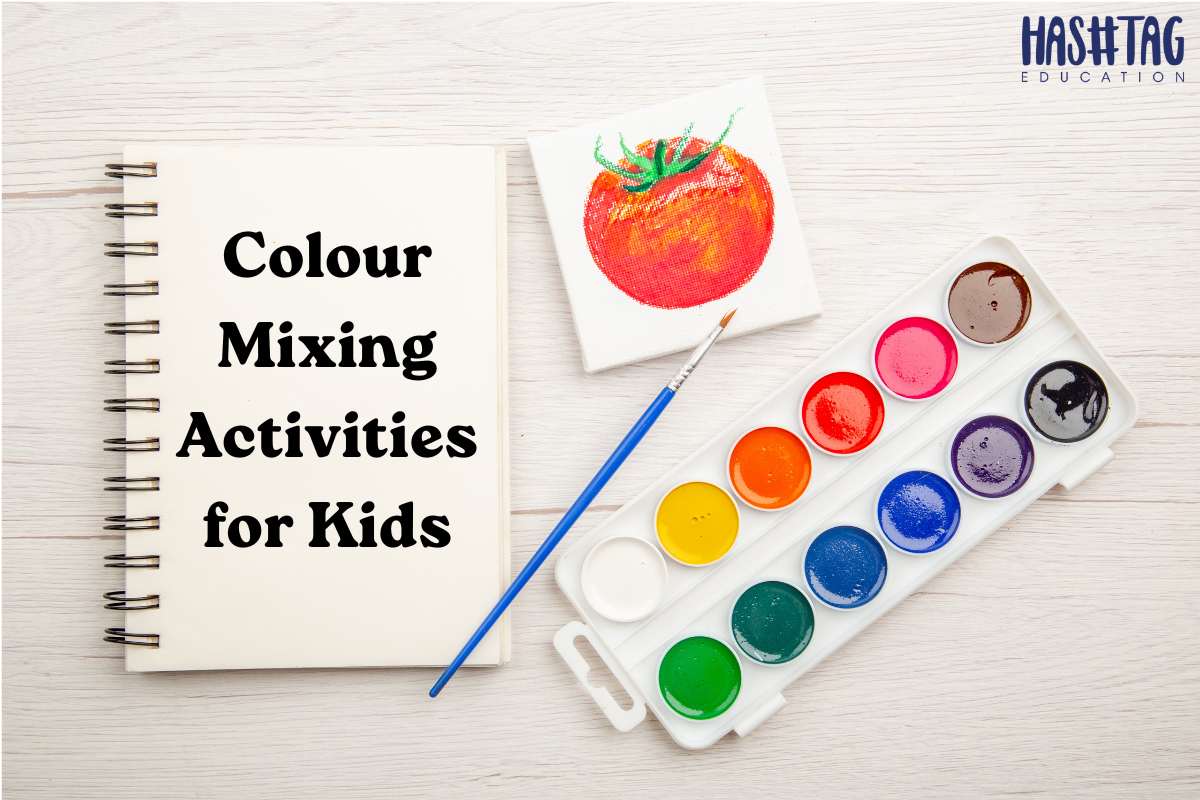
Colour Mixing Activities for Kids: 6 Powerful Yet Ignored Science Tricks
Colour Mixing Activities for Kids: Turn Art into Real Science Learning Colour mixing activities for kids seem like a lot of simple fun, but they can also be excellent opportunities to learn about science. When you see your child mixing red and yellow paint to create orange, there is more than art happening; they are making observations, testing, and understanding how one thing causes another. The beauty of colour mixing activities is that they naturally incorporate the steps of the scientific method. Your child makes predictions, tests them out, observes what happens, and tries again. This is why colour-mixing activities are not only enjoyable but also lay the foundation for learning about STEM concepts. Why Colour Mixing Activities For Kids Matter The true strength of Colour Mixing Activities for Kids lies in the way they blend creativity and logic. Although kids love colours and drawing, they are simultaneously grasping some of the fundamentals of science without even knowing it. These activities help kids build their skills in: Observation Reasoning and prediction Understanding cause and effect Experimentation and curiosity Colour Mixing Activities for Kids take learning to another level, stimulating the mind instead of just passively absorbing information. 6 Colour Mixing Activities For Kids You Can Try At Home 1. First Color Discovery Center Place three cups containing red, blue, and yellow colored water on a table. Provide your child with empty cups for them to experiment freely. Question: What do you think will happen? This is a fun way to teach the basic skills associated with Colour Mixing Activities for Kids. 2. Ice Cube Colour Mixing Make ice cubes with coloured water. Place them on a tray, and observe how the colours blend as the ice melts. This activity promotes patience and attentiveness, essential elements of Colour Mixing Activities for Kids. Inspired by these ideas? Let your child bring them to life through play! Explore Blueberry workbooks that turn learning into fun, engaging activities. 🛒 Shop Now: https://hashtageducation.in/collections 3. Milk and Colour Experiment Fill a plate with milk, put some food colours in it, and touch its surface with soap. Observe the dramatic colour movement. This experiment reveals that a simple act can have an immense impact, a fascinating aspect of Colour Mixing Activities for Kids. 4. Colour Mixing using Playdough Allow your kid to experiment with mixing two colours of playdough. In contrast to painting, this process is slow and enables kids to learn about change gradually, which is a more advanced level in Colour Mixing Activities for Kids. 5. Colour Art using Tissue Paper Put some tissue papers with colours on white paper and spray water on them. New colours will be created as colours flow out. This makes Colour Mixing Activities for Kids interesting and instructive. 6. Nature’s Colour Discovery Encourage your kid to find flowers, leaves, and rocks based on their colours. This relates Colour Mixing Activities for Kids to nature, thus expanding the scope of awareness outside the classroom. What Children Learn Through Colour Mixing Activities While playing, children are actually learning key scientific concepts such as: Prediction: What will happen when colours mix Observation: Watching changes carefully Cause and Effect: Understanding actions and results Transformation: Seeing how one thing becomes another Comparison: Noticing differences between shades These are the same thinking skills used in science and maths later in life. This is why Colour Mixing Activities for Kids are more than just play; they are early science education. Why Colour Mixing Activities For Kids Are Better Than Traditional Learning Traditional learning often focuses on memorisation, but Colour Mixing Activities for Kids encourage exploration and discovery. Children learn better when they: Experience concepts directly Ask questions Try things themselves This makes learning enjoyable and meaningful. Instead of remembering facts, children understand concepts deeply. How To Make Colour Mixing Activities For Kids More Effective You don’t need special tools to make Colour Mixing Activities for Kids effective. Simple tips can enhance learning: Ask questions before and after mixing Let your child experiment freely Avoid giving answers immediately Encourage repeated trials Talk about what they observe The goal is not perfect results; it is curiosity and exploration. The Long-Term Impact Of Colour Mixing Activities For Kids Children who regularly engage in Colour Mixing Activities for Kids develop stronger thinking skills. They become: More curious Better problem-solvers More confident in experimenting These skills support learning in science, maths, and everyday life. Read Also: Activity ideas for playing and learning with your children Colours Mixing Games for Children can be considered one of the most straightforward yet potent tools for introducing kids to science at an early age. While it may appear as mere play, it helps develop critical cognitive abilities that kids will need throughout their lives. Through engaging activities such as colour mixing, experimenting, and observing, you are fostering curiosity and self-assurance. Since the process of learning becomes fun, kids not only learn but also enjoy the discovery process.
Storytelling Skills for Preschoolers: Powerful Yet Ignored Brain Booster
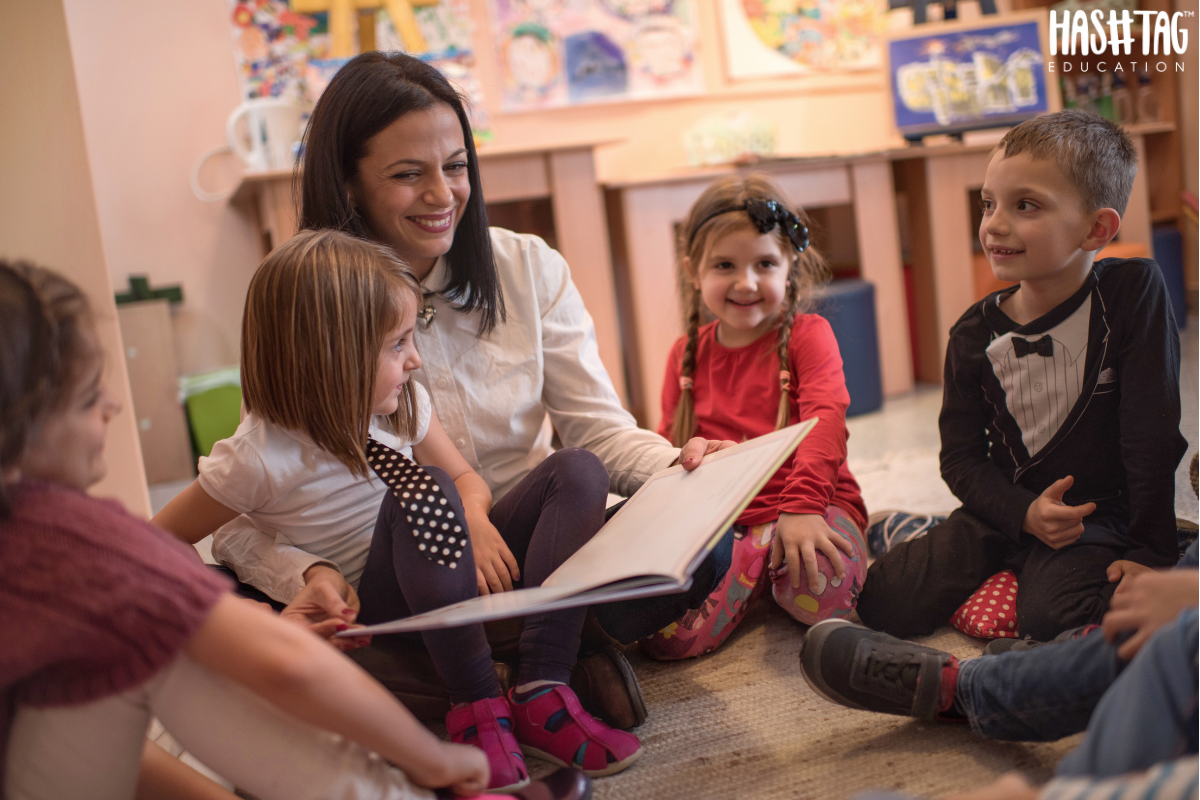
Storytelling Skills for Preschoolers: Build Lifelong Learning Storytelling Skills for Preschoolers is among the most potent yet underappreciated instruments in early childhood development. As many parents perceive storytelling as mere bedtime entertainment, the practice of storytelling affects children’s cognitive abilities, communication skills, and understanding of the world around them. Storytelling Skills have always been at the forefront of the learning process since the dawn of time. According to recent studies, storytelling engages numerous regions of the brain simultaneously, making the practice much more productive than conventional ways of learning. While listening to tales, kids are not only having fun but also acquiring necessary skills for life. Why Storytelling Skills For Preschoolers Matter The effectiveness of the Skills of Storytelling for Preschoolers can be explained by their capacity to unite studying with imagination. By listening to a story, a kid will simultaneously analyse language, imagine the scene, identify feelings, and discern the sequence of events. Storytelling Skills differ from memorising information because they form additional links in the brain of children that help them to retain knowledge and use it outside of class. In this essay, we will consider five important storytelling skills. 1. Language And Vocabulary Development Another major advantage of Storytelling Skills for Preschoolers is that language skills improve. Words are picked up in context without requiring memorization. For instance, whenever preschoolers hear phrases such as “It became gloomy before the rains,” they come to know the meaning of “gloomy” without having to be told. Storytelling gives preschoolers access to more complex sentence constructions than they get in regular conversation. Language becomes clearer and easier. There is a notable increase in Storytelling Skills in connection with language development as a result of consistent storytelling. 2. Sequencing And Logical Thinking All stories follow a particular sequence starting point, events, and a conclusion. The sequence helps children to grasp sequencing and cause-and-effect associations. What happens first What comes next How problems are solved These skills are essential for logical thinking, problem-solving, and even maths learning. Asking simple questions like “What happened next?” strengthens Storytelling Skills linked to reasoning. Inspired by these ideas? Let your child bring them to life through play!Explore Blueberry workbooks that turn learning into fun, engaging activities.🛒 Shop Now: https://hashtageducation.in/collections 3. Emotional Intelligence And Empathy Storytelling Skills for Preschoolers also play a key role in emotional development. Stories introduce children to different feelings: happiness, fear, sadness, and excitement. When children connect with characters, they begin to understand emotions from different perspectives. This builds empathy and emotional intelligence. You can strengthen this by asking: “How do you think the character felt?” “What would you do in that situation?” These conversations make Storytelling Skills a powerful tool for social development. 4. Memory And Attention Span Listening to stories requires focus and patience. Over time, Storytelling Skills for Preschoolers help improve attention span and memory. Children learn to: Sit and listen carefully Remember details Retell parts of the story Repetition is especially important. When children ask for the same story again, they are strengthening their memory and building confidence. This makes Storytelling Skills essential for academic readiness. 5. Creativity And Imagination One of the most exciting benefits of Storytelling Skills for Preschoolers is the development of imagination. Unlike videos, storytelling encourages children to create mental images on their own. This active thinking builds creativity, which is important for: Problem-solving Innovation Self-expression Encourage this by asking: “What do you think happens next?” “Can you create your own ending?” These activities strengthen Storytelling Skills and turn children into active learners. How To Build Storytelling Skills For Preschoolers At Home It is unnecessary to attend specialised courses to obtain high-quality Storytelling Skills for Preschoolers. Here are some easy ways to enhance storytelling: Use your child’s name in stories Add sound effects and expressions Change your voice for different characters Use toys or props Let your child participate and ask questions The goal is engagement, not perfection. The more interactive the experience, the stronger the Storytelling Skills become. Why Storytelling Skills Are More Effective Than Traditional Methods Traditional learning often focuses on repetition and memorisation. In contrast, Storytelling Skills for Preschoolers make learning natural and enjoyable. Through storytelling, children: Learn without pressure Stay engaged longer Remember concepts better This makes Storytelling Skills one of the most effective tools for early childhood education. Read Also: The Power of Storytelling in Early Education The Role Of Structured Story Learning Although everyday storytelling may already be effective, there is still much more that can be done through programming to improve Storytelling Skills for Preschoolers. These include guided storytelling sessions, story-related lessons, and interactive storytelling. This will guarantee that children benefit from storytelling both fun-wise and knowledge-wise. Final Thought The skills of Storytelling in Preschoolers involve much more than simply telling tales to the children. In the process of telling stories, children develop several skills, including language, imagination, memory, and emotions. In today’s world, which is overwhelmed by technological gadgets, there is no better way to connect with a child than storytelling. As you foster the development of Storytelling Skills in your child, you do much more than help him learn something new. You shape his mind and feelings.
Music Activities for Preschoolers: Powerful Hidden Brain Boost
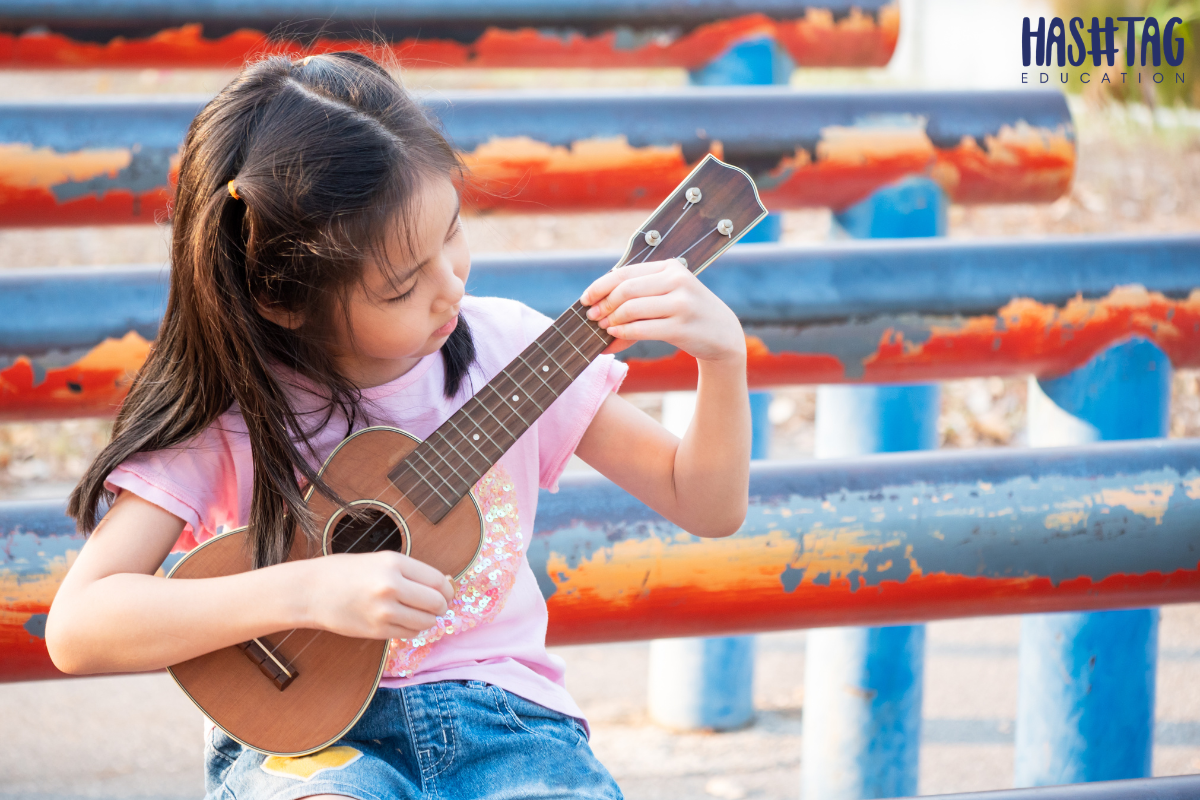
Music Activities for Preschoolers That Build More Than Just Fun Music activities for preschoolers may be perceived simply as a means of amusement, but they have a far more fundamental meaning. While watching your kid clap, sing, or dance, you may be unaware of how important these seemingly trivial actions are for the cognitive development of your child’s brain. Music activities for preschoolers work the same areas of the brain as any educational program does; in fact, they develop the very neural connections necessary for learning such disciplines as language skills or mathematics. Why Music Activities For Preschoolers Matter According to several research works, Music Activities for Preschoolers help tremendously in enhancing cognitive abilities. Developmental psychology indicates that the regular participation of children in activities based on rhythm helps them gain better memory, concentration, and language skills. The child who claps to music understands how to recognize a pattern. The one who sings develops better vocabulary and memory. The one who dances develops better coordination and a sense of timing. This is the reason why Music Activities for Preschoolers are much more than just play. 7 Music Activities For Preschoolers You Can Try At Home 1. Playing with Body Beats Make use of your body to produce sound: clap your hands, slap your knees, or stomp your feet. Create a pattern for your child to imitate. Skills that can be developed: Memory, sequencing, and coordination. 2. Making Music with Pots and Pans Use cooking tools as instruments to experiment with different sounds. Skills that can be developed: Creativity, sound discrimination, and science skills. 3. The Freezing Dance Play some music and dance; when the music stops, stay still instantly. Skills that can be developed: Self-control and focus. Loved these ideas? Let’s bring them to life beyond the screen!Discover Blueberry workbooks & box sets designed for joyful, hands-on learning.🛒 Shop Now: https://hashtageducation.in/collections 4. Echo Rhythm Game Create a rhythm pattern and encourage your child to mimic it. Make it progressively harder. Why it develops: Develops auditory memory and focus. 5. Turning Daily Activities into Songs Singing during your daily activities, like brushing teeth, putting toys away, or getting ready to go out. Why it develops: Helps learn routine behaviors. 6. Syllable Clapping Activity Clap out the syllables of words like elephant and watermelon. Why it develops: Develops phonemic awareness and literacy skills. 7. Music and Emotions Play music of varying genres and ask your child what emotion it evokes. Why it develops: Helps with emotional intelligence and understanding. How Music Activities For Preschoolers Build Key Skills The real power of Music Activities for Preschoolers lies in how many skills they develop at once. Through simple activities, children improve: Pattern recognition (important for maths) Language and vocabulary (important for reading) Memory and attention span Emotional understanding Physical coordination Unlike worksheets or passive learning, Music Activities for Preschoolers engage the whole brain. Why Music Activities For Preschoolers Are Better Than Drilling Traditional learning methods often focus on repetition and memorization. But Music Activities for Preschoolers make learning interactive and enjoyable. When children learn through music: They stay engaged longer They remember concepts better They develop confidence naturally Music combines movement, sound, and emotion, making it one of the most effective learning tools in early childhood. How To Include Music Activities For Preschoolers Daily You don’t need instruments or special training to use Music Activities for Preschoolers. Simple ways to include them: Play music during daily routines Sing together during playtime Use rhythm games during breaks Encourage free movement and dance Consistency matters more than complexity. The Long-Term Impact Of Music Activities For Preschoolers Children who regularly engage in Music Activities for Preschoolers often show stronger academic readiness. They are better at: Following instructions Recognising patterns Expressing emotions Staying focused These skills directly support success in school and beyond. Read Also: 10 playful activities for children with disabilities Why Musical Training is More Important Than You Realize While Music Activities for Toddlers may sound like singing activities, they are really about laying the groundwork for future learning. Music activities are unique because they blend enjoyment with development in an unparalleled way. When you introduce your child to rhythm and music at an early age, you will be helping your child to acquire the skills necessary in life. Since children who learn via music don’t just learn, they feel and remember.