Sleep Habits for Children: The Hidden Learning Superpower
Sleep is the most underrated learning tool your child has. Discover how sleep habits for children shape memory, mood, and focus — plus the nutrition link and 7 practical ways to build better rest at home.
Sleep Habits for Children: The Hidden Learning Superpower
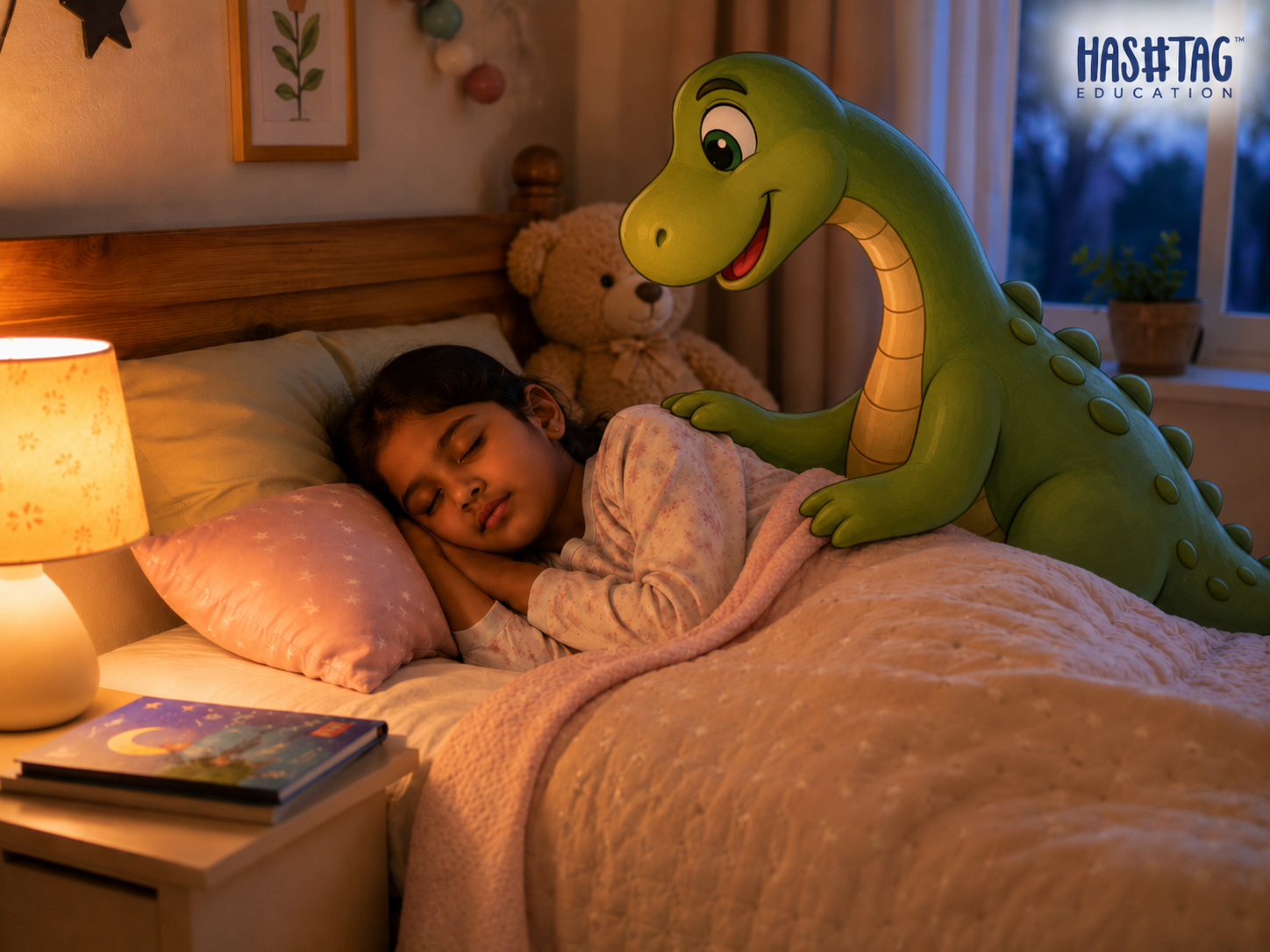
We talk a lot about nutrition, academics, and screen time when it comes to how children learn. But one factor quietly shapes everything, and it's often overlooked: sleep.
sleep habits for children isn't just rest. It's the brain's most powerful tool for organising and storing thoughts, emotions, and memories. Yet modern routines — packed with gadgets, homework, and late-night distractions — are stealing the rest our children need.
The truth is simple. Good sleep isn't a luxury. It's a foundation. It's the base from which children learn, focus, create, and draw emotional strength. When children sleep well, their minds bloom with energy and curiosity. When they don't, even the brightest child struggles to focus or manage emotions.
If you liked these activities and tips, explore our online courses!
Nurture curiosity, creativity, and confidence through interactive learning.
👉 Start Learning Today: https://learning.hashtageducation.in/#Go-Learn
The Science Behind Sleep and Learning
When children fall asleep, their brains don't shut down. They power up.
During deep and REM sleep, the brain sorts through everything learned that day:
Memory consolidation — connections between neurons strengthen, moving information from short-term to long-term memory. This is how children recall what they learned in class.
Cognitive restoration — the brain clears out waste and prepares to learn again tomorrow.
Creativity and problem-solving — well-rested children perform better at logical reasoning and creative tasks.
According to the American Academy of Pediatrics, well-rested children pay better attention, learn concepts faster, solve problems more effectively, and perform better academically overall.
The opposite is also true. Too little sleep leads to forgetfulness, inattention, and slower thinking. Losing even one hour a night noticeably affects mood, attention, and classroom performance.
Sleep, Mood, and Emotional Balance
sleep habits for children doesn't only shape how children think. It shapes how they feel.
A well-rested child is happier, more patient, and emotionally steady. A tired child turns small frustrations into tears, anger, or anxiety. That's because sleep regulates the limbic system — the emotional centre of the brain. Without rest, the brain becomes reactive, and children find it hard to manage stress or speak calmly.
Poor sleep often shows up as irritability, mood swings, difficulty controlling anger, anxiety, or a loss of motivation. Sleep is an emotional reset button. Each good night helps children process the day and wake up ready for new challenges. Learn more in our guide to raising an emotionally intelligent child.
Loved these ideas? Let’s bring them to life beyond the screen!
Discover printable summer worksheets designed for joyful, hands-on learning.
🛒 Shop Now: https://learning.hashtageducation.in/treasure-chest#worksheet
The Nutrition–Sleep Connection
Food directly affects sleep. Sugary, processed diets cause restlessness. Balanced nutrition deepens and lengthens sleep.
Foods that help:
Bananas, milk, almonds — natural tryptophan, which the body uses to make melatonin, the sleep hormone
Leafy greens and lentils — magnesium and iron reduce restlessness and night-time twitching
Whole grains and fruits — steady blood sugar prevents midnight spikes
Warm, light dinners — heavy or fried meals delay sleep
Avoid caffeine (yes, even in chocolate and cola) and sugary snacks near bedtime. Aim to finish dinner about two hours before sleep, then follow with a calming routine like reading or storytelling.
Movement Matters Too
Physically active children fall asleep faster and sleep more deeply. Outdoor play — running, cycling, dancing — tires the body naturally.
But timing matters. High-energy games or screens right before bed overstimulate the brain. Instead, wind down with light stretching, a bedtime story, calming music, or simple breathing exercises. A calm routine tells the brain: it's time to sleep.
Looking for a fun spelling activity?
This game helps kids practise words, letters, and vocabulary through hands-on play.
👉 Shop now: https://amzn.to/4wPF9mu
7 Ways to Build Better Sleep Habits at Home
Keep a regular bedtime and wake time — even on weekends. Consistency sets the body clock.
Set a digital curfew — no screens for at least an hour before bed. Blue light delays melatonin. See our guide to age-appropriate screen time.
Create a sleep-friendly room — cool, dark, quiet, and uncluttered.
Use bedtime rituals — a story, a goodnight, a gratitude moment. Rituals create emotional safety.
Never use sleep as punishment — bedtime should mean comfort, not control.
Serve a light, early dinner — and skip the sugar.
Model it yourself — when parents rest well, children learn that sleep matters as much as homework.
The School's Role
Schools can help too — through sleep education in wellness programmes, homework policies that avoid late-night stress, classroom mindfulness sessions, and parent workshops on managing digital habits.
At Hashtag Education, our early learning programmes align with NEP 2020 and NCF 2022 to support not just academic success, but whole-child wellbeing. We believe in nurturing emotionally strong, curious, balanced learners — and quality sleep is the cornerstone of that vision.
Share your feedback
Tell us what you think about this post or the website. Approved messages may appear on the Hashtag Club page.