Online Learning for Preschoolers: Does It Actually Work?
Online learning for preschoolers is booming, but is it really good for young kids? See how to use it well, when to skip it, and what works best at home.
Online Learning for Preschoolers: Does It Actually Work?
Online learning for preschoolers is one of the biggest questions in Indian parenting today. After the pandemic, apps and online classes flooded the market. Every brand promises smart kids, better focus, and early reading. But many parents still worry, is online learning for preschoolers really good? Or is it just more screen time in a new dress?
The honest answer sits in the middle. Done well, it helps. Done badly, it hurts. Let's break it down simply.
Is Online Learning Good for Kids
Is online learning for preschoolers is good? Yes, when it fits the child's age, attention span, and pace. No, when it becomes long, passive, and screen-heavy.
What works well for preschoolers:
Short lessons, 5 to 15 minutes each
Interactive tasks, not just watching
Songs, stories, and games that spark joy
Bilingual content, English with Hindi or the home language
A parent nearby, guiding gently
What doesn't work:
Long screen sessions over 30 minutes
Fast-cut videos with loud music
Adult-style lessons that expect long focus
Apps that replace human talk and hugs
The child's brain at this age needs real people more than perfect apps. Screens are the tool. You are the teacher.
For more on this, see our screen time guidelines for kids by age.
Online Classes for Kids Under Six
Online classes for kids under six should feel like guided play. At this age, kids can't sit still for 45 minutes. That's not bad behaviour. online learning for preschoolers that's just how young minds work.
Good online classes for kids do three things right:
Keep lessons short, 10 to 20 minutes max
Pair each lesson with an offline task, tracing, colouring, or a hunt
Give parents clear guides, so learning continues beyond the screen
Skip courses that promise miracle reading in 30 days. Real learning at this age is slow, steady, and joyful. It shows up years later, not next week.
Online vs Offline Learning for Kids
Online vs offline learning for kids isn't really a battle. Both matter. The best approach mixes them wisely.
Where offline wins:
Fine motor skills through paper, pencil, and clay
Social skills through play with real kids
Language through real conversation
Emotional growth through parent time and hugs
Attention span through boredom and free play
Where online helps:
Bright, engaging intros to new topics
Songs and rhymes in different languages
Fun revision through games and quizzes
Access to expert content in far-off villages and towns
A healthy rhythm looks like this, 20 minutes of online, followed by 40 to 60 minutes of hands-on play or reading. Screens should support real life, not replace it.
For more offline play ideas, see our guide on play based learning activities for preschoolers.
How to Make Online Learning Work at Home
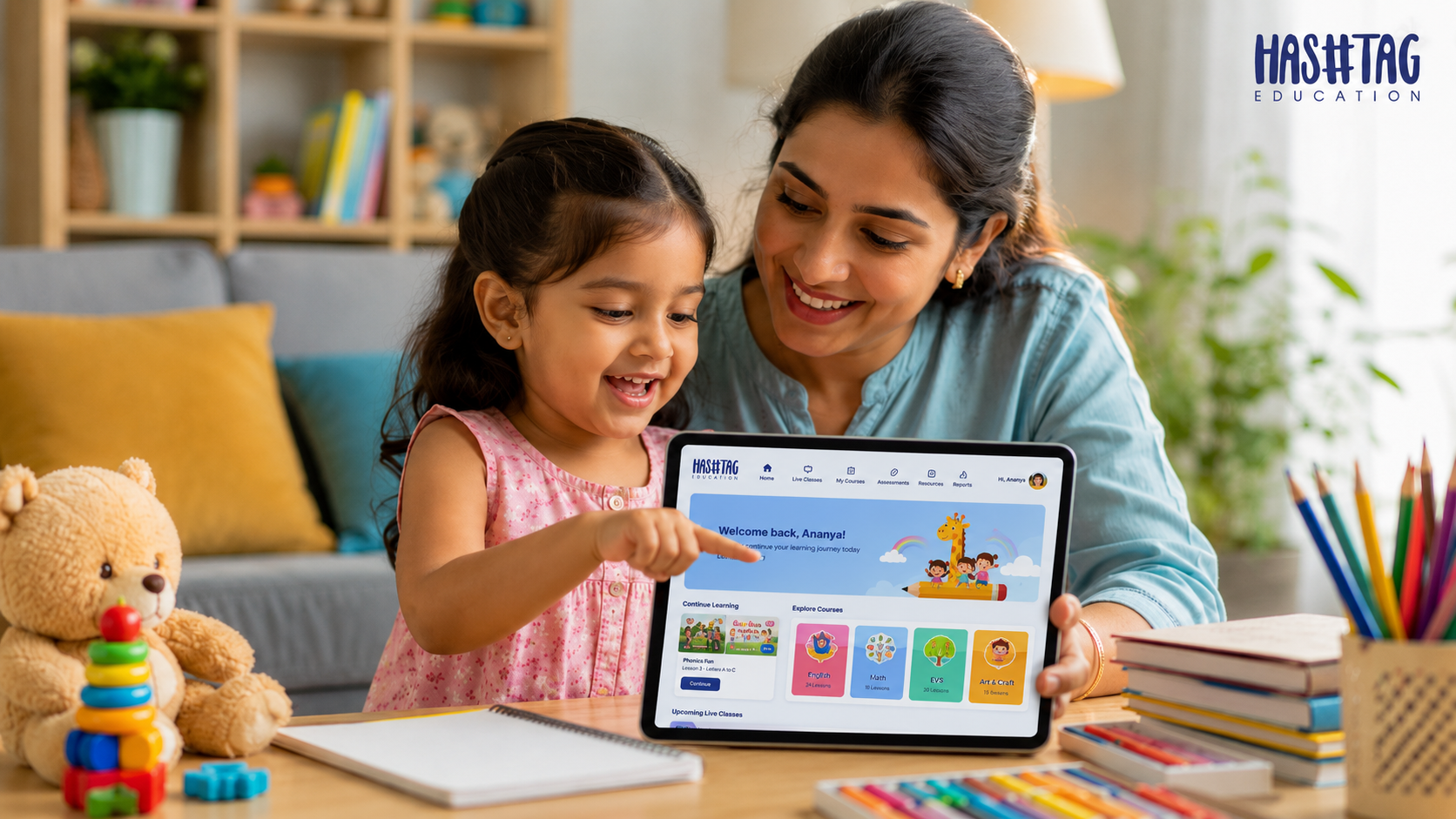
Online learning for preschoolers works only when parents guide it. Kids this young can't self-learn from a screen alone.
Simple rules that help:
Sit beside your child, don't hand over the tablet and walk away
Keep sessions short, 15 to 20 minutes at a time
Do the offline task together after each lesson
Pick trusted platforms, like Hashtag Education, Khan Academy Kids, or Kutuki
Keep screens out of bedrooms
No screens 1 hour before bed
The parent, not the app, is the real learning coach at this age.
Online learning for preschoolers can be a beautiful tool when used well. But it's not the whole story. Real learning still happens in the moments you sit close, read together, count fruits, sing rhymes, and answer their endless "why" questions.
👉 Explore our NEP-aligned online courses and activity book sets and give your child a screen-smart, joyful start to learning today.
Share your feedback
Tell us what you think about this post or the website. Approved messages may appear on the Hashtag Club page.