
How to Raise an Emotionally Intelligent Child: Tips
How to raise an emotionally intelligent child with everyday habits, activities, key signs to watch for, and the best books to help kids understand feelings.
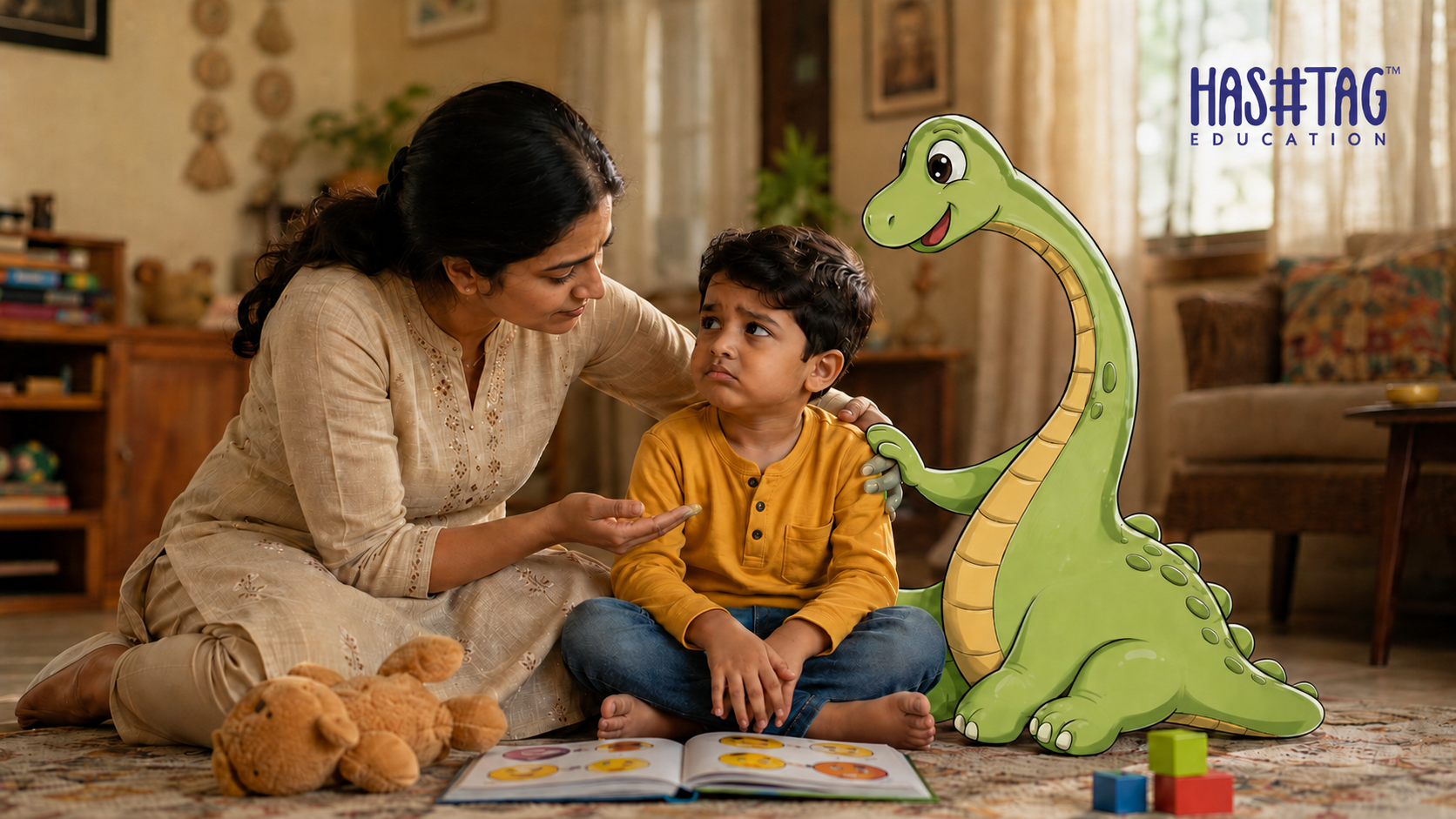
How to Raise an Emotionally Intelligent Child: Helping Kids Understand Their Own Feelings
How to raise an emotionally intelligent child has become one of the most significant parenting questions of our generation. For decades, parents concentrated primarily on academic performance and external achievements, assuming emotional development would naturally resolve itself over time. Unfortunately, that assumption rarely holds true. Children who can identify their emotions, regulate their reactions, and recognise the feelings of others tend to grow into adults who navigate relationships, stress, and disappointment far more effectively than those who never developed these abilities. Fortunately, emotional intelligence isn't an inherited trait that some children possess and others lack. It's a learnable capability that develops gradually through ordinary daily interactions, which means almost any committed parent can cultivate it at home.
Also Read: Brain Development Games for Toddlers
What Emotional Intelligence Really Means
Emotional intelligence isn't about being a calm child or a quiet one. It's about being aware. A child with emotional intelligence can notice their own feelings, give them a name, manage them without falling apart, and read what others around them are feeling. These four pieces, self-awareness, self-regulation, empathy, and social skills, form the foundation of every healthy relationship a child will have for the rest of their life.
Research consistently shows that emotional intelligence predicts success in school, friendships, and adulthood better than IQ does. Yet it gets almost no attention in classrooms. Most of this learning has to happen at home.
How to Raise an Emotionally Intelligent Child Through Daily Habits
The work isn't in dramatic conversations. It's in small, repeated moments, the way you respond when your child is angry, the words you use when they're disappointed, the way you handle your own frustration in front of them.
What helps most:
Name feelings out loud, both yours and theirs: "You're feeling left out right now" or "I'm feeling frustrated, so I'll take a deep breath"
Validate before solving, let them feel heard before you offer a fix
Don't dismiss small emotions, "it's just a toy" teaches them their feelings don't matter
Model calm repair after losing your temper, apologise when you snap, it teaches accountability
Let them sit with hard feelings, don't rush in to make every sadness disappear
Praise emotional moments, "I noticed you waited your turn even though you were excited"
Talk about characters' feelings in books and films, "why do you think she felt scared there?"
Keep your tone steady when they're not, your calm becomes their calm over time
Children copy what they live with, not what they're told. A home where adults handle emotions openly raises kids who do the same.
Boost STEM learning, focus, and hand-eye coordination with this fun DIY Mini Golf game for kids.
Perfect for screen-free playtime.
👉 Shop now: https://amzn.to/4dlAoZ5
Why Quick Fixes Backfire
Many well-meaning parenting moves quietly slow emotional growth. Bribing a crying child with a treat teaches them that feelings should be avoided. Shaming, "big boys don't cry", teaches them to hide what they feel. Distracting a sad child with a screen teaches them that their emotions need numbing. Rushing past hard feelings sends the message that they're not allowed.
The slower, harder approach, sitting with them, naming the feeling, waiting it out, is what actually builds emotional intelligence.
Activities to Teach Kids About Emotions
Activities to teach kids about emotions work best when they feel like play, not therapy. Children learn most when they're relaxed and curious.
A few that work well:
Feelings chart, a poster on the wall with faces showing happy, sad, angry, scared, excited, and calm. Kids point to how they feel each day.
Emotion charades, take turns acting out feelings while others guess
Mood meter, a simple drawing where kids place a small token to show how they feel that morning
Worry jar, kids write or draw their worries on slips and drop them in. Adults read them with the child later.
Calm corner, a small space with cushions, soft toys, and books where kids can go when overwhelmed, not as punishment
Breathing games, blowing pretend candles, smelling a flower then blowing it away
Feelings journal, even drawing the day's mood counts for younger kids
Roleplay tricky situations, "what if your friend takes your toy?", helps kids rehearse responses
These activities give children a vocabulary for what's happening inside them. Once they can name it, they can manage it.
Discover Blueberry workbooks & box sets designed for joyful, hands-on learning.
🛒 Shop Now: https://hashtageducation.in/collections/box-set
Signs of Emotional Intelligence in Children
Signs of emotional intelligence in children show up quietly, often when adults aren't looking.
What to look for:
They can tell you what they're feeling, not just "good" or "bad"
They notice when someone else is upset
They handle small disappointments without falling apart
They apologise without being forced
They wait their turn, even when it's hard
They share comfort, hugs, and gentle words with friends or siblings in distress
They calm down faster after upsets than they used to
They ask questions about other people's feelings
They respond to "no" without complete meltdowns by age six or seven
These aren't all-or-nothing skills. Children grow in fits and starts. A child who's empathetic on Monday may melt down on Wednesday. The trend over months and years matters more than any single day.
Books to Teach Kids About Feelings
Books to teach kids about feelings do something conversation alone can't. They let children see emotions from a safe distance, in characters who feel things they've felt too.
A few worth keeping on the shelf:
The Colour Monster by Anna Llenas, perfect for ages 3 to 6
In My Heart, A Book of Feelings by Jo Witek
The Boy with Big, Big Feelings by Britney Winn Lee
When Sophie Gets Angry, Really, Really Angry by Molly Bang
Today I Feel Silly by Jamie Lee Curtis
Ruby Finds a Worry by Tom Percival
The Way I Feel by Janan Cain
Indian publishers like Tulika, Pratham, and Karadi Tales also have strong-feeling-themed picture books in English and regional languages
Read these together, pause to ask what your child noticed, and let them lead the conversation. The book opens the door, and your conversation walks them through it.
How to raise an emotionally intelligent child, in the end, isn't a single lesson or a parenting course. It's a thousand small choices, made calmly, day after day, that teach a child their feelings matter, others' feelings matter, and they have the tools to handle both. The patience this takes is real, but so is the reward, a child who grows into an adult capable of loving, listening, and leading well.
Share your feedback
Tell us what you think about this post or the website. Approved messages may appear on the Hashtag Club page.