
Nursery vs LKG vs UKG: 2026 Parent Guide India
Nursery vs LKG vs UKG explained. See ages, meanings, syllabus differences, and how to prepare your child gently for each stage of preschool.
Nursery vs LKG vs UKG: A Simple Guide for Indian Parents
Nursery vs LKG vs UKG is one of the most Googled questions by Indian parents every year. The names sound similar. The classes look similar. Yet each stage has a different age group, different focus, and a very different learning approach. Getting this right matters, because these are the foundational years that quietly shape everything that follows. In this simple parent guide, we'll break down Nursery vs LKG vs UKG in plain language, along with what your child should be doing at each stage.
📺 Prefer watching? Follow Hashtag Education on YouTube for daily preschool videos, rhymes, and social story time.
That's exactly how we design learning at Hashtag Education, gently, joyfully, and rooted in how Indian kids really grow.
LKG UKG Meaning
LKG UKG meaning confuses many first-time parents, but it's simpler than it sounds.
Nursery, also called Pre-KG or Playgroup in some schools
LKG, Lower Kindergarten (the year after Nursery)
UKG, Upper Kindergarten (the year after LKG)
Together, these three stages form the Foundational Stage under NEP 2020 in India. This stage sets the base for all future learning across every subject.
Some schools call these stages by different names, Playgroup, Pre-Primary, Junior KG, Senior KG, but the underlying age groups and goals are mostly the same.
What Age Is LKG in India
What age is LKG in India is a common question, and the answer depends slightly on the school.
Nursery, typically ages 3 to 4
LKG, typically ages 4 to 5
UKG, typically ages 5 to 6
By June each year, most schools go by the child's age as of March 31. Some private schools stretch this by three months either way, but most follow this pattern.
If your child is on the younger end of the age band, don't rush admissions. Give them the extra time. Kids who join a class comfortably older tend to do far better emotionally and academically.
For more on this, see our guide on LKG and UKG readiness skills.
What Does UKG Stand For
What does UKG stand for is another common query. UKG stands for Upper Kindergarten, the second stage of kindergarten before formal school begins in Class 1.
At this stage, kids are usually 5 to 6 years old. UKG is the bridge between playful preschool learning and structured primary school. Done well, this year builds confidence, comfort with letters and numbers, and the emotional readiness needed for Class 1.
By the end of UKG, most children can:
Read simple 3 and 4 letter English words
Write capital and small letters clearly
Count to 100 forward and backward
Do simple addition and subtraction up to 20
Speak full sentences in English and their mother tongue
Sit for a 20-minute focused activity
For more on this stage, see our guide on UKG preparation at home.
Looking for a fun learning toy?
Storio Geometric Shape Sorter Toy for Kids
👉 Shop now: https://link.amazon/B00xRENvO
What Kids Learn in Nursery, LKG, and UKG
Nursery vs LKG vs UKG also differs sharply in what kids learn at each stage.
Also Read: Printable Worksheets for LKG: 7 Powerful Yet Smart Picks
Nursery (ages 3 to 4):
Free play, singing, dancing
Basic colours, shapes, and sounds
Simple tracing and colouring
Learning to sit for 10 to 15 minutes
Starting group play and sharing
LKG (ages 4 to 5):
Recognising letters, numbers 1 to 50
Simple writing, colouring within lines
Beginner phonic sounds
Storytelling and rhymes
Basic self-help skills
UKG (ages 5 to 6):
Full letters, small and capital
Numbers 1 to 100, simple math
Reading small words
Longer focus and structured tasks
Comfort with school routine
The overall shift is from play to gentle structure, never from play to pressure. Any school pushing full worksheets at Nursery or LKG level is going against how young minds actually learn.
Nursery vs LKG vs UKG is not a race. Each stage does one job, and does it well. Follow your child's pace. Read together daily. Skip comparisons with other kids. Trust the process, and your child will step into Class 1 calm, confident, and curious.
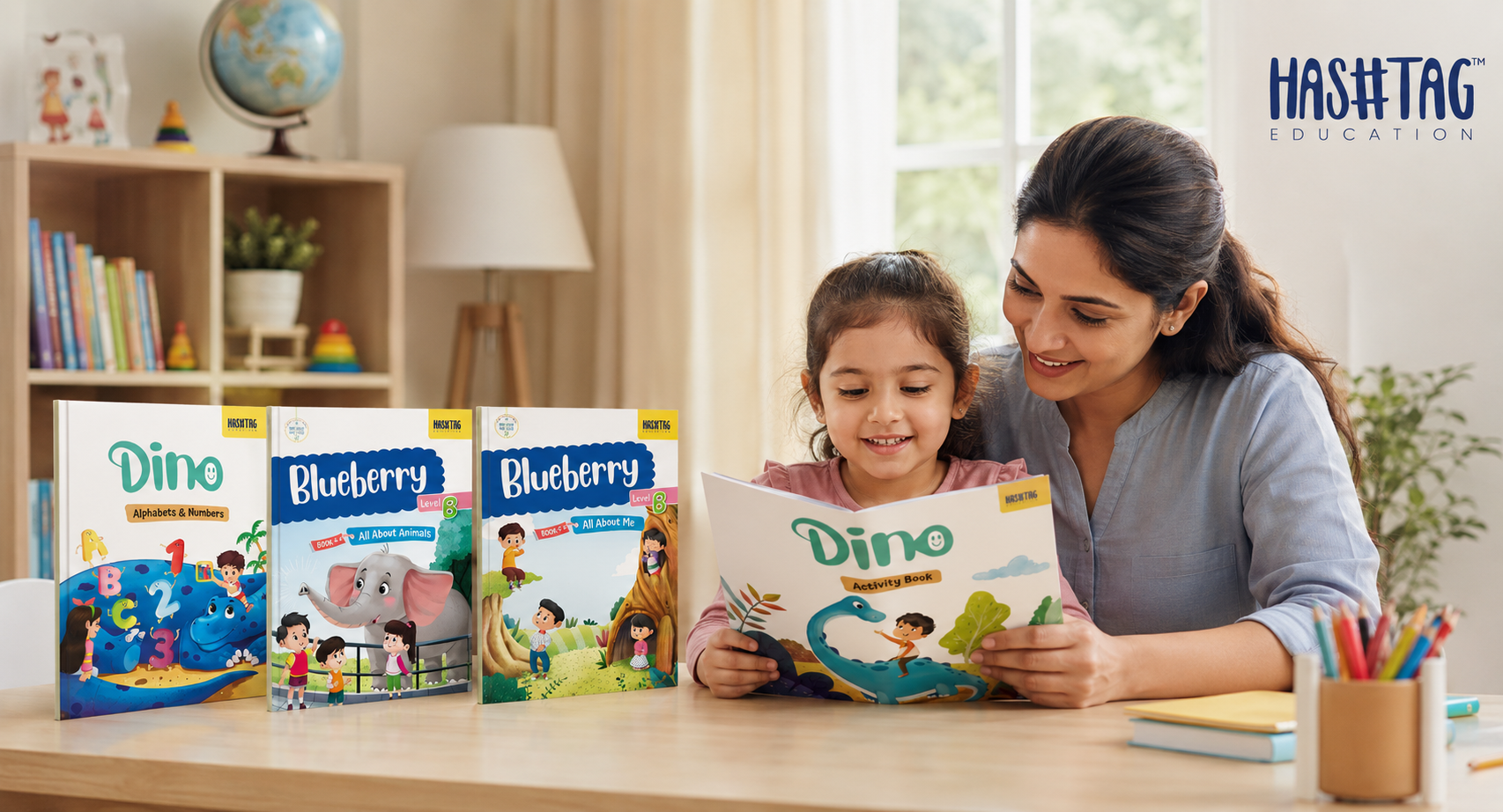
👉 Explore our Dino and Blueberry activity book sets and give your child a joyful, screen-smart start to preschool today.
Follow Hashtag Education for weekly parenting guides, NEP-aligned learning tips, and screen-smart ideas for Indian kids.
Share your feedback
Tell us what you think about this post or the website. Approved messages may appear on the Hashtag Club page.