
How Much Screen Time for Kids by Age? A Parent Guide
Screen time for kids by age is one of the biggest worries for Indian parents today. How much is safe for a baby, toddler, or preschooler? Here is a clear, research-backed 2026 guide with age-wise limits, healthy screen habits, and simple, warm alternatives for every Indian home.
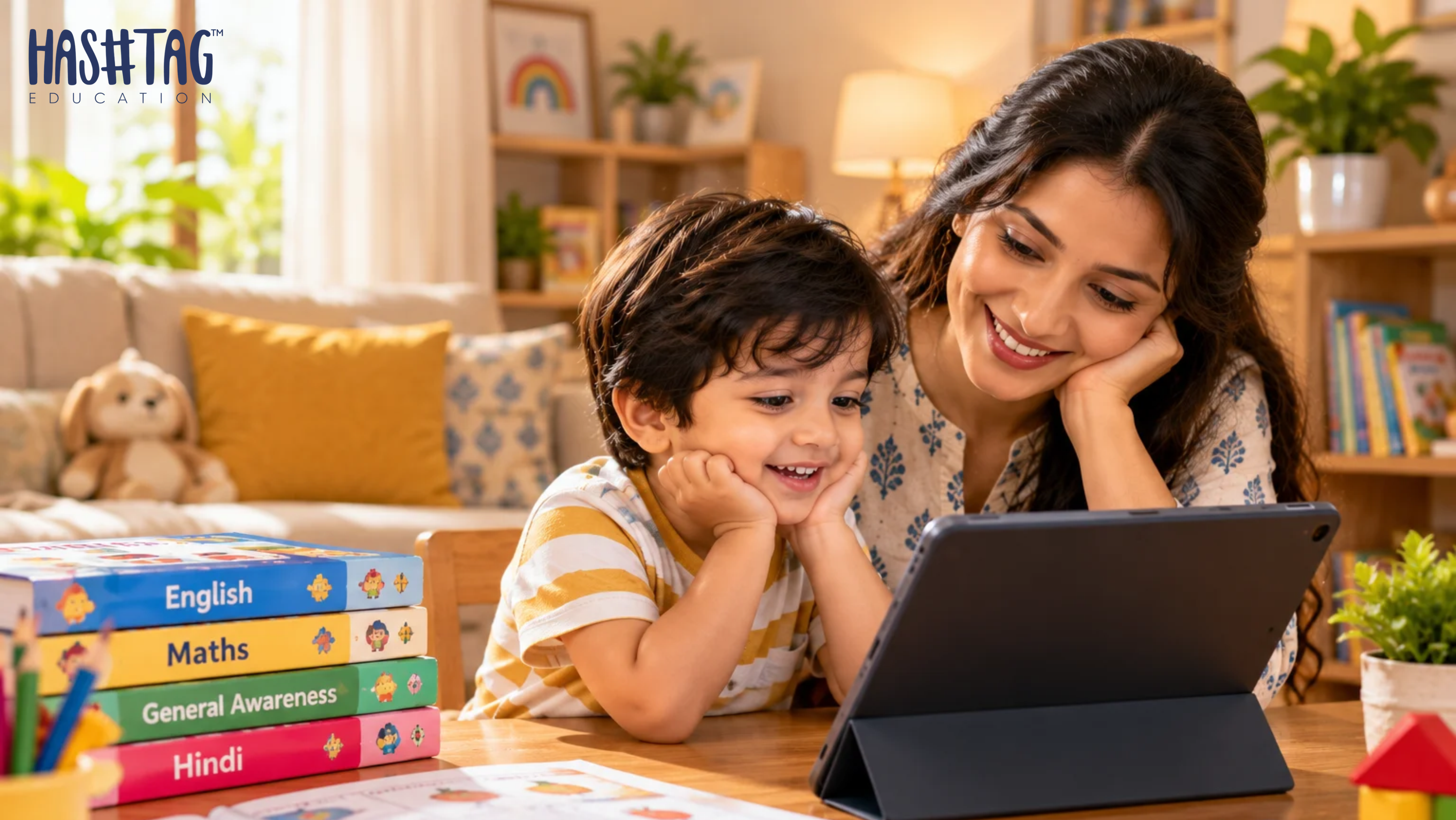
How Much Screen Time for Kids by Age Is Really Safe?
Screen time for kids by age is one of the most searched parenting questions in India today. The honest answer is simple. Under 18 months, zero screen time except video calls. 18 months to 2 years, under 20 minutes a day with a parent. 2 to 5 years, under 1 hour a day of quality content. 6 years and above, around 1 to 2 hours with firm family rules.
📺 Prefer watching? Follow Hashtag Education on YouTube for daily preschool videos, rhymes, and social story time.
At Hashtag Education, we hear this worry from Indian parents every single week. Here is the complete, research-backed, warm 2026 guide for Indian homes.
Why Screen Time for Kids by Age Matters
A child’s brain grows faster in the first 5 years than at any other stage of life. Too much screen time in this window can:
Delay speech and language
Shorten attention span
Hurt sleep quality
Reduce real-world play
Impact emotional regulation
Increase tantrums and restlessness
But too little balance in modern India is also unrealistic. The real goal is not zero screens. The goal is screen-smart screens.
The American Academy of Pediatrics (AAP) and the World Health Organisation (WHO) both have clear age-wise guidelines Indian parents can follow.
Screen Time Guidelines by Age
Babies 0 to 18 Months — Zero Screen Time
No TV, no phone, no tablet. The only exception is video calls with family. At this age, babies need faces, voices, cuddles, and sounds. Nothing else builds the brain faster.
Toddlers 18 to 24 Months — Under 20 Minutes a Day
Introduce screens slowly and only with a parent. Pick slow, calm videos. Rhymes, picture-based stories, and short learning clips work best. Avoid loud cartoons, flashy ads, or anything with fast cuts.
Preschoolers 2 to 5 Years — Under 1 Hour a Day
The WHO recommends under 1 hour of quality screen time per day for ages 2 to 5. Co-view when possible. Pick educator-designed content. Phonics, bilingual rhymes, storytime, and warm preschool videos work beautifully at this age.
Kids 6 to 12 Years — 1 to 2 Hours a Day Max
Add structure. Decide family rules together. No screens at the dining table. No screens before bed. No screens in the bedroom. Balance with outdoor play, books, and sleep.
Teens 13 and Above — Negotiated Limits
By this age, pure limits stop working. Build conversations about digital habits, mental health, and social media safety. Keep devices out of bedrooms at night.
When to Introduce Screen Time to a Baby
Hold off until at least 18 months. Even then, keep it short, slow, and shared with a parent. Babies learn best from real human faces and voices. Every minute of screen time at this age replaces a minute of brain-building real-world input.
Healthy Screen Time Habits for Kids
Follow these simple screen-smart habits in your Indian home:
No screens during meals
No screens 1 hour before bedtime
No screens in the bedroom
Co-view with your child when possible
Choose ad-free, educator-designed content
Prefer bilingual Hindi + English learning videos
Break every 20 minutes to protect eyes
Replace one screen hour with one book or outdoor play hour daily
Rhythm matters more than restriction. Kids need predictable screen-off, screen-on times.
Loved these ideas?
Discover Blueberry workbooks & box sets designed for joyful, hands-on learning.
🛒 Shop Now: https://hashtageducation.in/collections
Signs Your Child Is Getting Too Much Screen Time
Watch for these red flags:
Tantrums when the screen is turned off
Trouble falling asleep
Short attention span in real play
Speech delays in toddlers
Headaches, eye strain, or watery eyes
Loss of interest in books, toys, or outdoor play
If any of these show up, cut screen time by half for 2 weeks and replace with picture books, rhymes, art, and outdoor play. The improvement is usually fast.
You can also explore our Best Online Courses for Preschoolers guide for ideas on choosing meaningful online learning.
What to Watch Instead of Random YouTube
Replace random cartoons with screen-smart, warm, Indian-educator-designed content. Look for videos that are:
Slow-paced and calm
Ad-free or paid safe apps
Bilingual in Hindi and English
Phonics, rhymes, storytime, or nature-based
Short under 15 minutes per session
For more offline ideas, explore our Fun Learning Activities at Home.
Hashtag Education’s YouTube channel is built exactly for this. Warm. Slow. Screen-smart. NEP 2020 aligned. Perfect for Indian homes.
FAQs: Screen Time for Kids by Age
Q1. How much screen time is OK for a 2 year old?
Under 20 minutes a day of slow, educator-designed content, co-viewed with a parent.
Q2. Can babies under 1 year watch TV?
No. The American Academy of Pediatrics recommends zero screen time under 18 months, except for video calls with family.
Q3. How much screen time is OK for a 4 year old?
Under 1 hour a day of quality content, with family rules around meals, sleep, and bedroom use.
Q4. What is the best way to reduce screen time in Indian homes?
Replace one screen hour with one book, one rhyme session, or one outdoor play block each day. Keep screens out of meals and bedrooms. Model it as parents too.
Share your feedback
Tell us what you think about this post or the website. Approved messages may appear on the Hashtag Club page.