
What Are the Best Learning Activities for 2-3 Year Olds?
Learning activities for 2-3 year olds help build language, motor skills, focus and joyful curiosity at home. Here is a warm Indian parent guide with simple indoor and outdoor ideas, pre-nursery activities, play-based tips and what to teach a 2 year old, by Hashtag Education.
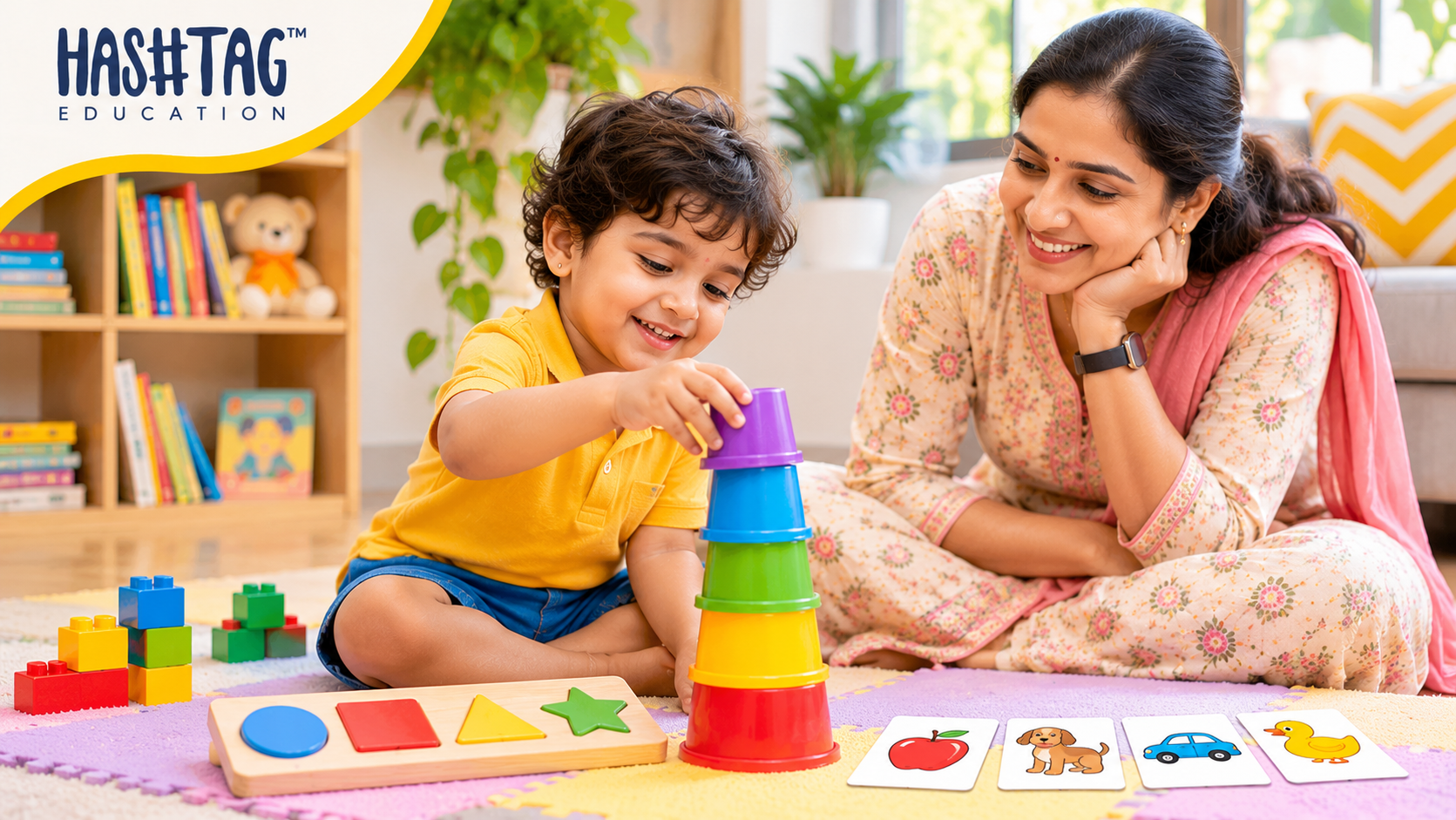
What Are the Best Learning Activities for 2-3 Year Olds at Home?
Learning activities for 2-3 year olds should be short, playful and hands-on. At this age, toddlers learn through touch, movement, sound and repetition — not drills. The short answer: focus on simple language games, sorting, colouring, outdoor play, music and warm storytime for 10 to 15 minutes at a time.
📺 Prefer watching? Follow Hashtag Education on YouTube for daily preschool videos, rhymes, and social story time.
What Should You Teach a 2 Year Old?
At age 2 to 3, your child's brain is building faster than at any other stage. Focus on these 5 simple areas:
Language — names of objects, animals, family members
Motor skills — stacking, pouring, scribbling
Social — sharing, waiting, greeting
Sensory — colours, textures, sounds, smells
Self-help — washing hands, picking up toys, eating by self
The National Education Policy (NEP) 2020 places this inside the Foundational Stage for ages 3 to 8.
10 Best Learning Activities for 2-3 Year Olds at Home
1. Picture Book Reading
Short, colourful books with 1 to 2 words per page. Read the same book daily — repetition is love.
2. Stacking Blocks and Cups
Builds focus, hand-eye coordination and early maths sense.
3. Colour Sorting
Give a bowl of mixed buttons, pom-poms or blocks. Ask: "Put all red ones here."
4. Scribbling and Colouring
Give crayons and plain paper. Let them scribble freely — no rules, no shapes yet.
5. Simple Puzzles (4 to 6 pieces)
Wooden shape puzzles are perfect at this age.
6. Music and Movement
Sing rhymes together. Dance. Clap. Toddler brains love rhythm.
7. Playdough or Wet Sand
Rolling, poking and squishing builds fine motor strength.
8. Water Play
Pouring water from one cup to another is magical for toddlers.
9. Naming Game
Point and name: "That is a chair. That is a fan." Builds vocabulary fast.
10. Family Role Play
Pretend to cook, feed a doll, drive a car. Builds imagination and empathy.
Also Read: What Is Language Development in young kids & Why It Matters
Indoor Activities for Toddlers 2-3 Years
Perfect for rainy days, hot afternoons or sick days:
Treasure hunt around the room
Tent or blanket fort
Dance party with 3 songs
Sticker peeling and sticking
Posting shapes into a cut-out box
Sorting laundry by colour
Flour or lentil sensory tray
Paper tearing and crumpling
Mirror play — name body parts
Keep it under 15 minutes per activity. Short + repeated wins.
Turn everyday play into learning! 🧠 Our flashcards help little ones recognise words, objects, and sounds with joyful, screen-free fun. 🛒 Shop Now: Click Here
Pre Nursery Activities for Learning Through Play
Pre-nursery (age 2 to 3) is a stage, not a syllabus. The best pre nursery activities are:
Hearing names of colours, shapes and animals daily
Holding crayons and tracing basic lines
Listening to short bilingual rhymes
Following 1 to 2 step instructions
Learning self-help routines
Lots of free play — indoor and outdoor
Our pick: The Hashtag Education Blueberry Series Level A is built exactly for pre nursery toddlers.
👉 Shop now: https://link.amazon/B0dbeWKTr
Simple Daily Rhythm for a 2-3 Year Old
A balanced day looks like this:
Morning — breakfast + 10 min storytime
Mid-morning — 15 min activity (craft, blocks, puzzle)
Afternoon — lunch + nap
Evening — outdoor play (1 hour)
Night — bath + bedtime story
Keep screen time under 1 hour a day. Repetition builds comfort.
FAQs: Learning Activities for 2-3 Year Olds
Q1. What are the best learning activities for 2-3 year olds?
Picture book reading, stacking blocks, colour sorting, scribbling, simple puzzles, music, playdough, water play, naming games and family role play.
Q2. What should I teach a 2 year old?
Teach names of objects, animals and family members, basic colours and shapes, simple instructions, social manners and self-help routines like washing hands.
Q3. How long should a learning activity last for a 2-3 year old?
Each activity should last only 10 to 15 minutes. Toddlers have short attention spans. Short, repeated activities work far better than long ones.
Q4. Are workbooks suitable for 2 year olds?
Yes, gentle age-matched workbooks like the Blueberry Series Level A work well for 2 to 3 year olds when used for 10 to 15 minutes a day with a parent.
Q5. What are good indoor activities for toddlers 2-3 years?
Treasure hunts, blanket forts, dance parties, sticker play, sensory trays, sorting games and mirror play keep toddlers engaged beautifully at home.
Share your feedback
Tell us what you think about this post or the website. Approved messages may appear on the Hashtag Club page.