
How to Create a Daily Routine for Preschoolers at Home?
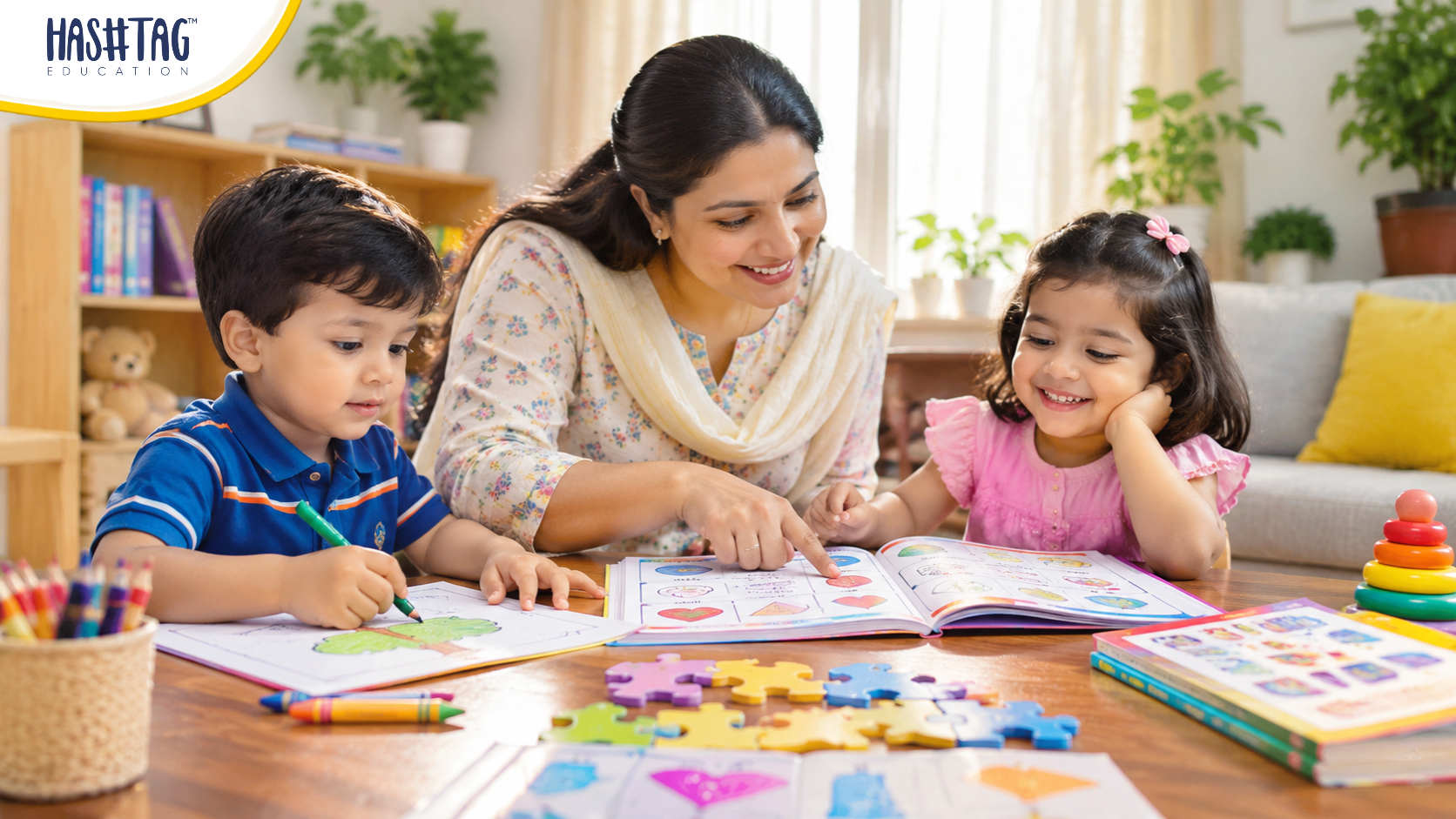
How Can You Create the Best Daily Routine for Preschoolers at Home?
Want to help your child learn at home? You don't need a strict timetable or long study hours.
A daily routine for preschoolers at home should include fun learning games, storytime, outdoor play, meals, and rest.
For kids aged 2–6, short and playful activities work well. The goal is simple: help your child learn new things while enjoying each day.
📺 Prefer watching? Follow Hashtag Education on YouTube for daily preschool videos, rhymes, and social story time.
How to Create a Daily Routine for Preschoolers at Home?
Young children feel safe when they know what comes next. A simple routine also helps them build good habits.
Daily activities can help your child:
Learn new words and numbers.
Build confidence and independence.
Improve focus and listening skills.
Develop social and creative skills.
Enjoy learning without pressure.
The NAEYC explains how daily routines and play can support early learning.
Parent tip: Keep your routine flexible. Every child learns at their own pace.
What Is the Best Preschool Learning Schedule at Home?
A good preschool learning schedule at home should be easy to follow.
Try this simple daily plan:
Time and Activity:
8:00 AM
Wake up, brush teeth, and eat breakfast
9:00 AM
Sing rhymes and read stories
9:30 AM
Play counting or colour games
10:00 AM
Enjoy outdoor play
11:30 AM
Draw, colour, or solve puzzles
1:00 PM
Eat lunch and rest
4:00 PM
Play with toys or explore nature
7:30 PM
Read a bedtime story
You don't have to follow these times exactly. Change the plan to fit your child's needs.
Parent tip: Treat this as a flexible example, not a compulsory timetable. Children attending preschool can follow a shorter home routine.
How to Teach Preschoolers at Home According to Age?
Children develop at different speeds, so learning activities should match their abilities rather than their age alone.
Ages 2–3: Explore Through Play
Focus on naming objects, identifying colours, singing action rhymes, and stacking blocks. Keep activities playful and follow your child's attention.
Ages 3–4: Build Early Learning Skills
Introduce picture books, simple counting, shape matching, sorting, and pretend play. Encourage children to describe what they see.
Ages 4–6: Encourage Independent Thinking
Try letter-sound games, story sequencing, number puzzles, drawing, and simple problem-solving activities.
For additional ideas, explore Learning Activities for 4-Year-Olds.
Which Play Based Learning Activities at Home Work Best?
You don't need expensive learning materials to make preschool education engaging.
Try these everyday activities:
Colour hunt: Find five objects of the same colour.
Kitchen counting: Count spoons, fruits, or plates together.
Pretend shop: Practise communication and simple counting.
Story basket: Use toys to create an imaginative story.
Nature walk: Observe birds, leaves, and different shapes.
Discover more Play-Based Learning Activities for Preschoolers.
How Much Time Should Preschoolers Learn Daily?
There is no universal number of minutes that every preschooler must spend on structured learning.
As a practical starting point, try 10–15 minutes of guided activity, followed by free play or movement. Adjust the duration based on your child's interest and comfort.
Remember, storytelling, cooking, conversations, and outdoor exploration are learning experiences too.
👉 Shop now: https://link.amazon/B0dbeWKTr
Turn everyday play into learning! 🧠 Our flashcards help little ones recognise words, objects, and sounds with joyful, screen-free fun. 🛒 Shop Now: Click Here
FAQs About Preschool Learning Routines
1. What is the best daily routine for a 3-year-old?
A balanced routine includes meals, sleep, outdoor play, storytelling, simple learning games, and time with family.
2. Should preschoolers study every day?
Children benefit from daily opportunities to learn, but formal lessons aren't necessary every day. Play and everyday interactions also support development.
3. How can I teach my preschooler without worksheets?
Use storytelling, counting household objects, singing, building blocks, and pretend play to introduce important concepts naturally.
4. What if my child refuses learning activities?
Avoid forcing participation. Offer choices, change the activity, or try again later when your child feels interested.
5. Can play-based learning prepare children for school?
Yes. Play-based activities support communication, social interaction, early literacy, numeracy, and problem-solving skills.
Conclusion: Make Every Day a Fun Learning Day
A good preschool routine doesn't need to be perfect.
Start with a story, a simple game, and some outdoor fun. Give your child time to explore, ask questions, and try new things.
Want to make home learning easier?
Explore Hashtag Education and discover simple ways to make everyday learning more enjoyable.
Share your feedback
Tell us what you think about this post or the website. Approved messages may appear on the Hashtag Club page.