
Bilingual Learning for Kids: Hindi or English First?
Bilingual learning for kids does not have to mean choosing between Hindi and English. Discover whether one language should come first, how to introduce two languages naturally, and simple everyday habits that can help children become comfortable communicating in both.
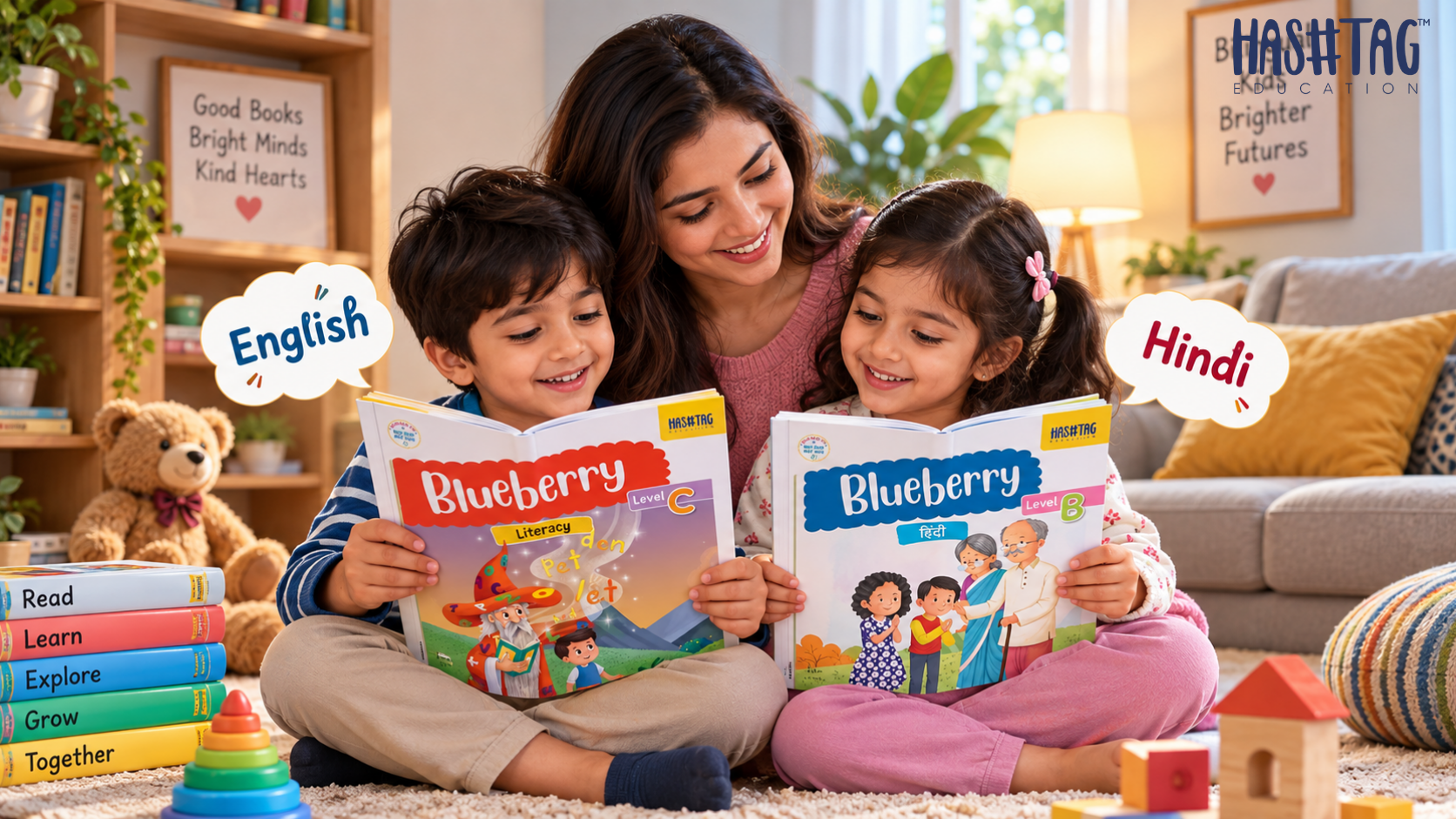
Bilingual Learning for Kids: Should You Teach Hindi or English First?
Bilingual learning for kids often leaves Indian parents with one big question: should my child learn Hindi or English first?
English is useful for school, books and future opportunities. Hindi helps children connect with family, stories, festivals and everyday life.
The good news is simple: you do not have to choose only one.
With the right approach, bilingual learning for kids can happen naturally at home. Children can listen to, speak and enjoy both languages without feeling pressured.
📺 Prefer watching? Follow Hashtag Education on YouTube for Panchatantra Stories for your kids.
Bilingual Learning for Kids: Will Two Languages Confuse a Child?
Many parents worry that learning two languages at the same time may confuse a young child.
You may hear your child say:
“Mumma, mujhe water chahiye.”
This kind of language mixing is common. Children often use the word that comes to mind first.
Instead of correcting every sentence, simply model the right words.
For example:
“Okay, aapko paani chahiye.”
This keeps the conversation easy and positive.
Over time, bilingual learning for kids helps children understand which language fits different people, places and situations.
Should I Teach My Child Hindi or English First?
If you often ask, “Should I teach my child Hindi or English first?”, remember that there is no single correct answer.
Start with the language your family uses most comfortably.
If Hindi is common at home, use it during meals, playtime and family conversations.
At the same time, introduce English through:
Picture books
Songs
Rhymes
Simple questions
School activities
The goal is not to make Hindi and English compete.
The goal is to make both languages useful and enjoyable.
For more ideas, read our How to Teach Hindi to Kids at Home guide.
How to Teach Two Languages to Kids at Home
Parents wondering how to teach two languages to kids do not need a strict timetable.
Small daily habits work better.
Bilingual Learning for Kids Through Everyday Activities
Storytime: Read an English story one day and a Hindi story the next.
Mealtime: Name fruits, vegetables and everyday foods in both languages.
Rhymes: Sing Hindi and English rhymes during playtime.
Family conversations: Let grandparents speak naturally in the language they know best.
Picture games: Show your child an object and ask its name in Hindi and English.
Book time: Use colourful books with simple words, pictures and familiar topics.
These easy activities make bilingual learning for kids feel like part of normal life instead of another lesson.
You can also explore our Hindi Varnamala for Kids Home Guide for fun Hindi-learning activities.
Bilingual Education Benefits for Kids
The bilingual education benefits for kids go beyond learning extra words.
Knowing two languages can help children:
Communicate with more people
Stay connected with grandparents and relatives
Understand family traditions better
Build stronger language awareness
Feel comfortable in different social situations
Enjoy stories, songs and books in both languages
For Indian families, bilingual learning for kids can create a useful balance.
Children can grow confident in English without losing their connection with Hindi or another home language.
Want to continue the learning offline? Explore our English books for kids, and Hindi books for kids.
Do Not Turn Language Learning Into a Test
Children learn languages best through listening, speaking, repeating and playing.
Avoid testing them all the time.
Do not ask:
“What is this called in English?”
“What is the Hindi word?”
“Why did you say that wrong?”
Too much correction can make children nervous about speaking.
Instead, praise the effort.
If your child mixes Hindi and English, repeat the sentence naturally in the language you want to strengthen.
Confidence comes before perfection.
Bilingual Learning for Kids Works Best Without Pressure
Bilingual learning for kids works best when both languages have a real purpose.
Use Hindi for family conversations, stories and everyday moments.
Use English through books, songs, schoolwork and playful activities.
There is no need to decide which language should “win.”
Give your child regular chances to listen, speak, read and enjoy both.
At Hashtag Education, we believe early learning should feel natural, joyful and connected to everyday life.
Explore our Bilingual Child in India Guide for more practical ideas on raising children with Hindi and English.
Share your feedback
Tell us what you think about this post or the website. Approved messages may appear on the Hashtag Club page.