
Benefits of Tracing for Preschoolers: Why Does It Help?
Benefits of tracing for preschoolers go far beyond following dotted lines. Tracing can help children build pencil control, hand-eye coordination, fine motor strength and important pre-writing skills before they begin forming letters independently.
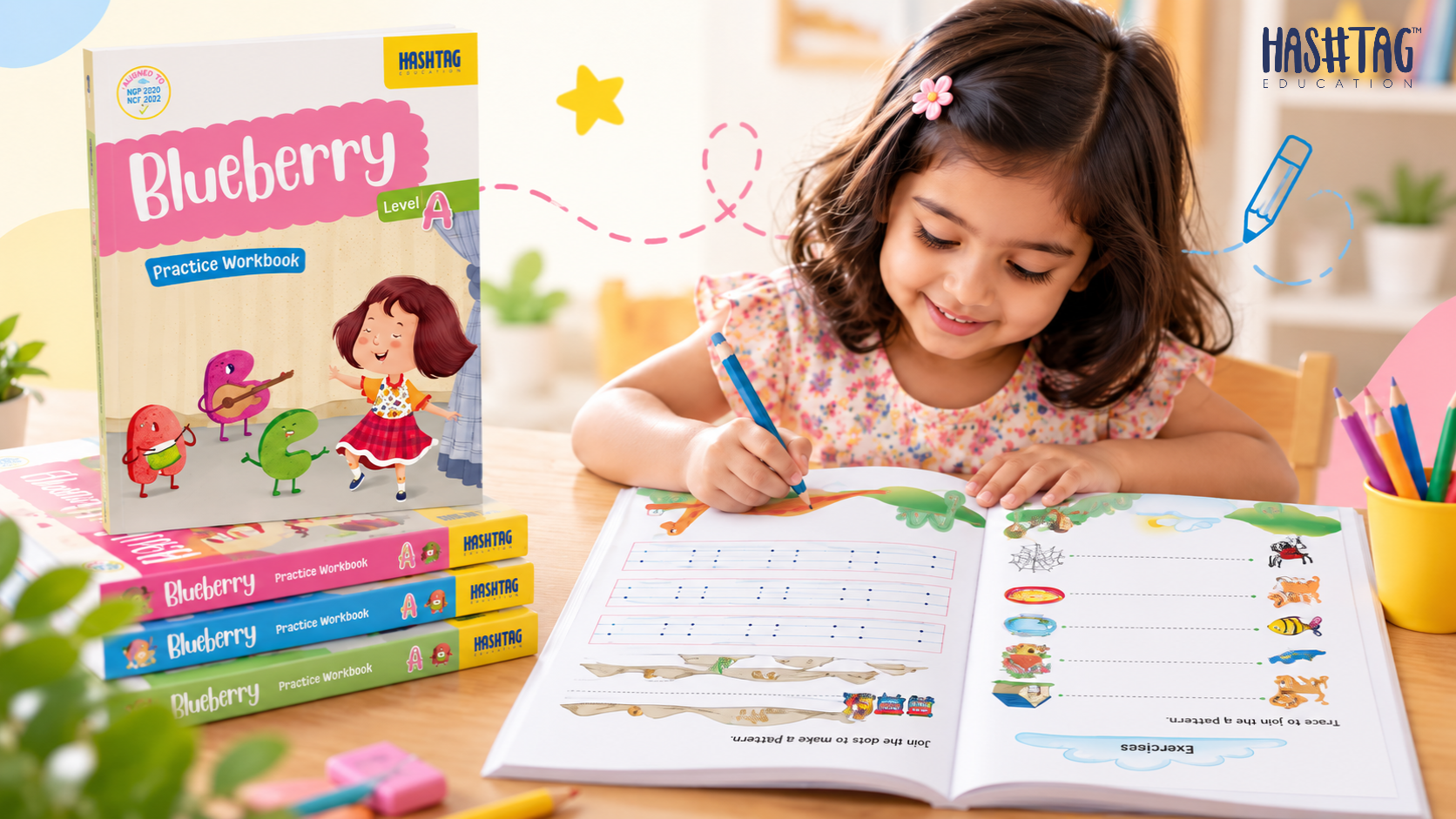
Benefits of Tracing for Preschoolers: Why Does It Help Kids Learn to Write?
Benefits of tracing for preschoolers begin long before children write their first clear letter.
Following a simple dotted line may look like a small activity, but a child is actually learning how to guide a pencil, control hand movement and follow a path with their eyes.
These are all important foundations for handwriting.
The goal of tracing is not perfect letters.
It is to help little hands become ready to write.
🔴 Prefer watching? Subscribe to our YouTube channel for daily preschool videos, rhymes, and activity tips: HashtagEducation
Benefits of Tracing for Preschoolers Before Writing Begins
Benefits of tracing for preschoolers, its helps children practise movements they will later use for letters and numbers.
Simple tracing can support:
Pencil control
Fine motor strength
Hand-eye coordination
Focus
Direction awareness
Shape recognition
Confidence with writing tools
Before children can comfortably write letters, they first need to control basic lines, curves and shapes.
That is why tracing is often used as a bridge between scribbling and independent writing.
Also Read: Printable Worksheets for LKG: 7 Powerful Yet Smart Picks
Why Tracing Helps Kids Learn to Write
If you are wondering why tracing helps kids learn to write, think about how letters are made.
Letters are built from basic strokes.
For example:
L uses straight lines.
O uses a curve.
A combines diagonal and horizontal lines.
Tracing gives children a chance to practise those movements without having to remember the complete letter shape on their own.
They can focus on moving the pencil correctly first.
As control improves, writing letters independently becomes easier.
When Should Kids Start Tracing?
Many parents ask, when should kids start tracing?
There is no single perfect age.
Most children begin with free scribbling first. Simple line tracing often becomes suitable around ages 3 to 4, depending on the child’s readiness. Age matters less than whether the child can hold a crayon with some control, make intentional marks and follow a basic path.
A simple progression may look like this:
Age 2–3: Scribbling, finger tracing and big movements
Age 3–4: Straight, curved and wavy lines
Age 4–5: Shapes, simple letters and numbers
Age 5+: Smaller letters, numbers and independent writing practice
Do not rush.
If tracing feels frustrating, return to drawing, colouring or finger-tracing activities and try again later.
Loved these ideas?
Discover Blueberry workbooks & box sets designed for joyful, hands-on learning.
🛒 Shop Now: https://hashtageducation.in/collections
Tracing Activities for Preschoolers
1. Trace Straight and Curved Lines
Start with large paths.
Use:
Straight lines
Zigzags
Waves
Loops
Curves
These simple patterns build control before letters are introduced.
2. Finger Tracing
Children do not always need a pencil.
Let them trace shapes or letters using a finger in:
Sand
Flour
Rice
Shaving foam
Finger paint
This makes tracing feel more like play.
3. Trace Shapes
Circles, squares, triangles and rectangles help children practise changing direction while keeping control.
4. Trace Their Name
Once your child is comfortable with basic lines, tracing their own name can make practice more meaningful.
Children usually feel more interested when the activity connects to something familiar.
Looking for a fun learning toy?
Storio Geometric Shape Sorter Toy for Kids
👉 Shop now: https://link.amazon/B00xRENvO
Pre-Writing Skills for Preschoolers Go Beyond Tracing
Pre-writing skills for preschoolers also develop through everyday play.
Useful activities include:
Playdough
Threading beads
Building blocks
Colouring
Painting
Tearing paper
Using child-safe scissors
Clothespin games
These activities strengthen the small hand muscles children need for writing.
You can also read our guide on How to Improve Pencil Grip in Kids for simple hand-strengthening ideas.
Keep Tracing Short and Enjoyable
Tracing should not become a long writing session.
For preschoolers, even five to ten minutes of focused practice can be enough. Short sessions help children practise without becoming tired or frustrated.
Try one tracing activity, then move on to colouring, a story or free play.
Praise effort rather than neatness.
Instead of saying:
“Stay inside the line.”
Try:
“You followed that curve really carefully.”
This helps children feel confident enough to keep practising.
Conclusion: Tracing Builds the Road to Writing
Benefits of tracing for preschoolers go far beyond completing dotted worksheets.
Tracing helps children understand how lines move, how a pencil responds and how their eyes and hands work together.
Start with large, simple movements.
Keep sessions short.
Add shapes, letters and numbers gradually.
Most importantly, let your child learn at their own pace.
At Hashtag Education, we believe writing readiness should grow through play, practice and confidence.
A wobbly traced line today can be the beginning of confident handwriting tomorrow.
Share your feedback
Tell us what you think about this post or the website. Approved messages may appear on the Hashtag Club page.