

 Team Hashtag
Fine Motor Skills for Kids: Build Strong Hands Before School Starts
Writing is not the beginning of developing fine motor skills. Children need to perform many smaller actions with their hands even before they start writing. For example, grabbing little objects, playing with clay, or turning book pages. All those small actions help develop the muscles necessary for writing. The earlier kids have good fine motor skills before entering kindergarten, the easier it will be for them to write, and they won’t struggle with that anymore.
What are Fine Motor Skills?
First, it is essential to understand what fine motor skills are. Fine motor skills include all hand movements, such as holding a spoon, putting on a sweater, or writing letters using a pencil. It is necessary to distinguish between gross motor skills and fine motor skills. Gross motor skills include larger movements like running, jumping, or climbing. The development period for fine motor skills falls between 1 and 6 years, but the key period is 2-5 years.
Why It Matters For School Readiness
If a child is starting school but has insufficient fine motor skills development, the child will have problems with writing, easily tire while writing, produce poor writing, and become demotivated. Educators have repeatedly noted that the primary difference between a school-ready and non-school-ready child is not in alphabet knowledge but in the ability to write easily.
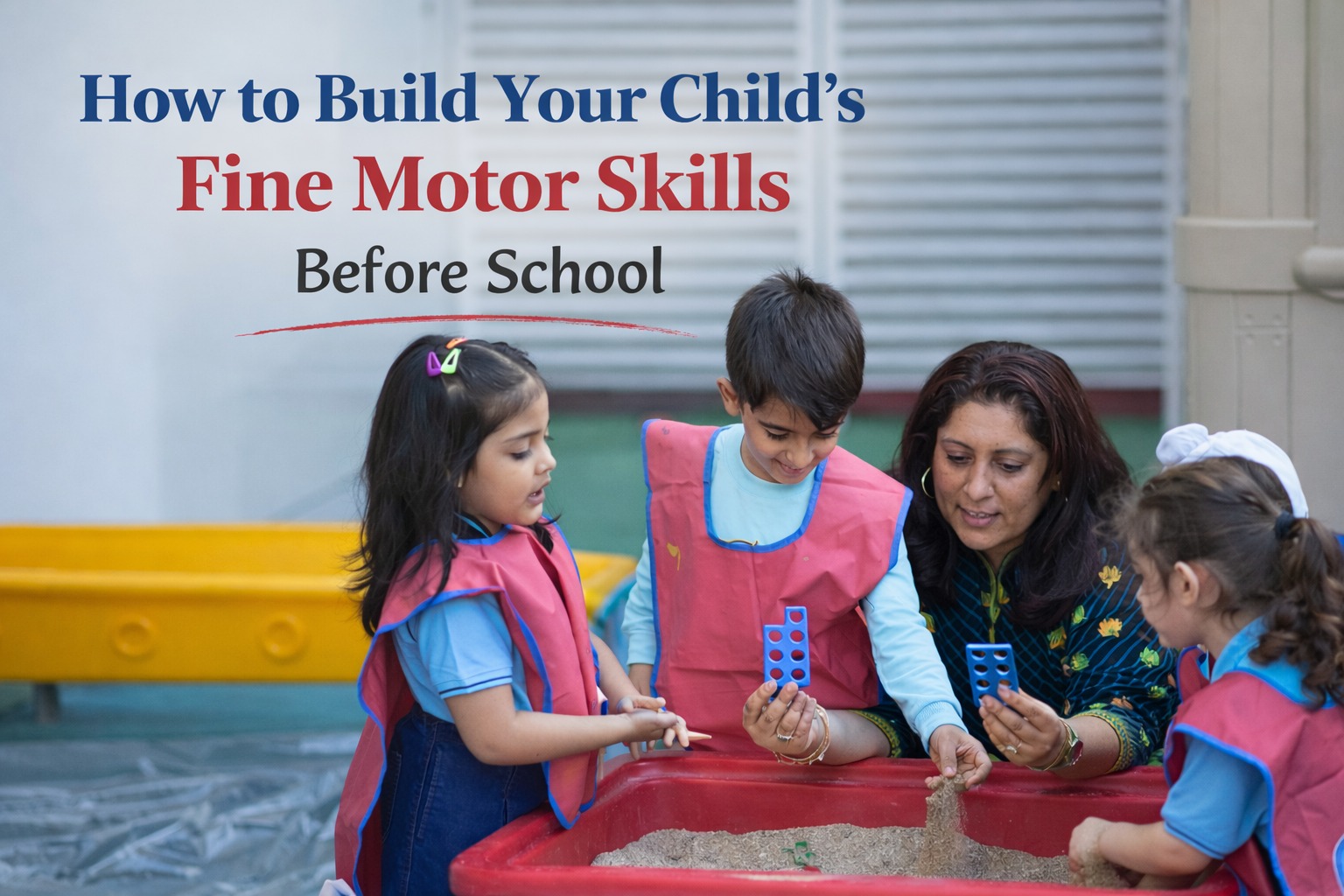
Age-by-Age Fine Motor Skills Development
Ages 1–2: Establishing a foundation. This period is dedicated to learning how to grasp, release, and transfer objects from one hand to another. Activities: stacking 2–3 blocks, picking up small foods (Cheerios, peas) using a pincer grip, turning pages of board books, and scribbling with thick crayons.
Ages 2–3: Developing strength in hands. At this point, your child is ready to perform more intricate activities. Activities: tearing paper into strips (fosters finger muscle strength), squishing and rolling playdough, finger painting with thick paints, and using our Dino English Workbook for finger tracing exercises.
Loved these ideas? Let’s bring them to life beyond the screen!
Discover Blueberry workbooks & box sets designed for joyful, hands-on learning.
🛒 Shop Now: https://hashtageducation.in/collections
Age 3-4: Controlling actions. Accuracy is achieved. Tasks: cutting along thick lines using child-safe scissors; colouring inside large lines; tracing dotted lines and simple shapes; using tweezers to grasp tiny items; assembling with smaller blocks and construction kits. We feature our Blueberry Level B books, which offer tracing and handwriting exercises suitable for this age group.
Age 4-5: Preparing to write. Fine motor skills have become refined enough to form letters properly. Tasks: Forming letters correctly (start at the top); colouring inside small lines; cutting out complicated shapes; engaging in elaborate arts and crafts projects using glue and small components; working with our Blueberry Level C books, which include cursive letter patterns.
Gradations in the Grasp of the pencil
Don’t rush the child into using a mature grasp of the pencil. The development of pencil grasp proceeds gradually through different stages.
1-2 years old: fisted grasp (the whole hand is clenched around the pencil). It’s perfectly natural and acceptable.
2-3 years old: digital pronate grasp (finger posture, movements from the shoulder and elbow joints); don’t interfere in any way.
Read Also: 10 Fun Learning Activities for 2-Year-Olds You Can Do at Home
3-4 years old: four-finger grasp (with four fingers plus a thumb); approaching the mature grasp position.
4-5 years old: tripod grasp (thumb plus two fingers); mature pencil grasp. Triangular pencils and special grips may facilitate this transition.

5 daily activites of develop fine motor skills without using any specific appliances
Buttoning and unbuttoning clothes while getting dressed. Opening and shutting containers and jars. Pulling off stickers and sticking them carefully. Squeezing water out of a sponge while bathing. Using a child-friendly knife to spread butter or jam on bread.
What should raise alarm signals?
While each kid progresses differently, if your three-year-old cannot grasp a crayon, does not seem to have an interest in sketching or doodling, finds it difficult to grab tiny items, or shuns tasks involving the hands, then you should visit a paediatric occupational therapist for professional advice.
Read Also: Activity ideas for playing and learning with your children
Frequently asked questions
Q: At what age should I expect my child to grasp a pencil correctly?
A: The proper tripod grasp (thumb, index, and middle fingers) usually emerges around the ages of 4 to 5 years. Before that age range, less mature grasps are entirely typical and should not be pushed.
Q: Does excessive tablet usage impact fine motor development?
A: Yes. Swiping and pressing buttons require a completely different set of muscle groups compared to grasping, pinching, and writing. Children who spend too much time using tablets exhibit weaker hand control when entering school.
Q: Which workbooks help develop fine motor skills?
A: Choose workbooks that offer tracing exercises starting from basic straight lines to advanced shapes and letter forms.
Our Blueberry series features precisely such a developmental progression at all three levels.
 English
Himanshu
April 9, 2026 at 12:11 PMGreat reminder—strong little hands make a big difference! Simple, fun activities can really help kids feel more confident before school starts.