

8 Powerful Things Not to Say: Language That Hurts or Heals
Words are powerful. They shape emotions, influence behavior, and leave lasting impressions especially on children. What we say, how we say it, and when we say it can either strengthen relationships or silently weaken them. In childhood, where emotional development is still taking shape, language becomes more than communication; it becomes guidance, identity, and connection. Building healthy communication habits is very important, believes Hashtag Education, to raise confident, emotionally strong, and resilient individuals. This blog explores how certain phrases accidentally harm children and how mindful, supportive language can heal, empower, and uplift. Why Words Matter in Childhood Communication Children develop a sense of self from what they hear from other people around them. One phrase may encourage a child or cause them to retreat. These interactions, repeated over time, help shape: The difference between harmful and healing communication is not about being perfect; rather, it is about being aware. Harmful Language: What Not to Say Many hurtful phrases aren’t said in anger or malice, they come from stress, habit, or cultural patterns. Yet they can profoundly impact the way a child thinks and feels. Below are some common examples of language that hurts more than it helps: 1. “Stop crying. It’s nothing.” Better alternative: “I see you’re upset. Tell me what happened.” 2. “Why can’t you be like other kids?” Better still: “You are doing your best. Let’s work on this together.” 3. “You never listen!” Better option: “I need your attention now. Let’s talk.” 4. “You’re too sensitive.” Better alternative: “It is okay to feel big emotions. I am here for you. 5. “Because I said so.” Better option: “Let me explain why this is important. 6. “Hurry up!” all the time Better alternative: “Let’s try doing this a bit quicker. I’ll help you.” 7. “That’s wrong, this is not how it’s done.” Better still: “Great effort! Let’s try it another way together. 8. “You’re being bad.” Better alternative: “The behavior wasn’t okay, but we can fix it.” Hurtful language doesn’t only break communication; it breaks connection. But the good news is-every phrase can be reworded in a growth-promoting and trust-enhancing manner. Healing Language: What to Say Instead Mindful communication can transform relationships. When children hear supportive phrases, they feel safe, valued, and understood. Healing language helps them develop self-regulation, empathy, and belief in themselves. Here are powerful phrases that strengthen emotional and social development: 1. “I understand how you feel.” Validation allows children to express their emotions without fear. 2. “Let’s solve this together.” Encourages teamwork, communication, and problem-solving. 3. “I’m proud of your effort.” Builds intrinsic motivation and reduces fear of failure. 4. “It’s okay to make mistakes.” Creates a growth mindset and resilience. 5. “I’m listening.” Opens the door to communication and trust. 6. “Take your time. I’m here.” Promotes calmness and emotional regulation. 7. “What do you think?” Enhances decision-making and confidence. 8. “Thank you for trying.” Reinforces positive behavior and effort. Healing language teaches children to believe in themselves and navigate challenges with strength and clarity. How Communication Shapes Relationships Healthy communication is not about saying perfect words; it’s about creating safe spaces. When adults model thoughtful communication, children learn: Children reflect whatever kind of communication they grow up with. If we speak with empathy, they will learn empathy. If we react calmly, they will learn calmness. If we show respect, they will learn respect. Language becomes a blueprint for future relationships. Healing Language: The Long-Term Impact Supportive communication doesn’t only affect childhood; it influences: Children who are spoken to with respect grow into adults who communicate with clarity and compassion, understand their emotions, value relationships, and seek healthy connections. Simple Ways to Build Healing Communication at Home Here are practical steps parents and educators can implement immediately: 1. Take a moment before responding. Everything changes with a calm tone. 2. Replace criticism with guidance. Correct behavior without attacking identity. 3. Practice active listening. Make children feel heard, not judged. 4. Use open-ended questions. Encourage thinking rather than limiting it. 5. Be intentional with words: Use language that teaches, not that wounds. 6. Celebrate small wins. Appreciation boosts confidence and optimism. 7. Model the language you want them to learn. Children learn more through observation rather than instruction. At Hashtag Education, we believe that communication is the core of every relationship and the bedrock of every child’s emotional development. With mindful language, we can raise children who feel confident, connected, and capable.
7 Powerful Ways Conscious Parenting Gently Shapes Discipline
Where parenting once relied on little more than “because I said so,” today, with a world of research deepening our understanding of child psychology and emotional development, it is crystal clear: what children need is not punishment but guidance. This is where conscious parenting comes in: connecting, communicating, and giving respect to empower the child. At Hashtag Education, we firmly believe that the best discipline is one that teaches, supports, and nurtures. When children understand boundaries-not out of fear but out of awareness-they grow into confident, emotionally secure, and responsible individuals. What is conscious parenting? Conscious parenting is an approach to raising children that favors empathy, communication, and understanding over punishment or control. Instead of misbehaviour being defiance, it’s a form of communication; children act out because they’re overwhelmed, confused, or unable to express what they really feel. Instead of reacting in anger or with punishment, conscious parenting encourages adults to: This does not mean there are no rules, but rather that discipline is based on respect and relationship, not fear. Why Traditional Punishments Don’t Work Many of us grew up hearing phrases like: Although these may stop the behavior for the time being, they do not teach emotional regulation, problem-solving, or communication. Punishment engenders fear, self-doubt, or resentment and can encourage children to hide their mistakes rather than learn from them. Psychological studies show that children learn better through connection rather than correction. They are more receptive to guidance when they feel understood. They listen when they feel safe. They cooperate when they feel respected. Healthy Discipline Is About Teaching, Not Controlling The purpose of discipline should always be to teach a child: How to make better choices How their actions affect other people Conscious parenting teaches children that boundaries are not restrictions but a tool for safety, wellbeing, and healthy behaviour. The Role of Boundaries in Conscious Parenting Boundaries are essential. In fact, children feel safer when they know what to expect. But boundaries work best when they are: ✔ Clear Children know precisely what is acceptable and what is not. ✔ Consistent The rule does not change with respect to mood, time, or place. ✔ OUT Compassionate Boundaries are communicated-in kindness, not conveyed in force. ✔ Age-appropriate A 3-year-old and a 7-year-old cannot be expected to behave the same way. When boundaries are firm yet kind, children learn self-control, not because they’re afraid of consequences, but because they understand expectations. Practical Examples of Conscious Discipline Punishing reaction: “Go to your room. You’re being bad!” Conscious response: Children learn emotional expression rather than aggression. Punishing reaction: “Stop crying or I’ll take away your toys.” Conscious response: The child learns emotional regulation, not suppression. Punishing reaction: “Do it right now or else!” Conscious response: The child learns how to problem-solve and cooperate. How Conscious Discipline Builds Long-Term Success Conscious parenting is not an issue of just dealing with behavior but rather shapes who the child becomes. Children raised through teaching-based discipline often grow into adults who are: When children feel heard and respected, they become adults who listen, understand, and lead with compassion. What Parents Can Start Doing Today Here are some small but powerful shifts parents can make immediately: Take a deep breath before you respond. Calm adults create calm children. Acknowledge feelings even when correcting behaviour. If the toy is broken, assist the child in repairing it instead of punishing them. Always show the child what to do instead of simply saying “don’t.” Children imitate what they see, not what they hear. These steps help in building an environment where children can grow up feeling safe, learning, and becoming better versions of themselves. How Hashtag Education Supports Conscious Discipline At Hashtag Education, our learning kits and early childhood resources are designed to help parents and teachers: Encourage positive discipline Build emotional intelligence in children. Support behaviour with storytelling and activities. Teach self-regulation and decision-making Encourage confidence through experiential learning. Our goal is to contribute to providing home and school environments where children can thrive emotionally, socially, and academically.

Little Readers: 5 Essential Steps for Language-Rich Homes
Raising Little Readers: Language-Rich Homes for Growing Minds Learn how language-rich homes help kids become strong readers, communicators, and thinkers and how parents can cultivate life-long learners from the start. Introduction: The Power of Early Words Before children ever open a book, they are already learning the language of the world. Their first teachers are not in classrooms but at home, in the voices of parents, grandparents, and caregivers who talk, sing, and share stories with them. Every giggle during a rhyme, every bedtime tale, and every question like “Why is the sky blue?” shapes a child’s growing mind. At Hashtag Education, we believe that raising little readers begins long before formal schooling, it begins in the language-rich home where words, curiosity, and imagination flow freely. For words don’t just teach children to speak; they teach them to think, express, and connect. 1. Why Language-Rich Homes Matter The first five years of every child’s life mark a golden window in the brain and language development process. During this period, over one million neural connections are formed per second-many of them influenced by the sounds and words kids hear. Research by the Harvard Center on the Developing Child shows that children who grow up in homes filled with conversation, reading, and storytelling develop larger vocabularies, stronger memory, and sharper comprehension skills. A rich language environment isn’t just about books-it’s about making a teachable moment out of every small one. For example: So next time one of your children asks “Why?”, remember: every answer you give is helping build their brain. 2. Reading: A Gateway to Imagination and Intelligence Books are not just about words on a page; they are windows into different worlds.Reading: A Gateway to Imagination and Intelligence When children listen to stories, they just don’t absorb information; they travel through imagination. They learn empathy, creativity, and problem-solving skills unconsciously. Reading aloud develops: Imagine that-a child who listens to bedtime stories learns rhythm, tone, and meaning. Later, those same rhythms help them read fluently, express themselves confidently, and even write creatively. It’s not about how long you read, it’s about how frequently. It is in that consistency that reading together becomes a bond, a nurturing of heart and mind shared. 3. Conversation is the Real Classroom While books feed imagination, conversation shapes intelligence. Everyday interactions whether it’s discussing what’s for dinner or talking about clouds — are powerful learning tools. When parents talk with children-not to them-the following is built: In these conversations, a child learns that their thoughts count, curiosity is welcome, and learning is joyful and shared. So, keep asking, keep listening, and keep talking because in every dialogue, a young mind is expanding. 4. Creating a Language-Rich Home A language-rich home does not need fancy materials or gadgets. What it needs is intentional communication and a little creativity. Here are some practical ways to bring language learning alive every day: Describe what is going on around you. “Look, the red bus is stopping at the big tree!” The child learns to connect words with objects and events in real life. Make storytime sacred and not a chore, but a joyous ritual. Choose colorful, age-appropriate books and let your child turn the pages, guess the ending, or act out characters. Rhyming, singing, and jingling help children develop rhythm, tone, and memory. Traditional lullabies or fun phonics songs both teach sound patterns an essential pre-reading skill. Try games such as “I spy something starting with B” or storytelling prompts like “Once upon a time, there was a talking balloon.” These fun moments stretch both language and imagination. These everyday practices turn ordinary routines breakfast, playtime, bedtime into powerful lessons in communication, imagination, and empathy. 5. The Bigger Picture: Language and Cognitive Growth Language and thought develop together. It is in learning to put words to their feelings that children also learn to think logically, to plan, and to solve problems. A child able to put feelings into words is less likely to express frustration through a tantrum. A child who can describe observations (“The ball rolled under the chair”) is already developing logic and spatial awareness. This interconnection of language and cognition builds stronger learners: children who question, explore, and engage deeply with their surroundings. When curiosity rather than correctness is celebrated in homes, children grow into confident communicators and lifelong learners. At Hashtag Education, early learning programs aligned to NEP 2020 and NCF 2022 focus on these very foundations: nurturing the joy of language, reading, and discovery in early childhood.

7 Powerful Positive Sleep Habits Boost Children’s Learning
The hidden superpower of Children’s learning and growth. Introduction: How Sleep is the Hidden Superpower of Learning In this fast-moving world, we talk a lot about nutrition, academics, extracurricular, and screen time when it comes to child learning but there’s one often-overlooked factor that silently shapes how a child learns, grows, and feels: sleep. It’s not just “rest”; sleep is the most powerful tool your brain has for organizing and storing thoughts, emotions, and memories. But modern routines packed with gadgets, homework, and late-night distractions are stealing away the essential rest our children need. The truth is straightforward: good sleep isn’t a luxury-it’s a foundation. It’s the base from which children learn, focus, create, and draw their emotional strength. When kids sleep properly, their minds bloom with energy, curiosity, and calmness. When they don’t, even the brightest child might fail to focus or handle his emotions in an appropriate manner. The Science Behind Sleep and Learning When children fall asleep, their brains don’t shut down-but power up in incredible ways. During deep sleep and REM sleep, the brain sorts through everything a child has learned in a day. Here’s what happens inside the brain while your child is sleeping: According to the American Academy of Pediatrics, well-rested children: On the other hand, too little sleep inevitably leads to forgetfulness, inattentiveness, and slowdowns in processing information. Even a loss of just one hour of sleep a night significantly affects mood, attention span, and classroom performance. How the Mood–Sleep Connection Impacts Emotional Regulation and Children’s Learning Sleep doesn’t just influence how children think; it deeply affects the ways in which they feel. When well-rested, a child is happier, has much patience, and is emotionally balanced, whereas sleep deprivation heightens even the smallest frustrations into tears, anger, or anxiety. This is because sleep helps regulate the limbic system, that part of the brain which controls emotions. Without rest, the brain becomes reactive, and children will find it very hard either to control stress or speak calmly. Poor sleep causes emotional imbalance, with possible symptoms showing up as: Sleep is a sort of emotional reset button. Every good night of sleep, so to speak, helps children process day experiences, recharge emotionally, and wake up ready for new challenges with empathy and balance. The Nutrition–Sleep Connection To build better sleep patterns, encourage foods that support calmness and serotonin production the “happy chemical” linked to good sleep. Food directly affects the sleeping of kids. While diets high in sugar and processed foods lead to restlessness and disrupt sleep, healthy nutrition enhances sleep depth and duration. Foods that help in sleeping better: Bananas, milk, and almonds are natural sources of tryptophan, which is an amino acid the body utilizes for its production of melatonin, or the sleep hormone. Avoid caffeine, even in chocolates or cola, and sugary snacks close to bedtime. Ideally, dinner should be taken 2 hours before going to sleep, then followed by a soothing bedtime routine such as reading or storytelling. The Role of Physical Activity in Sleep Children who remain physically active all day sleep faster and more soundly. Regular outdoor playtime like running, cycling, dancing, and other games results in natural exhaustion within the body and enhances the quality of sleep. Timing is everything, however. High-intensity games or screen-based activities before bedtime can overstimulate the brain and make it difficult to fall asleep. Introduce evening winding-down routines such as: Creating Healthy Sleep Habits at Home Healthy sleep habits are built on teamwork: parents, teachers, and children. Here are some practical, scientifically-based tips for families: Use bedtime rituals. Be a role model. When parents make time for rest, too, kids learn that sleep is just as important as homework. The School’s Role in Encouraging Healthy Sleep Schools can also contribute by inculcating in children the value of sleep through: Sleep education as part of wellness programs Homework policies that avoid late-night study stress. Classroom mindfulness or relaxation sessions Parent workshops on managing digital habits at home. At Hashtag Education, early learning programs align with NEP 2020 and NCF 2022 for the promotion of not only academic excellence, but also holistic well-being. We believe in nurturing future-ready learners-emotionally strong, curious, and balanced children. And quality sleep is a cornerstone of that vision.
6 Ways to Raise Confident Children Without Excess Praise Now
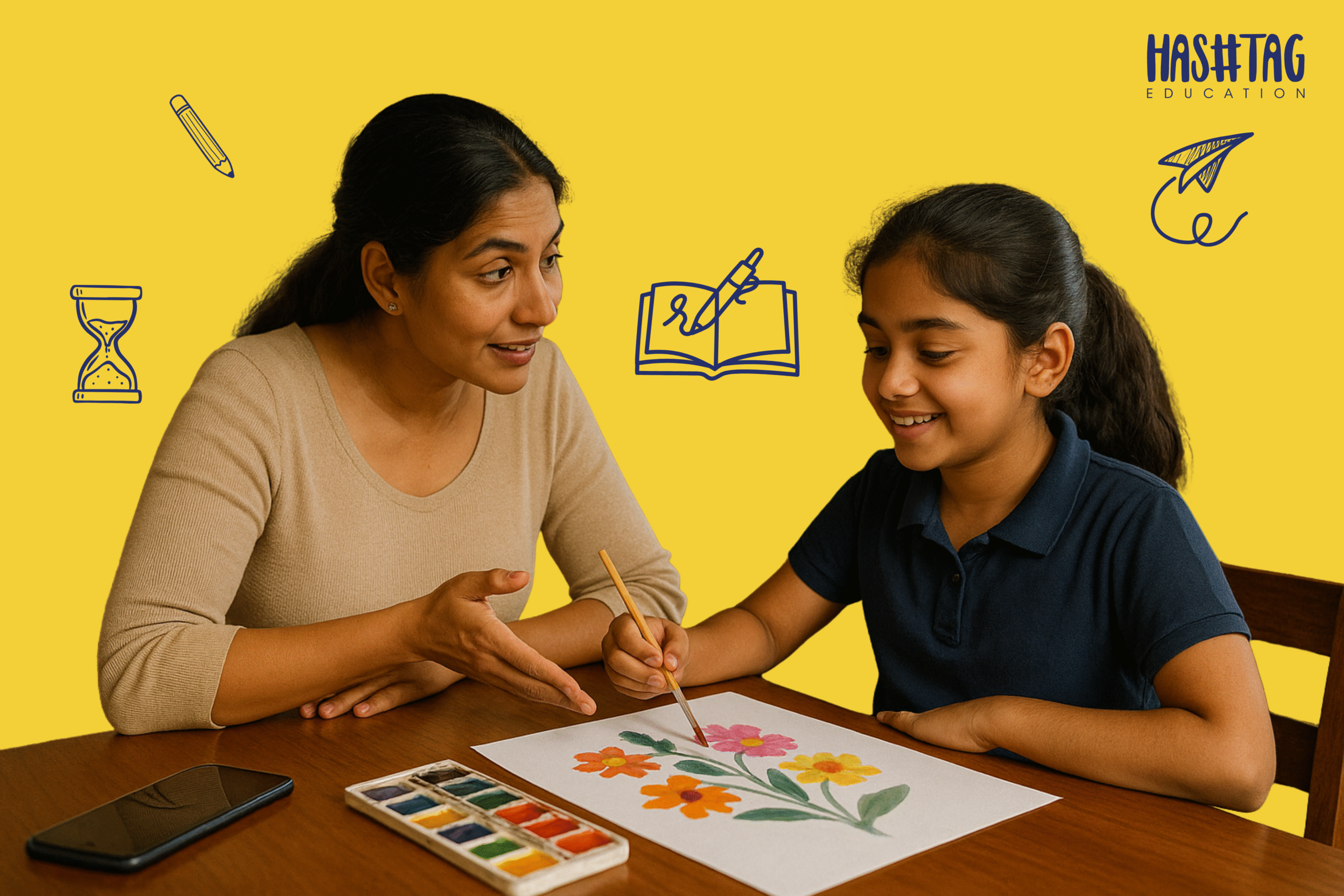
Every parent’s dream is to raise confident children who believe in themselves, make good choices, and bounce back from setbacks. In today’s world of constant encouragement and social media validation, there is a fine line between building confidence and creating dependence on praise. The truth is that too much praise can do more harm than good. Let me explain how to raise confident, self-assured children-not by overpraising them but by helping them find their true identity, self-worth, and a sense of belonging. 1. Confidence Isn’t Built, It’s Grown Confidence does not come from telling a child they’re amazing every five minutes. It is not something you “give” them through repeated approval. Instead, confidence grows through lived experiences—moments of success, moments of effort, and even moments of failure. Imagine that your child painted a picture, and immediately your instinct would be to say, “You are the best artist ever!” While this is well-intentioned, such statements accidentally teach children to work for approval rather than from curiosity or passion. Instead, try something more thoughtful, like: “I love the way you mixed those colors; what made you choose them?” This subtle shift turns praise into engagement: It tells your child that: This boosts intrinsic motivation, where your confidence does not depend on external validation. 2. Praise Effort, Not Just Outcome Children often receive applause for high grades, winning a competition, or mastering a skill. While celebrating achievements is important, it’s equally important to acknowledge what helped them get there: effort, commitment, and perseverance. When parents say: “You worked so hard on that project, I noticed how much time you put into it.” …children learn that effort and not perfection is what truly matters. They begin to realize that: This mindset builds resilience because it separates a child’s worth from the outcome. A child who values effort will stay motivated even when results don’t go their way, which is an essential element in strong self-esteem. In other words, outcome-based praise creates pressure-“What if I can’t win next time?”-while effort-based appreciation instills confidence: “I can always try again.” 3. Help Them Discover Who They Are Confidence blossoms when children understand themselves, not who others want them to be. Children need space to develop: Building autonomy involves letting them make small choices. Something as simple as choosing their outfit, deciding on a hobby, or helping to plan a family outing can strengthen their sense of identity. When the child knows who they are, they do not rely heavily on outside praise. Their confidence is thus rooted in self-awareness rather than in approval. Encourage them with questions like: A positive sense of identity also underpins connectedness, children can feel secure enough in themselves to express themselves freely, including when their choices differ from others. 4. Create a Sense of Belonging Confidence grows in relationships where children feel they matter not because of what they achieve, but because of who they are. Belonging means: Small, daily interactions build this emotional base: A sense of belonging at home, at school, and within the community provides a child with less reason to compare themselves to others. They don’t feel the urge to “perform” for love or be validated. Instead, they develop quiet inner confidence-the steady belief that “I matter.” 5. Teach Them to Handle Failure Gracefully to Raise Confident Children One of the greatest gifts you can give your child is the ability to fail and rise again. Failure isn’t the opposite of success-it’s a part of success. Yet many parents swoop in to rescue kids to avoid discomfort, mistakes, or unhappiness. Overcomforting or overpraising following a setback may unwittingly send the wrong message that failure is a thing to be shunned or hidden. Rather, use moments of struggle as an occasion for reflection. Ask questions like: This approach teaches children that Children who learn to tolerate frustration, revise their thinking, and try again become resilient. They learn that confidence doesn’t come from being right all the time it comes from being willing to keep going. 6. Be a Mirror, Not a Megaphone Children learn 80% from what they observe and only 20% from what they are told. The greatest lessons in confidence come from watching how adults handle life. Model behaviors such as: Rather than telling your child that they’re perfect all the time, show them it’s okay to not be perfect-and worthy nonetheless. When you model balanced confidence, children naturally mirror it. They learn to fail with poise, celebrate effort, and believe in their own capabilities-with no need for over-the-top praise. Social Media: The Hashtag Education Perspective At Hashtag Education, we believe that confidence is not about being the best, it’s about believing in your best self. Confidence in childhood does not grow through overpraising, exaggerated compliments, or comparisons of achievements. It grows through: As parents make the shift from loud praise to meaningful presence, kids begin creating their own validation. They learn that their worth doesn’t come from applause; it comes from who they are and what they believe about themselves. The aim is straightforward: Raise confident children who are confident, not just today, but for lifestyle, and belonging, we can help our children grow into grounded individuals who don’t seek validation they create it.

5 Gentle Parenting Mindfulness Habits to Help Kids Stay Calm and Connected
If you’ve ever watched a child spiral after a tough day homework tears, sibling squabbles, the whole nine yards you know how fast little hearts can get overwhelmed, and how much a gentle parenting approach can help. The world moves quickly for kids: buzzing notifications, busy schedules, big feelings in small bodies. Mindfulness gives them (and us) something simple and powerful to hold onto: a pause button. At its core, mindfulness is paying kind attention to the present moment no judgment, just noticing. It’s more than “relaxing.” It’s a small spiritual practice of connection: to breath, body, feelings, and the world around us. And when children learn it early, they don’t just get calmer; they grow more compassionate, confident, and steady. What mindfulness looks like for kids (and why it matters) Mindfulness for children isn’t sitting perfectly still for 20 minutes. It’s tiny, doable moments woven into the day before school, during a meltdown, while eating a snack, at bedtime. Over time, those small moments add up. Kids who practice mindfulness learn to: And yes, there are practical wins too: Make it small, make it daily You don’t need a meditation cushion. You need a few simple routines. Try these and pick your favorites. 1. Smell the flower, blow the candle When to use: before school, in the car, right after a conflict, before tests, at bedtime. 2. The Glitter Jar Fill a clear jar with water and glitter. Shake it: “This is your mind when you’re upset.” Watch as the glitter slowly settles: “This is your mind after breathing.” Kids see calmness arrive. When to use: after big feelings or as a pre-bed ritual. 3. One Bite, All Senses- Mindful Eating Pick one bite of something delicious. Ask: What colors do you see? What does it smell like? What’s the first taste? The second? Chew slowly. When to use: snack time, family meals, or to reset a rushed afternoon. 4. Nature Noticing Walk Walk for five minutes and find: When to use: after screen time, on the way to the bus, weekend reset. 5. Loving-Kindness- Wishes Close eyes or soften the gaze. Say (silently or out loud): When to use: bedtime, after a disagreement, before a big day. Real-life scripts you can borrow Child: “I can’t do this. It’s too hard!”You: “Totally get it. Let’s try two flower-and-candle breaths together, then we’ll take one small step.” Child (angry): “I hate this!”You: “Looks like a stormy feeling. Want to sit and watch the glitter settle with me?” Before a test: “Put one hand on your belly. Feel it rise and fall three times. Your breath is your superpower.” Bringing mindfulness into school and home is easier with a gentle parenting approach. In classrooms: Teachers can open class with a 60-second breathing break or a “sound bell” (listen until the sound fades). Post a “feelings chart” kids can point to. Keep a calm corner with headphones, a soft square to sit on, a timer, and a glitter jar. At home: Model it. You don’t need to be perfect just honest. Try, “I’m feeling rushed. I’m going to pause for three breaths.” Kids copy what we do, not what we say. The quiet spiritual layer, simple, not preachy You don’t have to teach theology to invite spirituality. Spirituality here is about connection to self, others, and something larger (nature, community, a sense of meaning). Mindfulness opens that door gently: For families with religious traditions, mindfulness can sit alongside prayer or reflection. For secular families, it’s simply attention with kindness. Either way, kids learn that stillness is safe, feelings are visitors, and kindness is a practice. Tips that make it stick A quick weekly plan, steal this! Parting thought Mindfulness won’t erase tough days. But it gives kids a lantern to carry through them. Breath by breath, they learn: “Feelings come and go. I can be kind to myself. I can pause. I can choose.” That’s emotional intelligence. That’s spiritual growth. And that’s a gift they’ll carry for life.If you’ve ever watched a child spiral after a tough day homework tears, sibling squabbles, the whole nine yards you know how fast little hearts can get overwhelmed. The world moves quickly for kids: buzzing notifications, busy schedules, big feelings in small bodies. Mindfulness gives them (and us) something simple and powerful to hold onto: a pause button. At its core, mindfulness is paying kind attention to the present moment no judgment, just noticing. It’s more than “relaxing.” It’s a small spiritual practice of connection: to breath, body, feelings, and the world around us. And when children learn it early, they don’t just get calmer; they grow more compassionate, confident, and steady.

How to Introduce Screen Time Wisely at Different Ages
Screens are an integral part of childhood as much as building blocks and bedtime tales. Exposure is inevitable in the form of YouTube videos, educational apps, and virtual classrooms. However, the true question for educators and parents is not, “Should we permit screen time?”—it’s “How do we introduce screen time in a healthy, appropriate manner?“ At Hashtag Education, we believe screen time should be guided , not feared. This blog offers a warm, practical guide for introducing screen time responsibly across different age groups, all under the umbrella of Digital Wellness. Why Age-Appropriate Screen Time Is the First Step Toward Digital Wellness In the same way that we wouldn’t give toddlers an entire chocolate meal, we shouldn’t give them unrestricted screen time unless we know what is developmentally appropriate. Making deliberate choices is the first step towards developing healthy digital habits, and these choices vary depending on the stage of development. The key to digital wellness is balance. When introduced wisely, screen time can: Boost creativity and learning Strengthen digital literacy Improve social connection (especially in older kids) Encourage responsible tech habits for life 👶 Infants (0–2 Years) It is advised to avoid screen time unless it is necessary for video chats with family. Now is the time to explore the real world. Babies must feel textures, hear voices, and see faces. Screens can’t replace that sensory experience. Better options: Singing songs Tummy time Looking at high-contrast picture books A delightful exception is talking to grandparents via video calls! 👧 Youngsters (2–5 Years) Up to an hour of excellent, instructive content per day, co-viewed with a caregiver, is advised. Toddlers are inquisitive and perceptive. Make your screen introduction meaningful and interactive. Observe alongside them. Make inquiries. Make it a communal experience. Advice for maintaining your digital well-being: Make use of reliable apps such as Sesame Street, Khan Academy Kids, or PBS Kids. Steer clear of auto play and fast-paced shows. Keep to scheduled times (e.g., before quiet time or after lunch). 🧒 Young Children (6–9 Years) One to one and a half hours per day is advised, preferably for creativity or education. Digital independence is part of the independence that this age group is learning. Now is a great time to teach children that screen time is for more than just enjoyment. Healthy routines to establish: Establish a tech schedule. Urge them to use screens for coding, storytelling, or drawing. Combine reading, playing outside, and screen time. 👦 Tweens (10–12 Years) It is advised to devote up to two hours per day to quality and accountability. Screens become a tool for social interaction, hobbies, and academic work. The time has come to instill digital responsibility in them; assist them in making wise decisions rather than merely adhering to regulations. What is beneficial: Discuss kindness and online safety. Allow them to experiment with creating content (music, art, and videos). Reward screen time with constructive offline activities, such as doing chores or reading. 🤑Teens (13 to 18 years old) Stressing self-monitoring, boundaries, and balance is preferable to imposing strict limitations. Teens require both structure and independence. Here, guidance not control is the aim. Include them in the discussion about screen limits. What functions well: Together, develop a digital media strategy. Establish tech-free periods, such as before bed and at dinner. Promote screen-free downtime and breaks. Encourage their digital pursuits, such as graphic design and content production. Five Age-Related Golden Rules Your child is observing you, so set an example. Set an example of good screen habits. Establish screen-free areas for family get-togethers, dinner tables, and bedrooms. Talk, don’t just impose rules; explain the importance of boundaries. Put quality first: slow-moving shows and educational apps are preferable to fast-paced entertainment. Make time for actual play. While screens are fantastic, nothing compares to pretend play, climbing, or drawing. Hashtag Education’s Screen Time We understand that technology is here to stay. For this reason, Hashtag Education’s programs blend in-person instruction with screen-based resources. We use digital content carefully; we never use it to replace learning, only when it improves it. Our objective? to support each child in building solid foundations for lifelong learning, emotional health, and screen time balance. Final Thoughts: Start Small, Stay Involved Being present is more important than being perfect when it comes to introducing screen time in an appropriate manner. Whatever your child’s age, the most important thing is to be there for them to guide, watch, and adapt as they develop. Keep in mind that digital wellness is a continuous process. It’s an adventure. You don’t have to deal with it alone, either.
Parenting on Purpose: Building Family Values and Living Them
Parenting is more than just raising kids; it’s also about raising future adults who will make a difference in the world. In today’s fast-paced, achievement-driven society, it’s all too easy to become enmeshed in the cycle of GPA, activity, and milestones. Intentional parenting, however, is deeper. It requires, What kind of adult do I desire for my child to become? That response is the foundation of intentional parenting based on solid family values and deep self-knowledge. Why Family Values Matter? Family values are a compass. They define behavior, build a sense of community, and direct choices. Knowing what their family values whether it be kindness, compassion, honesty, grit, or respect helps kids form an inner code that guides their actions even when no one else is around. But family values don’t just appear. They are deliberately constructed, through discussion, introspection, and everyday living. Gather your partner and kids around and talk about what is most important to your family. Is it honesty? Helping others? Being a lifelong learner? Identify these values, then put them on paper. Post them in your house. Incorporate them into problem-solving and success-celebrating activities. Self-Awareness’s Function in Parenting Parenting on purpose starts with knowing yourself. In addition to what you say, children also observe how you live. Your tone, responses, and routines teach them unspoken lessons about managing emotions, resolving conflicts, and interacting with others. Being self-aware allows you to react thoughtfully rather than impulsively. What made me yell at my kid today? Am I a loving or fearful parent? By becoming aware of your emotional triggers and unconscious beliefs, you can move from reflexive responses to conscious decisions. For example, if you value open communication but often interrupt your child, self-awareness enables you to align your behavior with your intention. Although this inner work is difficult, it is necessary. Kids require parents to be human, not perfect to be willing to say sorry, think about it, and become better. As parents show their kids vulnerability and self-growth, children understand to do the same. Living the Values Daily The first step is to create values; living them is the life’s work. If your values are empathy, then volunteer together. Telling the truth, even when it’s difficult, is something to be proud of if honesty is important. Make ordinary moments teachable moments arguments are opportunities to teach respect, mistakes are ways to show resilience. Establish the habit of checking in as a family. A weekly or monthly reflection session—What value did we live well this week? What can we improve?—keeps values alive and growing. Concluding remarks To be a purposeful parent, you must be deliberate rather than perfect. It involves altering your daily schedule to better represent the type of person you want to be. And it begins with you: your self-awareness, your values, and your determination to live them out each and every day. When values are founded on love and continuously upheld, they become the unseen threads that hold your family together. They not only determine your children’s future but also the world they will eventually influence.
How to Build Trust with Your Child Through Sincere Conversation
Why Listening Is More Important than Lecturing? As parents, we tend to want our children to come to us when they’re having some issue, a bad day at school, a mistake they’ve made, or a question they’re afraid to ask. But the reality is, children don’t tell us because we are their parents. They reveal things when they trust us. And trust doesn’t develop in a large moment. It develops in small, everyday moments of conversation. What Open Conversations Really Look Like Open conversations aren’t forced or formal. They typically occur in between, while driving, setting the table, or at bedtime. What matters, though, is how we react in those fleeting moments. Here’s what worked for me to develop deeper trust with my child: Create a Safe Space to Talk Kids learn how we respond. If they get judged, cut off, or rushed, they’ll clam up. When my daughter once confessed to fibbing so she wouldn’t disappoint me, I wanted to respond but I opted to remain calm and simply listen. That one instant created an opening for countless future open and honest conversations. Be accessible. Don’t respond with anger or disappointment. Allow them to finish speaking before you respond. Normalise Talking About Emotions Your child will be more likely to trust you when more serious problems arise if they learn that it’s acceptable to express their feelings. You may say: It’s acceptable to experience anxiety prior to tests. I used to feel that too. “You seem upset. Want to talk about it or just sit for a while?” Make Time for Casual Conversations Not every discussion needs to be about “issues.” Mere conversation about their favorite TV show, that one time at school when something was hilarious, or what they’re thinking will build connection. And trust may begin with small talk. Make bedtime a check-in time. Talk to someone when you’re driving or walking. Never wait for them to start a conversation. Express Your Feelings Honestly We become human when children realise that adults are flawed and have feelings too. Use age-related examples from your own life. “I recall how scared I was with my first presentation.” “Even I have days when I’m feeling down. It’s totally normal.” 5. Observe Their Privacy We don’t have to pry into every detail just because we are parents. Be accepting if they say, “I’m not ready to discuss that.” Inform them that you are available when they are. Concluding remarks Being consistent, composed, and approachable is more important for building trust with your child than having deeply serious conversations every day. Your kid will eventually begin to view you as more than just a parent, but as someone they can turn to without apprehension. And don’t forget, it’s not about saying the right thing, it’s about being willing to hear without fixing, judging, or hastening.

An Overview of Reading Milestones for Parents: From Picture Books to Chapter Book
Among the most delightful aspects of parenthood is teaching your child to read. But how can you tell if your child is on schedule? When should you introduce chapter books? What part do you play in all of this? The key reading milestones from toddlerhood to the early years of primary school will be covered in this book, along with how Hashtag’s educational resources may support your child at every stage. Stage 1: The Ages 1–5 Picture Book Stage What It Looks Like: Vibrant, interactive illustrations with little text. Rhyming words and refrain patterns Chances for interaction such as naming objects or creating sounds Why It Is Important: Picture books assist young children in establishing early language skills, understanding, and a sense of story They present vocabulary and encourage imagination even before a child is reading on his/her own. Ways to Help: Read every day, even if it’s the same book you read again and over. Use questions, goofy voices, and gestures to keep them engaged. Teach them to page-turn and gesture to pictures From Hashtag, Try This: With the help of carefully chosen picture books, storytime flashcards, and entertaining parent prompts, our “First Readers Kit” makes reading exciting and enjoyable. Stage 2 (Ages 5–6): Sight Words and Early Readers What It Looks Like: Repetitive, simple sentences with familiar vocabulary Phonics and sight word introduction Predictable, short storylines Why It Is Important: Children start reading simple words and connecting letters and sounds at this point, which is when decoding begins. Success at this stage increases confidence in reading and sets the foundation for higher-level skills. What You Can Do To Help: Employ starter-level phonics books and sight word games Effort, not perfection—is your goal—celebrate small successes Don’t push the pace; allow your child to set the speed Support with: Hashtag’s Sight Word Flashcard Pack and Phonics Play Sheets are perfect for this stage of learning hands on, active, screen-free. Stage 3: Transitional Readers (Ages 6–8) What It Looks Like: Brief paragraphs, simple plots, and starter-level chapters Fewer pictures, more print, more vocabulary range Why It Is Important: Children now move away from “learning to read” and into “reading to learn.” They begin to read simple fiction and nonfiction and build stamina for longer narratives. Alternate reading together shared reading builds fluency What You Can Do To Help: Question them about characters and decisions Begin with brief series to establish familiarity and anticipation Attempt This from Hashtag: Our Transitional Reader Set has novice chapter books, genre samplers, and guided reading bookmarks to assist your child with staying engaged and motivated. Stage 4: Chapter Books and Fluent Reading (Ages 8–10) What It Looks Like: Several chapters, plot development, and character change Few or no illustrations Exposure to multiple genres and styles of writing Why It Is Important: At this stage, children are doing more than just reading; they are evaluating, understanding, and making decisions. Reading becomes a hobby and a way of life. How You Can Assist: Allow them to have control over what they read—freedom creates interest Talk through stories as you would a show or movie Make exploration of genre a priority: mystery, adventure, biography, etc. Support With: Hashtag’s Genre Explorer Packs and Monthly Reading Subscription Box provide age-relevant books by themes, with discussion questions for parents to remain engaged. Reading Milestones: A Parent-Friendly Breakdown This is a brief summary of what reading usually looks like as kids mature, and how you can support them with the help of Hashtag’s learning materials: Ages 1–2: Identifies pictures, repeats sounds, loves repetition Utilize Hashtag’s Soft Story Cards and touch board books Ages 2–3: Points to familiar pictures, completes sentences, turns pages Interactive books and parent storytelling are essential Ages 3–4: Identifies some letters, makes pretend reading sounds, understands story sequence. Try Hashtag’s Pre-Reader Kit with alphabet mats and images Ages 4–5: Begins to decode simple words, reads sight words Use Phonics Playbooks and Sight Word Flashcards Ages 5–6: Reads short sentences, identifies story beginnings and endings Introduce Level 1 readers and Reading Practice Playbooks Ages 6–7: Reads short chapter books, develops fluency, enjoys series Use bookmark buddy sets and simple series books as incentives. Ages 7–8: Summarizes books, samples various genres Employ Genre Explorer Packs for variety and discovery Ages 8–10: Reads smoothly and alone, appreciates complex plots Provide Monthly Book Subscription Boxes for ongoing growth Last Thoughts: Growing a Lifelong Reader Raising a home reader doesn’t require you to be a teacher. What matters most is your presence, support, and consistency. Let your child observe you reading. Go with your child to libraries. Incorporate books into play and daily life. Additionally, Hashtag’s meticulously developed book kits, literacy aids, and reading tools are made to grow with your child—from the first picture book to the cherished chapter series, in case you do require assistance. Because, one story at a time, reading is about creating memories, expanding empathy, and unleashing imagination in addition to teaching word decoding skills.
- 1
- 2

 English