
Educational vs Passive Screen Time: Better for Preschoolers?
Educational vs passive screen time can create very different experiences for young children. Learn how to identify quality screen use, balance digital learning with offline play, and make screen time more meaningful for preschoolers.
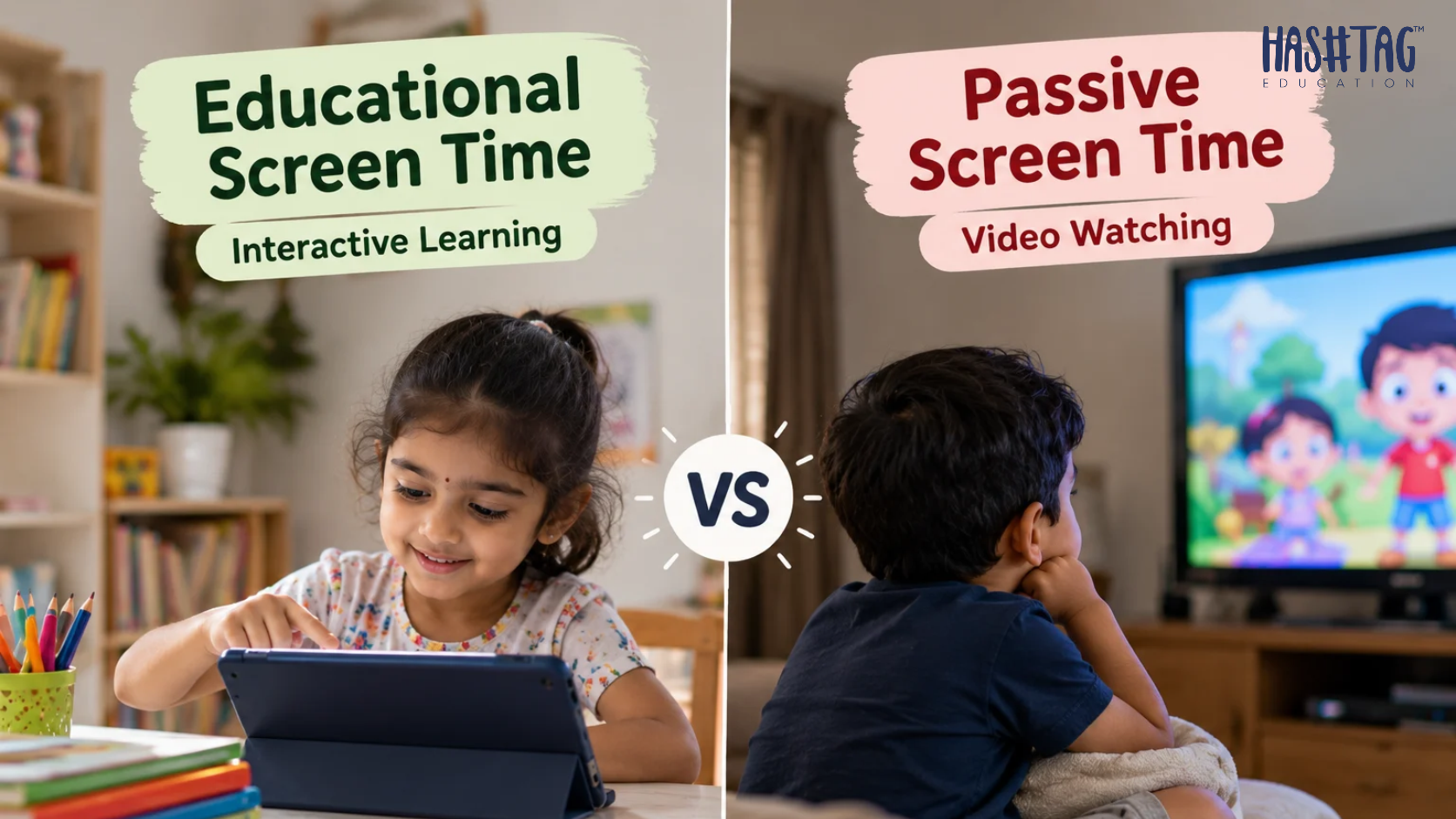
Educational vs Passive Screen Time: Which Is Better?
Educational vs passive screen time is an important difference for parents to understand.
A child watching videos for 30 minutes is not always having the same experience as a child spending 30 minutes answering questions, solving puzzles, singing, or following an educational activity.
Both involve a screen. But what the child does with that screen can be very different.
So, instead of asking only, “How much screen time is okay?” parents can also ask, “What is my child doing during that time?”
📺 Prefer watching? Follow Hashtag Education on YouTube for daily preschool videos, rhymes, and social story time.
Educational vs Passive Screen Time: What Is the Difference?
The easiest way to understand educational vs passive screen time is to look at participation.
Passive screen time usually asks very little from the child.
Examples include:
Watching endless cartoons
Autoplay videos
Short entertainment clips
Background television
Watching without responding or talking
Educational screen time encourages children to do something.
They may:
Answer a question
Match pictures
Count objects
Identify colours
Repeat words
Sing along
Solve a simple puzzle
Follow an instruction
The screen becomes a starting point for learning rather than something children only watch.
Loved these ideas?
Discover Blueberry workbooks & box sets designed for joyful, hands-on learning.
🛒 Shop Now: https://hashtageducation.in/collections
What Is Educational Screen Time?
Parents often ask, what is educational screen time?
A video or app does not become educational simply because the word “learning” appears in its title.
Good educational content should encourage a child to think, respond, talk, move, or practise something.
For example, imagine your child watches a lesson about the number five.
After the lesson, ask:
“Can you find five blocks?”
Now the digital lesson has become a real-world activity.
That is a useful example of educational vs passive screen time in everyday life.
You can also explore our Best Online Courses for Preschoolers guide for ideas on choosing meaningful online learning.
Difference Between Active and Passive Screen Time
The difference between active and passive screen time is simple:
Passive screen time says:
Watch.
Active educational screen time says:
Watch, think and do.
A child learning colours on a screen can then find those colours around the room.
A child watching a rhyme can sing it afterward.
A child learning animal names can point them out in a picture book.
This is why understanding educational vs passive screen time matters. Digital learning becomes more useful when children connect it with the real world.
Good Screen Time for Kids Goes Beyond the Screen
Good screen time for kids should not end when the device turns off.
After an educational video or game, try asking your child to:
Draw something they learned
Build it using blocks
Retell the story
Find matching objects
Count real items
Sing the rhyme again
Explain what happened
These small activities help children use what they just learned.
For more offline ideas, explore our Fun Learning Activities at Home.
Healthy Screen Time for Preschoolers Needs Balance
Healthy screen time for preschoolers is not only about choosing educational content.
Children also need plenty of:
Physical activity
Outdoor play
Conversation
Books
Creative play
Sleep
Family interaction
Educational content should support these experiences, not replace them.
Parents can create simple rules such as:
No screens during meals
Avoid screens close to bedtime
Turn off autoplay
Choose content before giving the device
Watch together when possible
Follow screen learning with an offline activity
Our Digital Safety for Young Children guide shares more practical ideas for building healthier digital habits at home.
How to Make Screen Time Educational
Wondering how to make screen time educational?
Use this simple rule:
Watch less. Participate more.
If the screen teaches shapes, find shapes around the house.
If it teaches letters, look for those letters in a book.
If it teaches numbers, count toys.
If it tells a story, ask your child what happened.
This turns educational vs passive screen time into something parents can actually recognise and manage.
You do not need every screen session to feel like a lesson. The aim is simply to make digital time more thoughtful and balanced.
Conclusion: Quality Matters as Much as Time
Educational vs passive screen time is not just about how long a child looks at a device.
It is about what happens during and after that time.
Passive viewing asks children mainly to watch.
Educational screen time can encourage them to think, answer, speak, move, and explore.
At Hashtag Education, we believe technology should support real childhood experiences, not replace them.
Choose meaningful content. Stay involved when possible. Connect digital learning with books, play, conversations, and everyday activities.
When the screen turns off, let the learning continue.
Share your feedback
Tell us what you think about this post or the website. Approved messages may appear on the Hashtag Club page.