

8 Powerful Things Not to Say: Language That Hurts or Heals
Words are powerful. They shape emotions, influence behavior, and leave lasting impressions especially on children. What we say, how we say it, and when we say it can either strengthen relationships or silently weaken them. In childhood, where emotional development is still taking shape, language becomes more than communication; it becomes guidance, identity, and connection. Building healthy communication habits is very important, believes Hashtag Education, to raise confident, emotionally strong, and resilient individuals. This blog explores how certain phrases accidentally harm children and how mindful, supportive language can heal, empower, and uplift. Why Words Matter in Childhood Communication Children develop a sense of self from what they hear from other people around them. One phrase may encourage a child or cause them to retreat. These interactions, repeated over time, help shape: The difference between harmful and healing communication is not about being perfect; rather, it is about being aware. Harmful Language: What Not to Say Many hurtful phrases aren’t said in anger or malice, they come from stress, habit, or cultural patterns. Yet they can profoundly impact the way a child thinks and feels. Below are some common examples of language that hurts more than it helps: 1. “Stop crying. It’s nothing.” Better alternative: “I see you’re upset. Tell me what happened.” 2. “Why can’t you be like other kids?” Better still: “You are doing your best. Let’s work on this together.” 3. “You never listen!” Better option: “I need your attention now. Let’s talk.” 4. “You’re too sensitive.” Better alternative: “It is okay to feel big emotions. I am here for you. 5. “Because I said so.” Better option: “Let me explain why this is important. 6. “Hurry up!” all the time Better alternative: “Let’s try doing this a bit quicker. I’ll help you.” 7. “That’s wrong, this is not how it’s done.” Better still: “Great effort! Let’s try it another way together. 8. “You’re being bad.” Better alternative: “The behavior wasn’t okay, but we can fix it.” Hurtful language doesn’t only break communication; it breaks connection. But the good news is-every phrase can be reworded in a growth-promoting and trust-enhancing manner. Healing Language: What to Say Instead Mindful communication can transform relationships. When children hear supportive phrases, they feel safe, valued, and understood. Healing language helps them develop self-regulation, empathy, and belief in themselves. Here are powerful phrases that strengthen emotional and social development: 1. “I understand how you feel.” Validation allows children to express their emotions without fear. 2. “Let’s solve this together.” Encourages teamwork, communication, and problem-solving. 3. “I’m proud of your effort.” Builds intrinsic motivation and reduces fear of failure. 4. “It’s okay to make mistakes.” Creates a growth mindset and resilience. 5. “I’m listening.” Opens the door to communication and trust. 6. “Take your time. I’m here.” Promotes calmness and emotional regulation. 7. “What do you think?” Enhances decision-making and confidence. 8. “Thank you for trying.” Reinforces positive behavior and effort. Healing language teaches children to believe in themselves and navigate challenges with strength and clarity. How Communication Shapes Relationships Healthy communication is not about saying perfect words; it’s about creating safe spaces. When adults model thoughtful communication, children learn: Children reflect whatever kind of communication they grow up with. If we speak with empathy, they will learn empathy. If we react calmly, they will learn calmness. If we show respect, they will learn respect. Language becomes a blueprint for future relationships. Healing Language: The Long-Term Impact Supportive communication doesn’t only affect childhood; it influences: Children who are spoken to with respect grow into adults who communicate with clarity and compassion, understand their emotions, value relationships, and seek healthy connections. Simple Ways to Build Healing Communication at Home Here are practical steps parents and educators can implement immediately: 1. Take a moment before responding. Everything changes with a calm tone. 2. Replace criticism with guidance. Correct behavior without attacking identity. 3. Practice active listening. Make children feel heard, not judged. 4. Use open-ended questions. Encourage thinking rather than limiting it. 5. Be intentional with words: Use language that teaches, not that wounds. 6. Celebrate small wins. Appreciation boosts confidence and optimism. 7. Model the language you want them to learn. Children learn more through observation rather than instruction. At Hashtag Education, we believe that communication is the core of every relationship and the bedrock of every child’s emotional development. With mindful language, we can raise children who feel confident, connected, and capable.
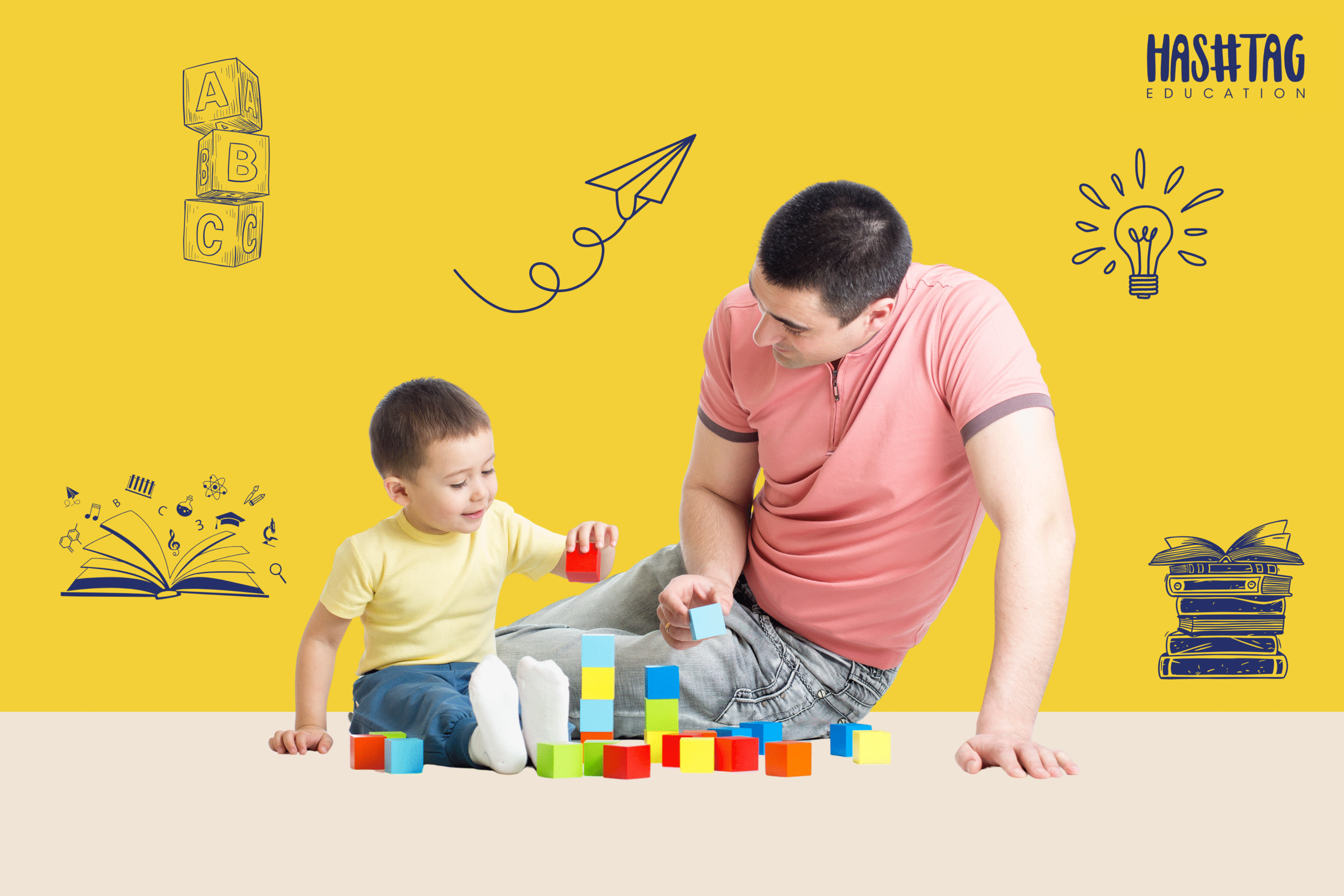
Playing with Your Child: 8 Powerful Educational Benefits of Shared Fun
Playing with your childIn today’s fast-paced world, it’s easy for parents to get caught up in trying to find “perfect” ways to support their child’s growth, from extra classes to structured activities to academic tools. But one of the most powerful, research-backed learning methods requires no sophistication at all: it merely requires your presence, a little time, and a willingness to play. Playing with your child is not just an act of joy; it is one of the most meaningful educational investments you can make. At Hashtag Education, we believe when parents and children share playful moments, they develop skills, confidence, creativity, and emotional strength that no classroom can replace. In this blog, we explore why shared play is essential, how it nurtures creativity, and how parents can turn everyday moments into rich learning experiences. The powerful impact of playing with your child Play is the natural language of childhood. For children, playing is thinking, imagining, exploring, and understanding the world. But when a parent joins in, the experience becomes deeper, richer, and more impactful. Shared play supports: With screen time on the rise and attention spans decreasing, shared play helps children reconnect with real experiences, real emotions, and real learning. 1. Joint Play Builds Creativity and Imagination One of the most important skills for the future involves creativity, which fuels innovation, problem solving, and adaptability. The seeds of creativity are sown early, and shared play acts as fertile soil where imagination thrives. When parents participate in play: For instance, building blocks may appear as simple toys, but they can teach children the way to design, experiment, and visualize. A parent playing alongside might ask: These little questions spark big ideas, teaching children that there is more than one way to investigate a problem. Shared play turns a mundane moment into a potent journey of creativity. 2. Play Strengthens Brain Development The brain creates trillions of neural pathways during early childhood. Those pathways play a role in attention, memory, emotion, and reasoning. Shared play stimulates those pathways in an important way. Activities include: When parents join in, they help children think deeper, notice patterns, and connect ideas. The engagement thereby reinforces both cognitive flexibility and problem-solving skills, so important throughout life. 3. Shared Play Builds Emotional Intelligence One of the most underrated benefits of parent-child play has to do with developing emotional intelligence. More specifically, through playing, children learn to: For instance, when a child is unable to put together a puzzle or loses their turn in a certain game, they often feel frustrated. The presence of a parent who is encouraging and asking them to try again can teach a child emotional regulation. Similarly, imaginative play-such as pretending to run a store, or taking care of a doll-allows children to conceptualize emotions, relationships, and social roles. Shared play times build emotionally confident children who are able to handle challenges with stability and maturity. 4. Play Strengthens Communication and Language Skills Language development does not occur solely through books or lessons; it grows through interaction. In parent-child play, conversations become much more natural, expressive, and meaningful. Activities that enhance language: A child begins to express ideas, explain actions, and develop a stronger vocabulary. Most importantly, they feel heard-a critical foundation for communication skills and self-esteem. 5. Shared Play Enhances Social Development Children learn social rules both in classrooms and in playful interactions. Through playful interactions with their parents, children will learn: It is through these moments that children develop social skills they will use throughout their lives. 6. Shared Play Strengthens Parent-Child Bonding Beyond the academic and developmental benefits, shared play creates emotional closeness. Children feel closely connected when parents: This forms the foundation of trust, openness, and psychological safety. A child who is secure at home will perform well academically, socially, and emotionally. Shared play can be the safest space where children express who they truly are. 7. Simple Indoor Activities That Inspire Creativity You don’t need complex setups. Even the most basic activities create rich learning opportunities: At Hashtag Education, we design indoor environments that turn classrooms into creative learning spaces filled with color, motion, imagination, and learning. 8. How Parents Can Make Play More Meaningful Here are some simple ways to enhance the educational value of shared play: Ask open-ended questions. Encourage exploration, not perfection. Mistakes are part of learning. Be present and avoid distractions. Even 15 minutes of focused play is powerful. Celebrate effort, not just results. This nurtures intrinsic motivation.
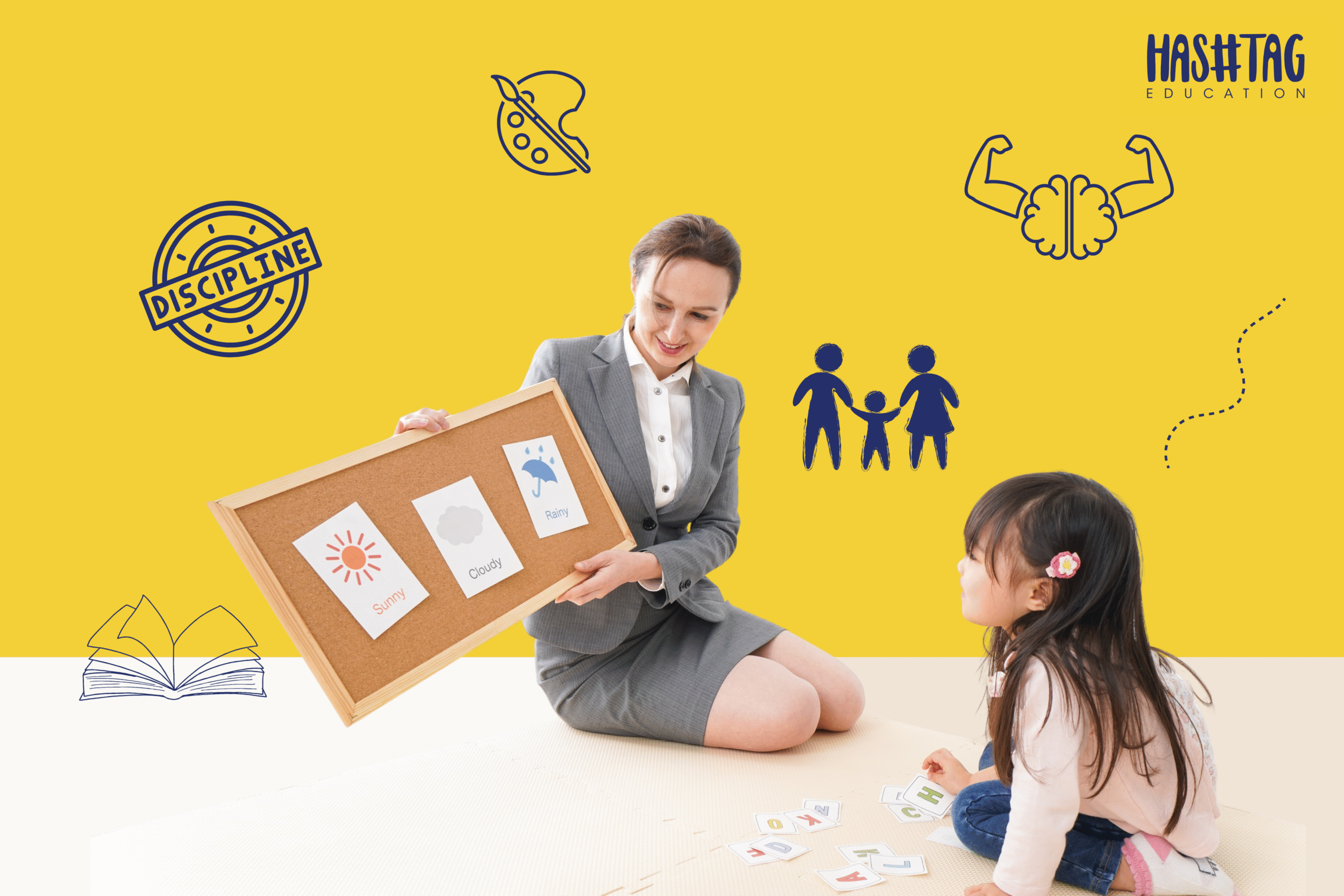
7 Powerful Ways Conscious Parenting Gently Shapes Discipline
Where parenting once relied on little more than “because I said so,” today, with a world of research deepening our understanding of child psychology and emotional development, it is crystal clear: what children need is not punishment but guidance. This is where conscious parenting comes in: connecting, communicating, and giving respect to empower the child. At Hashtag Education, we firmly believe that the best discipline is one that teaches, supports, and nurtures. When children understand boundaries-not out of fear but out of awareness-they grow into confident, emotionally secure, and responsible individuals. What is conscious parenting? Conscious parenting is an approach to raising children that favors empathy, communication, and understanding over punishment or control. Instead of misbehaviour being defiance, it’s a form of communication; children act out because they’re overwhelmed, confused, or unable to express what they really feel. Instead of reacting in anger or with punishment, conscious parenting encourages adults to: This does not mean there are no rules, but rather that discipline is based on respect and relationship, not fear. Why Traditional Punishments Don’t Work Many of us grew up hearing phrases like: Although these may stop the behavior for the time being, they do not teach emotional regulation, problem-solving, or communication. Punishment engenders fear, self-doubt, or resentment and can encourage children to hide their mistakes rather than learn from them. Psychological studies show that children learn better through connection rather than correction. They are more receptive to guidance when they feel understood. They listen when they feel safe. They cooperate when they feel respected. Healthy Discipline Is About Teaching, Not Controlling The purpose of discipline should always be to teach a child: How to make better choices How their actions affect other people Conscious parenting teaches children that boundaries are not restrictions but a tool for safety, wellbeing, and healthy behaviour. The Role of Boundaries in Conscious Parenting Boundaries are essential. In fact, children feel safer when they know what to expect. But boundaries work best when they are: ✔ Clear Children know precisely what is acceptable and what is not. ✔ Consistent The rule does not change with respect to mood, time, or place. ✔ OUT Compassionate Boundaries are communicated-in kindness, not conveyed in force. ✔ Age-appropriate A 3-year-old and a 7-year-old cannot be expected to behave the same way. When boundaries are firm yet kind, children learn self-control, not because they’re afraid of consequences, but because they understand expectations. Practical Examples of Conscious Discipline Punishing reaction: “Go to your room. You’re being bad!” Conscious response: Children learn emotional expression rather than aggression. Punishing reaction: “Stop crying or I’ll take away your toys.” Conscious response: The child learns emotional regulation, not suppression. Punishing reaction: “Do it right now or else!” Conscious response: The child learns how to problem-solve and cooperate. How Conscious Discipline Builds Long-Term Success Conscious parenting is not an issue of just dealing with behavior but rather shapes who the child becomes. Children raised through teaching-based discipline often grow into adults who are: When children feel heard and respected, they become adults who listen, understand, and lead with compassion. What Parents Can Start Doing Today Here are some small but powerful shifts parents can make immediately: Take a deep breath before you respond. Calm adults create calm children. Acknowledge feelings even when correcting behaviour. If the toy is broken, assist the child in repairing it instead of punishing them. Always show the child what to do instead of simply saying “don’t.” Children imitate what they see, not what they hear. These steps help in building an environment where children can grow up feeling safe, learning, and becoming better versions of themselves. How Hashtag Education Supports Conscious Discipline At Hashtag Education, our learning kits and early childhood resources are designed to help parents and teachers: Encourage positive discipline Build emotional intelligence in children. Support behaviour with storytelling and activities. Teach self-regulation and decision-making Encourage confidence through experiential learning. Our goal is to contribute to providing home and school environments where children can thrive emotionally, socially, and academically.

Little Readers: 5 Essential Steps for Language-Rich Homes
Raising Little Readers: Language-Rich Homes for Growing Minds Learn how language-rich homes help kids become strong readers, communicators, and thinkers and how parents can cultivate life-long learners from the start. Introduction: The Power of Early Words Before children ever open a book, they are already learning the language of the world. Their first teachers are not in classrooms but at home, in the voices of parents, grandparents, and caregivers who talk, sing, and share stories with them. Every giggle during a rhyme, every bedtime tale, and every question like “Why is the sky blue?” shapes a child’s growing mind. At Hashtag Education, we believe that raising little readers begins long before formal schooling, it begins in the language-rich home where words, curiosity, and imagination flow freely. For words don’t just teach children to speak; they teach them to think, express, and connect. 1. Why Language-Rich Homes Matter The first five years of every child’s life mark a golden window in the brain and language development process. During this period, over one million neural connections are formed per second-many of them influenced by the sounds and words kids hear. Research by the Harvard Center on the Developing Child shows that children who grow up in homes filled with conversation, reading, and storytelling develop larger vocabularies, stronger memory, and sharper comprehension skills. A rich language environment isn’t just about books-it’s about making a teachable moment out of every small one. For example: So next time one of your children asks “Why?”, remember: every answer you give is helping build their brain. 2. Reading: A Gateway to Imagination and Intelligence Books are not just about words on a page; they are windows into different worlds.Reading: A Gateway to Imagination and Intelligence When children listen to stories, they just don’t absorb information; they travel through imagination. They learn empathy, creativity, and problem-solving skills unconsciously. Reading aloud develops: Imagine that-a child who listens to bedtime stories learns rhythm, tone, and meaning. Later, those same rhythms help them read fluently, express themselves confidently, and even write creatively. It’s not about how long you read, it’s about how frequently. It is in that consistency that reading together becomes a bond, a nurturing of heart and mind shared. 3. Conversation is the Real Classroom While books feed imagination, conversation shapes intelligence. Everyday interactions whether it’s discussing what’s for dinner or talking about clouds — are powerful learning tools. When parents talk with children-not to them-the following is built: In these conversations, a child learns that their thoughts count, curiosity is welcome, and learning is joyful and shared. So, keep asking, keep listening, and keep talking because in every dialogue, a young mind is expanding. 4. Creating a Language-Rich Home A language-rich home does not need fancy materials or gadgets. What it needs is intentional communication and a little creativity. Here are some practical ways to bring language learning alive every day: Describe what is going on around you. “Look, the red bus is stopping at the big tree!” The child learns to connect words with objects and events in real life. Make storytime sacred and not a chore, but a joyous ritual. Choose colorful, age-appropriate books and let your child turn the pages, guess the ending, or act out characters. Rhyming, singing, and jingling help children develop rhythm, tone, and memory. Traditional lullabies or fun phonics songs both teach sound patterns an essential pre-reading skill. Try games such as “I spy something starting with B” or storytelling prompts like “Once upon a time, there was a talking balloon.” These fun moments stretch both language and imagination. These everyday practices turn ordinary routines breakfast, playtime, bedtime into powerful lessons in communication, imagination, and empathy. 5. The Bigger Picture: Language and Cognitive Growth Language and thought develop together. It is in learning to put words to their feelings that children also learn to think logically, to plan, and to solve problems. A child able to put feelings into words is less likely to express frustration through a tantrum. A child who can describe observations (“The ball rolled under the chair”) is already developing logic and spatial awareness. This interconnection of language and cognition builds stronger learners: children who question, explore, and engage deeply with their surroundings. When curiosity rather than correctness is celebrated in homes, children grow into confident communicators and lifelong learners. At Hashtag Education, early learning programs aligned to NEP 2020 and NCF 2022 focus on these very foundations: nurturing the joy of language, reading, and discovery in early childhood.

7 Powerful Positive Sleep Habits Boost Children’s Learning
The hidden superpower of Children’s learning and growth. Introduction: How Sleep is the Hidden Superpower of Learning In this fast-moving world, we talk a lot about nutrition, academics, extracurricular, and screen time when it comes to child learning but there’s one often-overlooked factor that silently shapes how a child learns, grows, and feels: sleep. It’s not just “rest”; sleep is the most powerful tool your brain has for organizing and storing thoughts, emotions, and memories. But modern routines packed with gadgets, homework, and late-night distractions are stealing away the essential rest our children need. The truth is straightforward: good sleep isn’t a luxury-it’s a foundation. It’s the base from which children learn, focus, create, and draw their emotional strength. When kids sleep properly, their minds bloom with energy, curiosity, and calmness. When they don’t, even the brightest child might fail to focus or handle his emotions in an appropriate manner. The Science Behind Sleep and Learning When children fall asleep, their brains don’t shut down-but power up in incredible ways. During deep sleep and REM sleep, the brain sorts through everything a child has learned in a day. Here’s what happens inside the brain while your child is sleeping: According to the American Academy of Pediatrics, well-rested children: On the other hand, too little sleep inevitably leads to forgetfulness, inattentiveness, and slowdowns in processing information. Even a loss of just one hour of sleep a night significantly affects mood, attention span, and classroom performance. How the Mood–Sleep Connection Impacts Emotional Regulation and Children’s Learning Sleep doesn’t just influence how children think; it deeply affects the ways in which they feel. When well-rested, a child is happier, has much patience, and is emotionally balanced, whereas sleep deprivation heightens even the smallest frustrations into tears, anger, or anxiety. This is because sleep helps regulate the limbic system, that part of the brain which controls emotions. Without rest, the brain becomes reactive, and children will find it very hard either to control stress or speak calmly. Poor sleep causes emotional imbalance, with possible symptoms showing up as: Sleep is a sort of emotional reset button. Every good night of sleep, so to speak, helps children process day experiences, recharge emotionally, and wake up ready for new challenges with empathy and balance. The Nutrition–Sleep Connection To build better sleep patterns, encourage foods that support calmness and serotonin production the “happy chemical” linked to good sleep. Food directly affects the sleeping of kids. While diets high in sugar and processed foods lead to restlessness and disrupt sleep, healthy nutrition enhances sleep depth and duration. Foods that help in sleeping better: Bananas, milk, and almonds are natural sources of tryptophan, which is an amino acid the body utilizes for its production of melatonin, or the sleep hormone. Avoid caffeine, even in chocolates or cola, and sugary snacks close to bedtime. Ideally, dinner should be taken 2 hours before going to sleep, then followed by a soothing bedtime routine such as reading or storytelling. The Role of Physical Activity in Sleep Children who remain physically active all day sleep faster and more soundly. Regular outdoor playtime like running, cycling, dancing, and other games results in natural exhaustion within the body and enhances the quality of sleep. Timing is everything, however. High-intensity games or screen-based activities before bedtime can overstimulate the brain and make it difficult to fall asleep. Introduce evening winding-down routines such as: Creating Healthy Sleep Habits at Home Healthy sleep habits are built on teamwork: parents, teachers, and children. Here are some practical, scientifically-based tips for families: Use bedtime rituals. Be a role model. When parents make time for rest, too, kids learn that sleep is just as important as homework. The School’s Role in Encouraging Healthy Sleep Schools can also contribute by inculcating in children the value of sleep through: Sleep education as part of wellness programs Homework policies that avoid late-night study stress. Classroom mindfulness or relaxation sessions Parent workshops on managing digital habits at home. At Hashtag Education, early learning programs align with NEP 2020 and NCF 2022 for the promotion of not only academic excellence, but also holistic well-being. We believe in nurturing future-ready learners-emotionally strong, curious, and balanced children. And quality sleep is a cornerstone of that vision.
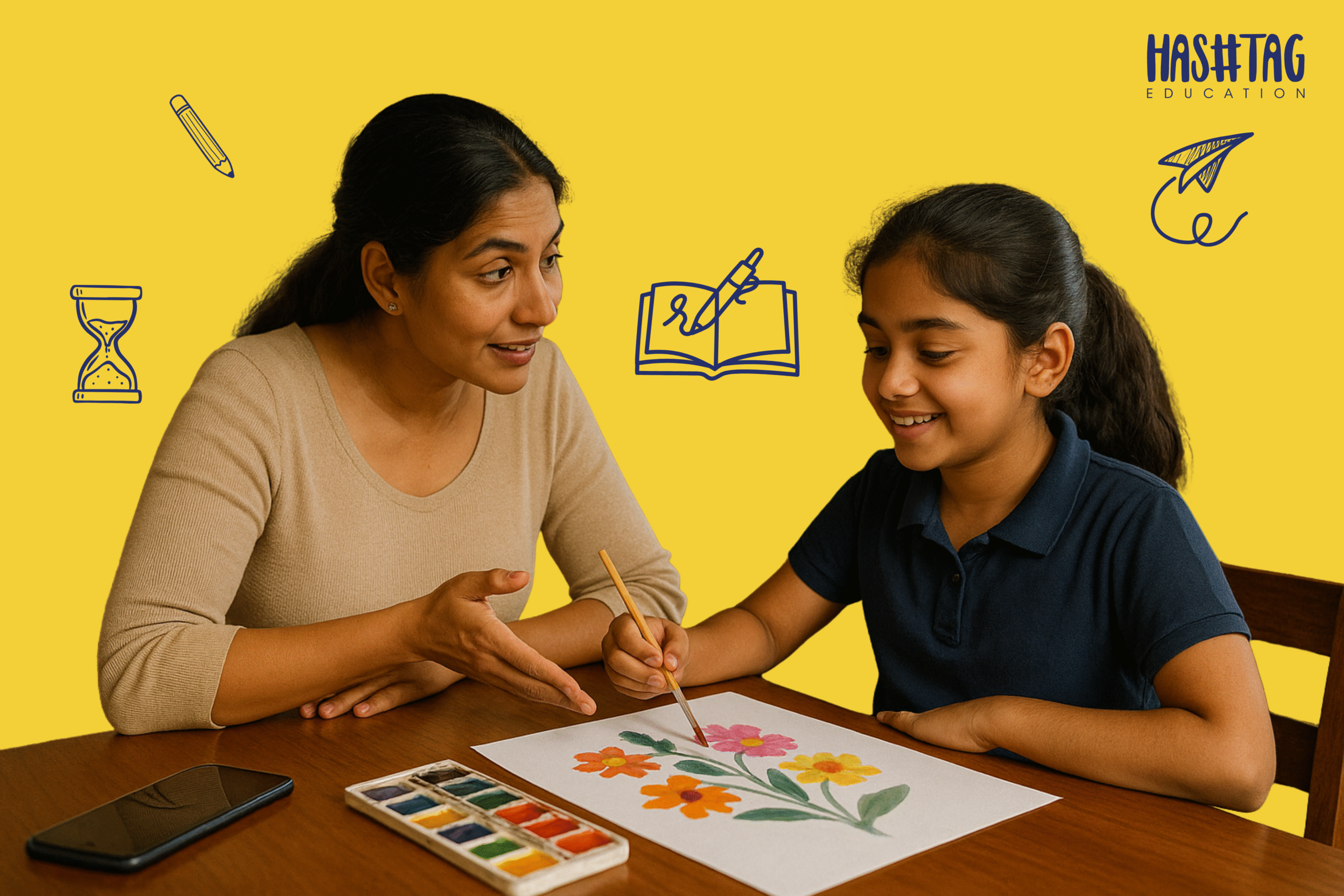
6 Ways to Raise Confident Children Without Excess Praise Now
Every parent’s dream is to raise confident children who believe in themselves, make good choices, and bounce back from setbacks. In today’s world of constant encouragement and social media validation, there is a fine line between building confidence and creating dependence on praise. The truth is that too much praise can do more harm than good. Let me explain how to raise confident, self-assured children-not by overpraising them but by helping them find their true identity, self-worth, and a sense of belonging. 1. Confidence Isn’t Built, It’s Grown Confidence does not come from telling a child they’re amazing every five minutes. It is not something you “give” them through repeated approval. Instead, confidence grows through lived experiences—moments of success, moments of effort, and even moments of failure. Imagine that your child painted a picture, and immediately your instinct would be to say, “You are the best artist ever!” While this is well-intentioned, such statements accidentally teach children to work for approval rather than from curiosity or passion. Instead, try something more thoughtful, like: “I love the way you mixed those colors; what made you choose them?” This subtle shift turns praise into engagement: It tells your child that: This boosts intrinsic motivation, where your confidence does not depend on external validation. 2. Praise Effort, Not Just Outcome Children often receive applause for high grades, winning a competition, or mastering a skill. While celebrating achievements is important, it’s equally important to acknowledge what helped them get there: effort, commitment, and perseverance. When parents say: “You worked so hard on that project, I noticed how much time you put into it.” …children learn that effort and not perfection is what truly matters. They begin to realize that: This mindset builds resilience because it separates a child’s worth from the outcome. A child who values effort will stay motivated even when results don’t go their way, which is an essential element in strong self-esteem. In other words, outcome-based praise creates pressure-“What if I can’t win next time?”-while effort-based appreciation instills confidence: “I can always try again.” 3. Help Them Discover Who They Are Confidence blossoms when children understand themselves, not who others want them to be. Children need space to develop: Building autonomy involves letting them make small choices. Something as simple as choosing their outfit, deciding on a hobby, or helping to plan a family outing can strengthen their sense of identity. When the child knows who they are, they do not rely heavily on outside praise. Their confidence is thus rooted in self-awareness rather than in approval. Encourage them with questions like: A positive sense of identity also underpins connectedness, children can feel secure enough in themselves to express themselves freely, including when their choices differ from others. 4. Create a Sense of Belonging Confidence grows in relationships where children feel they matter not because of what they achieve, but because of who they are. Belonging means: Small, daily interactions build this emotional base: A sense of belonging at home, at school, and within the community provides a child with less reason to compare themselves to others. They don’t feel the urge to “perform” for love or be validated. Instead, they develop quiet inner confidence-the steady belief that “I matter.” 5. Teach Them to Handle Failure Gracefully to Raise Confident Children One of the greatest gifts you can give your child is the ability to fail and rise again. Failure isn’t the opposite of success-it’s a part of success. Yet many parents swoop in to rescue kids to avoid discomfort, mistakes, or unhappiness. Overcomforting or overpraising following a setback may unwittingly send the wrong message that failure is a thing to be shunned or hidden. Rather, use moments of struggle as an occasion for reflection. Ask questions like: This approach teaches children that Children who learn to tolerate frustration, revise their thinking, and try again become resilient. They learn that confidence doesn’t come from being right all the time it comes from being willing to keep going. 6. Be a Mirror, Not a Megaphone Children learn 80% from what they observe and only 20% from what they are told. The greatest lessons in confidence come from watching how adults handle life. Model behaviors such as: Rather than telling your child that they’re perfect all the time, show them it’s okay to not be perfect-and worthy nonetheless. When you model balanced confidence, children naturally mirror it. They learn to fail with poise, celebrate effort, and believe in their own capabilities-with no need for over-the-top praise. Social Media: The Hashtag Education Perspective At Hashtag Education, we believe that confidence is not about being the best, it’s about believing in your best self. Confidence in childhood does not grow through overpraising, exaggerated compliments, or comparisons of achievements. It grows through: As parents make the shift from loud praise to meaningful presence, kids begin creating their own validation. They learn that their worth doesn’t come from applause; it comes from who they are and what they believe about themselves. The aim is straightforward: Raise confident children who are confident, not just today, but for lifestyle, and belonging, we can help our children grow into grounded individuals who don’t seek validation they create it.

5 Gentle Parenting Mindfulness Habits to Help Kids Stay Calm and Connected
If you’ve ever watched a child spiral after a tough day homework tears, sibling squabbles, the whole nine yards you know how fast little hearts can get overwhelmed, and how much a gentle parenting approach can help. The world moves quickly for kids: buzzing notifications, busy schedules, big feelings in small bodies. Mindfulness gives them (and us) something simple and powerful to hold onto: a pause button. At its core, mindfulness is paying kind attention to the present moment no judgment, just noticing. It’s more than “relaxing.” It’s a small spiritual practice of connection: to breath, body, feelings, and the world around us. And when children learn it early, they don’t just get calmer; they grow more compassionate, confident, and steady. What mindfulness looks like for kids (and why it matters) Mindfulness for children isn’t sitting perfectly still for 20 minutes. It’s tiny, doable moments woven into the day before school, during a meltdown, while eating a snack, at bedtime. Over time, those small moments add up. Kids who practice mindfulness learn to: And yes, there are practical wins too: Make it small, make it daily You don’t need a meditation cushion. You need a few simple routines. Try these and pick your favorites. 1. Smell the flower, blow the candle When to use: before school, in the car, right after a conflict, before tests, at bedtime. 2. The Glitter Jar Fill a clear jar with water and glitter. Shake it: “This is your mind when you’re upset.” Watch as the glitter slowly settles: “This is your mind after breathing.” Kids see calmness arrive. When to use: after big feelings or as a pre-bed ritual. 3. One Bite, All Senses- Mindful Eating Pick one bite of something delicious. Ask: What colors do you see? What does it smell like? What’s the first taste? The second? Chew slowly. When to use: snack time, family meals, or to reset a rushed afternoon. 4. Nature Noticing Walk Walk for five minutes and find: When to use: after screen time, on the way to the bus, weekend reset. 5. Loving-Kindness- Wishes Close eyes or soften the gaze. Say (silently or out loud): When to use: bedtime, after a disagreement, before a big day. Real-life scripts you can borrow Child: “I can’t do this. It’s too hard!”You: “Totally get it. Let’s try two flower-and-candle breaths together, then we’ll take one small step.” Child (angry): “I hate this!”You: “Looks like a stormy feeling. Want to sit and watch the glitter settle with me?” Before a test: “Put one hand on your belly. Feel it rise and fall three times. Your breath is your superpower.” Bringing mindfulness into school and home is easier with a gentle parenting approach. In classrooms: Teachers can open class with a 60-second breathing break or a “sound bell” (listen until the sound fades). Post a “feelings chart” kids can point to. Keep a calm corner with headphones, a soft square to sit on, a timer, and a glitter jar. At home: Model it. You don’t need to be perfect just honest. Try, “I’m feeling rushed. I’m going to pause for three breaths.” Kids copy what we do, not what we say. The quiet spiritual layer, simple, not preachy You don’t have to teach theology to invite spirituality. Spirituality here is about connection to self, others, and something larger (nature, community, a sense of meaning). Mindfulness opens that door gently: For families with religious traditions, mindfulness can sit alongside prayer or reflection. For secular families, it’s simply attention with kindness. Either way, kids learn that stillness is safe, feelings are visitors, and kindness is a practice. Tips that make it stick A quick weekly plan, steal this! Parting thought Mindfulness won’t erase tough days. But it gives kids a lantern to carry through them. Breath by breath, they learn: “Feelings come and go. I can be kind to myself. I can pause. I can choose.” That’s emotional intelligence. That’s spiritual growth. And that’s a gift they’ll carry for life.If you’ve ever watched a child spiral after a tough day homework tears, sibling squabbles, the whole nine yards you know how fast little hearts can get overwhelmed. The world moves quickly for kids: buzzing notifications, busy schedules, big feelings in small bodies. Mindfulness gives them (and us) something simple and powerful to hold onto: a pause button. At its core, mindfulness is paying kind attention to the present moment no judgment, just noticing. It’s more than “relaxing.” It’s a small spiritual practice of connection: to breath, body, feelings, and the world around us. And when children learn it early, they don’t just get calmer; they grow more compassionate, confident, and steady.
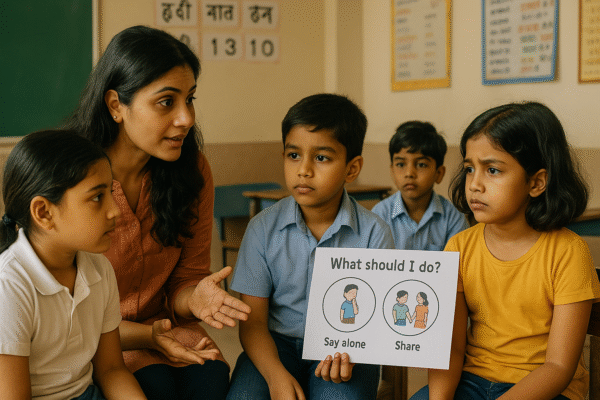
Wise Decision: 7 Powerful Ways to Help Kids Make Better Choices
As adults, we are accustomed to helping kids navigate a world that sometimes seems too vast, too quick, and too complicated. Our natural tendency is to defend them by intervening and telling them to “do this, not that.” However, if we want to raise self-assured, considerate, and independent children, it could be wiser to educate them how to make their own decisions rather than instructing them what to do. Making wise decisions is similar to having a muscle. Every time a youngster uses it, it changes and gets stronger.Creating a secure space for kids to practise this skill where they may make decisions, experience the consequences of their decisions, and reflect on them is the secret for parents and educators. We may encourage such type of learning in the following ways: 1. Start Small: Everyday Choices Matter We don’t require grand moral dilemmas to teach decision-making; actually, it begins with the smallest and most ordinary choices. Allow them to wear anything they want, even if it’s polka-dot stripes. Let them choose whether to do the puzzle or go outside and play. Children learn about cause and consequence via these tiny choices. Youngsters discover that their decisions have repercussions, which may be both enjoyable and stressful, but they are always their own.A youngster learns more from their shiver than from your admonition when they wear shorts on a chilly day.The goal is to increase awareness rather than prevent errors.That knowledge eventually turns into accountability. 2. Use Curiosity Rather Than Instructions Try asking open-ended questions rather than offering clear instructions like This method encourages introspection rather than compliance. It helps kids to think things through, consider others, assess the dangers, and accept responsibility for their decisions. In this sense, it moves the emphasis from satisfying adults to comprehending the world. 3. Model the thinking process aloud Children need to hear our thoughts, but they learn far more from our actions than from our words. Explain your decision-making process. For example: It’s overcast, but we can go to the park now. Perhaps the sun will come out if we wait another hour. What is your thoughts? You’re showing them that decisions are not black and white, but about trade-offs and possibilities and consideration. This kind of modelling takes that abstract idea of “good judgement” and makes it tangible, real. 4. Let Natural Consequences Be the Teacher One may always take a step back and let a youngster experience a natural outcome of a decision, unless they are in danger. Did they become thirsty since they forgot their water bottle?That’s uncomfortable, but it teaches responsibility far more effectively than does a lecture. Children are incredibly capable of learning from real experiences provided we don’t rush in to rescue or scold them. It is our responsibility to offer empathy rather than ways out. Kind remarks such as “That must have been difficult.” What could you do differently the next time?Encourage them to think without feeling guilty. 5. Promote Decisions Based on Empathy Making judgements involves more than just reasoning; they also include empathy and compassion. When kids learn how their decisions affect other people, they grow more socially conscious and caring. You can foster this by being honest about your emotions.When they grab a toy from a buddy, instead of telling them, “That’s wrong,” try: “What do you think your friend is feeling right now based on the look on their face?” Children eventually start making thoughtful decisions because they want to, not because they have to, and empathy helps transform external norms into internal values. 6. Permit a Safe Space to Fail One of the hardest things for parents is witnessing their children make “bad” choices. But rather than being the opposite of success, failure is a part of it. When children are raised in a home or setting where mistakes are tolerated without condemnation, they are motivated to keep trying. Instead of correcting them when something doesn’t work out, sit with them in contemplation. Enquire: “What did you discover?” What would you strive to do differently the next time? The objective is to demonstrate that one can endure the discomfort rather than to alleviate it. Children become more resilient when they see that mistakes do not define them but rather aid in their development. 7. Give Options Rather Than Control One effective tactic for empowering children is structured independence. This approach provides guidance while encouraging independence. When a youngster feels trusted, they are more inclined to cooperate than when they are given instructions. 8. Honour the Process Rather Than Just the Result We unintentionally promote kids to shun risk when we only commend “good” outcomes. Rather, commend the procedure: This shifts the emphasis from being right to thinking well. It reinforces that the ability to make decisions is an evolving skill, not a one-time test.This shifts the emphasis from being right to thinking well. It reinforces that the ability to make decisions is an evolving skill, not a one-time test. 9. Reflection of Practice Together Reflection is where decision-making wisdom really takes shape. Make it a ritual for the family or classroom, perhaps at bedtime or at the end of the week.Ask questions like: “What’s one good decision you made today?” “Was there something you’d do differently?” This gentle habit makes self-evaluation second nature. The children learn to stop themselves and think before reacting-a helpful skill for a lifetime. 10. Be patient as your child learns to make each wise decision Developing a mentality that will endure a lifetime is more important than having the ideal behaviour today. Even while you might not see the outcome right away, every second you spend listening, asking questions, and allowing yourself to make your own decisions creates an invisible foundation. Youngsters who are trusted to make decisions develop into self-assured adults. They learn to strike a balance between empathy and reasoning, intuition and reason. Above all, though, kids have an internal compass that keeps them on course long after we quit holding their hands.

6 Powerful Skills Every Child Needs to Become Future-Ready, Not Just Academics
Powerful Skills, not good grades alone, are no longer a guarantee of success in the rapidly evolving world of today.Academics provide a vital foundation, but children require much more to truly grow. To create future citizens who are confident, capable, and compassionate, we need to cultivate a range of abilities outside of the classroom. This is what it means to raise future-oriented children: those who have the imagination, versatility, fortitude, and mindset required to face life’s obstacles head-on. Why Leave Academics Behind? Traditional education focuses on information facts, calculations, and tests is the main focus of traditional education. However, the society that youngsters are growing up in in the twenty-first century requires more than memorisation. They have to have the capacity for critical thought, problem-solving, open discourse, and lifelong learning. The goal of 21st-century skills is to prepare kids for life in general, not simply for school. It’s about giving learners the abilities they need to enquire, create, cooperate, & adapt skills that will be useful regardless of how the world changes. Essential Competencies for Every Child Let’s examine six crucial life skills that every youngster should acquire in order to prepare for the future. Every day, both at home and at school, as well as via significant real-world experiences, each may be fostered. 1. Problem-Solving and Critical Thinking The skill of critical thinking involves posing queries, investigating many viewpoints, and coming up with original answers. Children who solve problems are better able to remain composed, self-assured, and inquisitive when faced with obstacles. How to cultivate it: 2. Innovation & Creativity Creativity is the one ability that robots cannot replace in a world when automation and technology rule the day. It gives kids the opportunity to dream, create, and innovate skills that are crucial for future leaders, scientists, artists, and business owners. How to cultivate it: 3. Cooperation & Communication In today’s interconnected world, the capacity to communicate ideas clearly as well as to listen and collaborate effectively with others is essential. While collaboration fosters respect and teamwork, communication increases self-assurance. How to cultivate it: 4. Media and Digital Literacy These days, technology is a part of every child’s world. Teaching them digital literacy enables them to use it responsibly, not only for content consumption but also for safe creation, exploration, and learning. How to cultivate it: 5. Self-Control, Flexibility, and Initiative Adaptability, the capacity to maintain composure and concentration in the face of change will be necessary in the future. Lifelong independence is developed by teaching kids how to control their emotions, take initiative, and maintain organisation. How to cultivate it: 6. Empathy & Global Awareness Children need to learn to think globally, act empathetically, and value diversity in an interconnected world. While global awareness enables individuals to perceive their role in the wider globe, empathy enables them to comprehend the viewpoints of others. How to cultivate it: How Teachers and Parents Can Work Together to Nurture Powerful Skills for the Future 1. Change your perspective from “grades” to “growth.” Give credit for effort, interest, and advancement rather than merely flawless outcomes. This fosters a passion of learning and intrinsic motivation. 2. Make Learning Out of Everyday Life. Everyday activities, such as cooking, gardening, shopping, and travelling, are effective methods to teach responsibility, teamwork, numeracy, and creativity. 3. Promote learning through projects. Allow kids to plan their own projects, whether they are building, writing, researching, or creating. Several 21st-century abilities are combined in these events. 4. Allow for errors. Failure is a necessary component of success, not its antithesis. Allow them to attempt new things, make mistakes, and try again without worrying about being judged. 5. Set a good example. Youngsters mimic what they observe. Children instinctively imitate the curiosity, flexibility, and generosity of adults. Using 21st-Century Skills in the Classroom Academics and practical skills are combined in a true 21st-century education. A future-ready mentality is built on the “4Cs”: Critical Thinking, Creativity, Dialogue, and Collaboration. The image is complete when digital literacy, flexibility, and empathy are included. Children become wiser and smarter when households and schools collaborate to foster these traits, preparing them for a future in which learning, unlearning, and relearning will be ongoing. Concluding Remarks Our children will inherit a world that is both unexpected and full with opportunities. We must foster brains that are capable of critical thought, rapid adaptation, and compassion if we want them to flourish. We create future-ready children by fostering curiosity, creativity, self-assurance, and compassion. These children are not only excellent scholars but also intelligent, capable, and compassionate people who are prepared to take the lead in the world. Let’s prepare our kids for life as well as tests.

6 Essential Truths Parents Must Know About AI in Classrooms
AI in classrooms is quickly transforming how our children learn, and schools are evolving right along with it. From smart learning apps to homework help chat bots, AI is entering the classroom across the world. For parents, this might be a bit exciting and a bit scary. What’s AI doing in schools, anyway? How is it affecting our children’s education? And how do we make sure that it’s being used rightly? Let’s demystify it together: 1. The new classroom reality 1. Artificial intelligence is no longer science fiction, it’s becoming an integral part of normal teaching in subtle ways. Teachers are employing AI tech to plan lessons, grade homework, and even monitor students’ learning. 2. Throughout schools around the world, these developments are part of a new global trend towards personalised schooling where learning isn’t cookie-cut, but rather tailor-made to the strengths, speed, and requirements of every child 3. Imagine your child working with an app that senses when they’re stuck on a math question and gives them a extra clue or on an English course that reads them their essay and suggests improved wording. That’s AI in action. It is not about replacing teachers it is about enabling them to focus more time on the human part of teaching: imagination, curiosity, and support of a personal kind. 2. The bright side: how AI in classrooms can help children learn Applied wisely, AI can make learning more captivating, inclusive, and effective. Here’s how: For parents, that means more opportunities for kids to be heard, motivated, and confident in what they are learning. 3. But let’s be honest: there are concerns too Such as all technologies, AI includes issues and risks that parents need to know about. Privacy counts: AI applications tend to harvest information the way a child learns, where they get stuck, even how long it takes them to complete a task. Parents are well within their rights to demand answers from schools: What’s being gathered? Who gets to look at it? How is it safeguarded? Not every student is treated equally. While some schools in wealthier neighbourhoods may have state-of-the-art technology, others may not. If the discrepancy is ignored, the inequality may worsen. Too much screen time: Although AI can be engaging, too much screen time remains bad. Balance is important children need to see the world, too. Human touch can’t be replaced: No matter how “smart” an app is, it will never substitute for a teacher’s compassion, sense of humor, or worry. Learning is emotional and social, not just intellectual. Authenticity and integrity: AI generative tools (like essay-grinders) can entice children into shortcuts. Parents and educators must show them how to use AI with responsibility as an aid, and not a replacement for effort. AI is a tool capable, to be sure, but only if used mindfully and responsibly. 4. What parents can do immediately You don’t have to be a computer whiz to remain engaged. Here’s how to take the lead: Start a conversation by enquiring about your child’s use of technology at school. Do they enjoy it? Does it simplify or complicate learning? Hearing out your child helps you identify both advantages and disadvantages. 5. The road ahead: schools of the future We’re still at the beginning of the AI-in-education story, but a few clear trends are emerging: It’s not about digitizing classrooms it’s about making learning more human, with the help of technology that actually understands and accommodates each child. 6. At the end of the day, it’s about balance AI in classrooms is not something to be afraid of it’s something to get. It has the potential to be an amazing partner for teachers and students when supported by solid values and careful decisions. As parents, our responsibility is to remain curious, ask questions, and continue reminding our kids that technology exists to serve them not the reverse. If teachers, schools, and families collaborate, AI has the potential to usher in a more personal, more inclusive, and more inspired type of education one in which every child learns not only alongside machines, but with purpose.