

 Team Hashtag
Fun Ways to Teach Phonics in India: Sound Before Letters, Always
Fun ways to teach phonics in India are becoming increasingly important for parents who want to build strong reading foundations at home without pressure or rote learning. Traditional letter-name teaching (A for Apple, B for Ball) is not actually phonics. Phonics is about sounds, not names. A child who knows the letter name “bee” cannot sound out the word “bat”. A child who knows the letter sound buh can blend buh-ah-tuh into bat, and that is reading.
This distinction matters enormously, and most Indian parents, schools, and even some educational apps get it wrong. They teach letter names first and wonder why the child struggles with reading later. The evidence-based approach validated by reading researchers worldwide and endorsed by NEP 2020 is sounds first, letters second, blending third. That is why fun ways to teach phonics in India should focus on playful sound awareness before formal reading instruction.
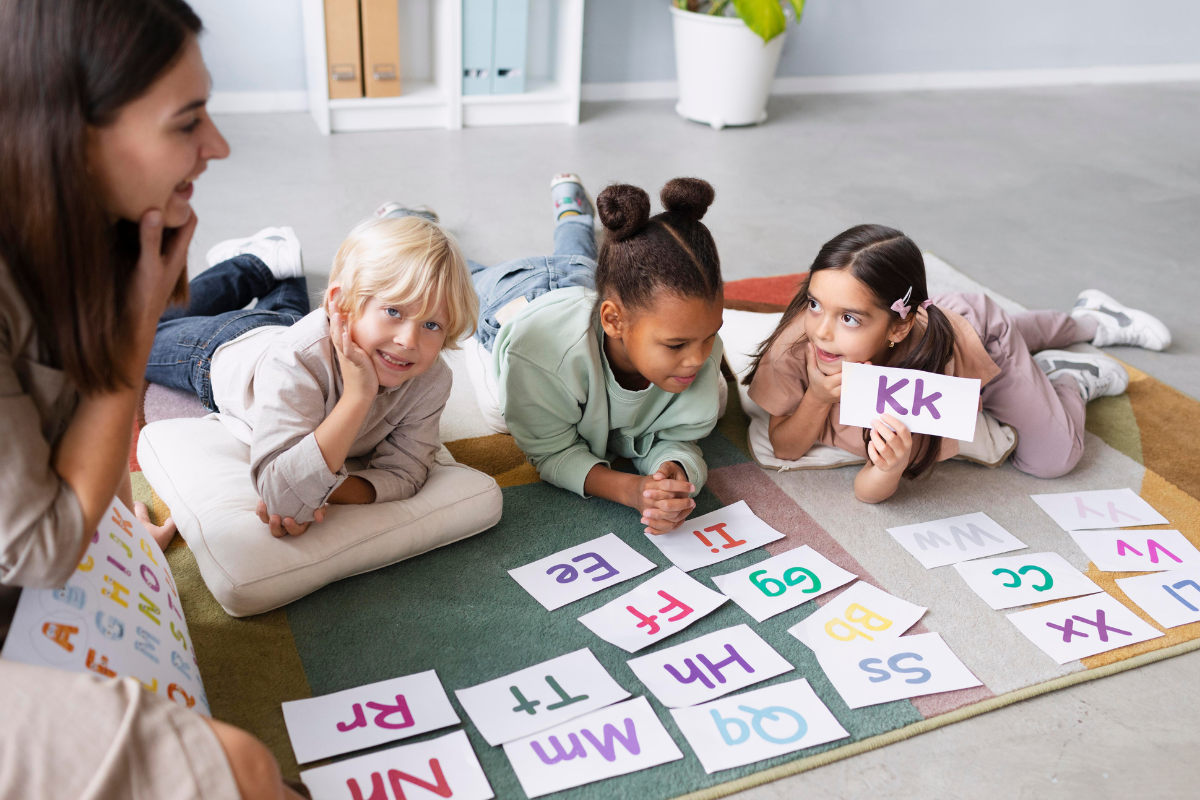
Here are 8 activities that build genuine phonics skills at age 3, through play, at home, using items you already have.
Why Age 3 Is the Right Time
Most children develop phonemic awareness, the ability to hear and manipulate individual sounds in words, between ages 2.5 and 4. At age 3, the brain’s auditory processing centres are particularly receptive to sound-discrimination training. This is the developmental window where fun ways to teach phonics in India produce the strongest results because children naturally absorb sounds through play, music, and conversation.
That is why fun ways to teach phonics in India should focus on listening, rhyming, and blending activities instead of memorising alphabet names too early. When phonics learning feels playful and pressure-free, children build stronger reading foundations naturally.
You are not too early. You are not too late. You are right on time to start using fun ways to teach phonics in India at home.
8 Fun Ways to Teach Phonics in India That Actually Build Skills
Activity 1: The Sound Detective
Say a sound: sssss. Now hunt around the house for objects that start with that sound. Soap, spoon, shoe, socks, sun (point to the window). The child learns to connect a sound to real objects, which is the cognitive bridge between hearing a sound and recognising it as the start of a word. Start with continuous sounds (sss, mmm, fff, rrr) that can be stretched. These are easier for young children to isolate than stop sounds (buh, kuh, tuh).
Activity 2: Beginning Sound Sorting
Collect 6 to 8 small objects that start with 2 different sounds. For example: ball, banana, button (buh) and map, mouse, mango (mmm). Put two bowls on the table. Label one with the sound buh and one with mmm. Have your child sort the objects by their starting sound. This builds phonemic categorisation, the ability to group words by their sound properties.
Help your child improve memory, focus, and problem-solving skills with this fun matching game for ages 3+. A perfect screen-free learning activity for preschoolers.
Shop now 👉 https://amzn.to/42jolGP
Activity 3: Rhyme Time Game
Say a word. Can your child find a rhyme? Cat hat, bat, sat, mat. If they cannot rhyme yet, give options: Does cat rhyme with hat or dog? Rhyming teaches children that words share sound patterns. This awareness of sound patterns is directly predictive of reading success. Fun ways to teach phonics in India often work best when learning feels playful and natural, and rhyming games are perfect for this.
Activity 4: Sound Stretching
Pick a simple three-sound word. Stretch it out slowly: fffff-iii-shhhh (fish). Can your child guess the word? Start with words your child already knows. Make it easier by showing the object while you stretch the sounds. Make it harder by stretching words without visual clues. This is a blending practice of the core phonics skill. A child who can blend sounds into words can decode unfamiliar text.
Activity 5: Clap the Sounds
Take any word your child knows. Clap once for each sound. Dog: d-o-g three claps. Ship: sh-i-p three claps (sh is one sound, not two). Fish: f-i-sh three claps. This is segmentation, the inverse of blending. Blending builds reading skills. Segmentation builds spelling skills. Both are essential.
Loved these ideas? Let’s bring them to life beyond the screen!
Discover Blueberry workbooks & box sets designed for joyful, hands-on learning.
🛒 Shop Now: https://hashtageducation.in/collections/box-set
Activity 6: Sandpaper Letter Tracing
Cut letters from sandpaper and glue them onto cards. Have your child trace the letter with their finger while you say the sound (not the name). Running their finger over the rough texture creates a tactile memory that reinforces the visual and auditory memory. This is a classic Montessori technique. You can make it at home in 20 minutes or buy pre-made sets. Our Blueberry Level B workbooks include similar tracing activities where the child traces letter shapes while practising the corresponding sound.
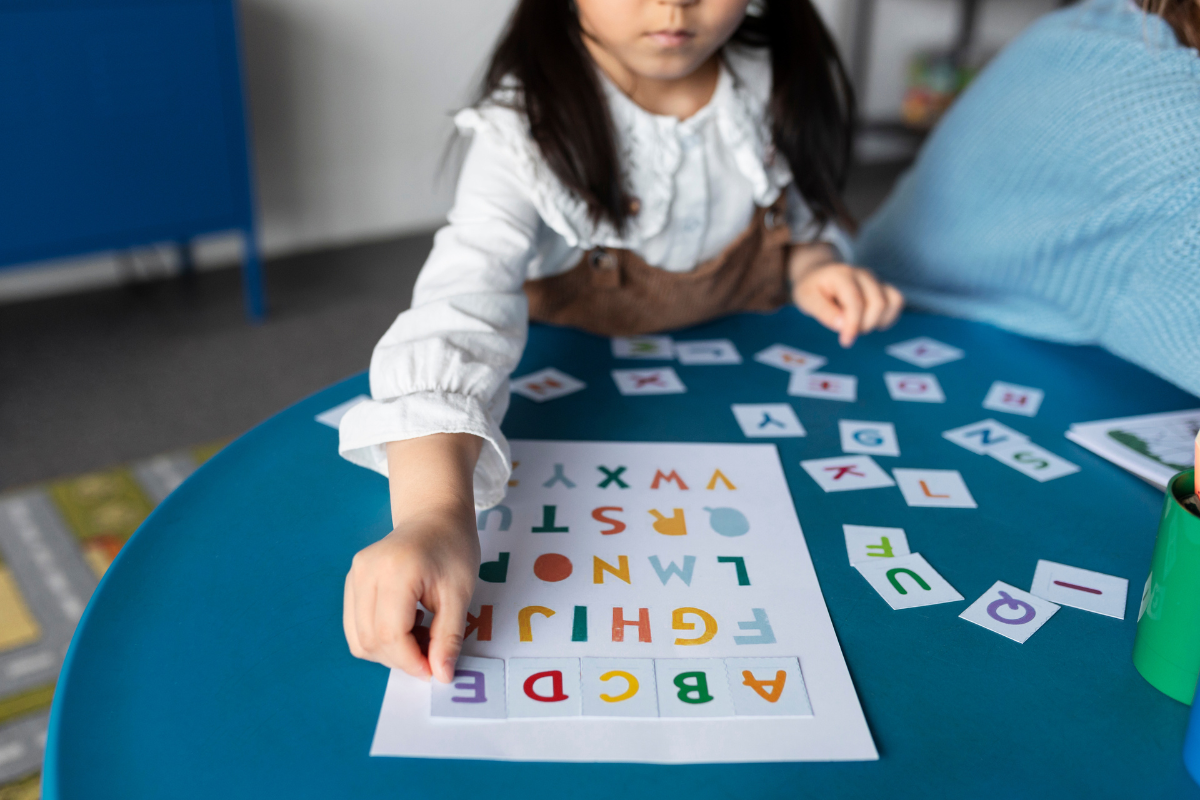
Activity 7: Musical Phonics
Sing the letter sounds to familiar tunes. Instead of the ABC song (which teaches letter names), create a sound version: ah-buh-kuh-duh-eh-fff-guh (to the same tune). Musical memory is stronger than spoken memory; children retain sounds learned through song faster. Many fun ways to teach phonics in India use songs and rhythm because music naturally improves sound recognition and recall.
Activity 8: Sound Swap Stories
Tell a tiny story where one sound changes the meaning. The cat sat on the mat. But what if the cat sat on the bat? What is a bat? And what if the bat sat on the hat? Each sound swap creates a new word and a new image. The child practises hearing the difference that a single sound makes, the most fundamental phonics skill. Make the stories silly. The sillier, the more memorable.
What Comes After These Fun Ways to Teach Phonics in India
Once your child can identify beginning sounds, rhyme consistently, blend three-sound words, and segment words into individual sounds, they are ready for formal letter-sound correspondence, connecting each sound to its written letter. This typically happens between ages 3.5 and 4.5. Our Blueberry Level B and Level C workbooks cover this transition with guided activities that connect the sounds your child already knows to the letters on the page.
Read Also: Play-based learning activities for children aged 3 to 10
The Sequence Behind Fun Ways to Teach Phonics in India
Hearing sounds in words (activities 1 to 3 above) leads to blending sounds into words (activities 4 to 5), which then leads to connecting sounds to letters (activities 6 to 7 and workbooks). From there, children begin decoding simple words and eventually reading short sentences independently. This is why fun ways to teach phonics in India should always begin with sound awareness instead of memorising letter names.
Many parents skip the early sound stages and move directly to alphabet writing, but this often creates confusion later. Fun ways to teach phonics in India work best when children learn step by step through rhymes, blending, songs, and playful interaction. When learning feels enjoyable, children become more confident, curious, and ready to read naturally.