

 Team Hashtag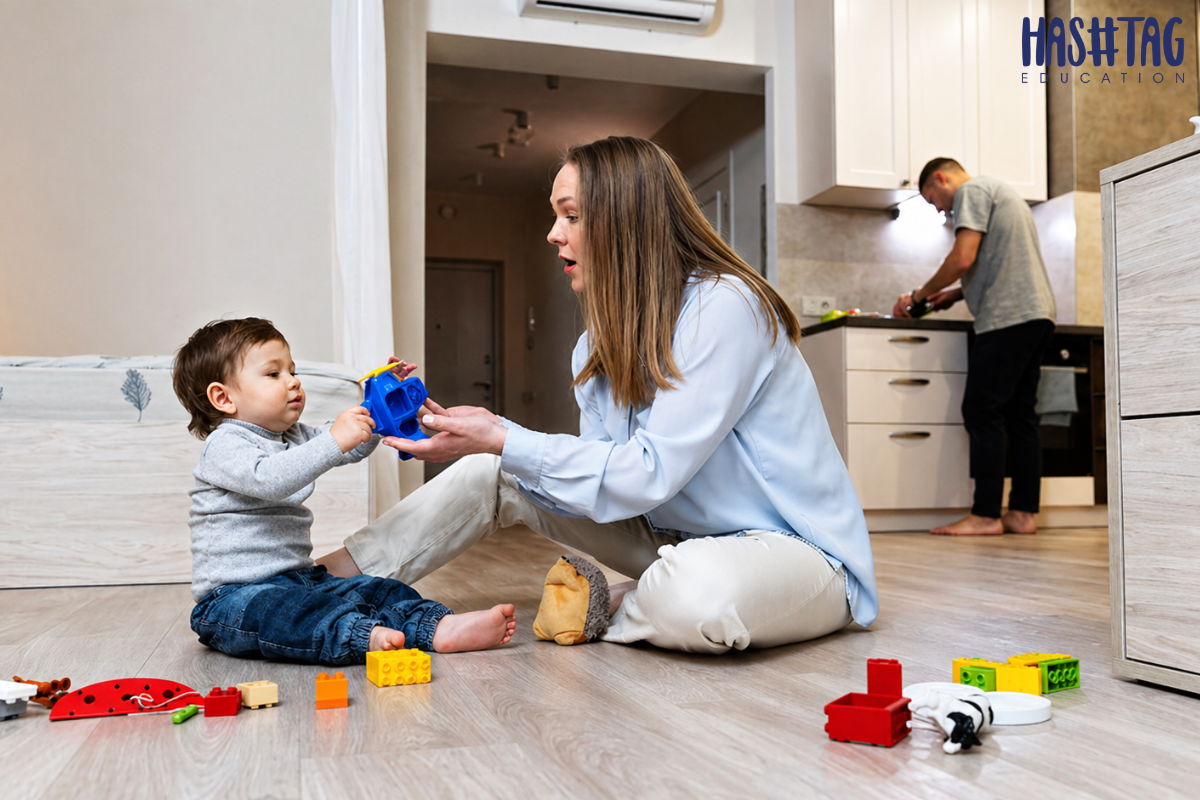
How to Teach 2 Year Old at Home Without Pressure: India: A Gentle Guide for Parents
How to teach 2 year old at home without pressure in India is a question that reveals a beautiful paradox in modern Indian parenting. Parents desperately want their children to learn, yet increasingly recognise that traditional methods of pressure, repetition, and early academic drilling often do more harm than good. If you are searching for how to teach 2 year old at home without pressure, you are already ahead of most parents. You understand that learning and pressure should never coexist in a toddler’s world.
The challenge is practical: what does pressure-free teaching actually look like? How do you ensure your 2-year-old is developing on track without resorting to flashcard drills, alphabet recitation, and forced sitting? This guide on how to teach 2 year old at home without pressure in India gives you 8 specific, gentle approaches backed by developmental research.
Why Pressure Backfires at Age 2
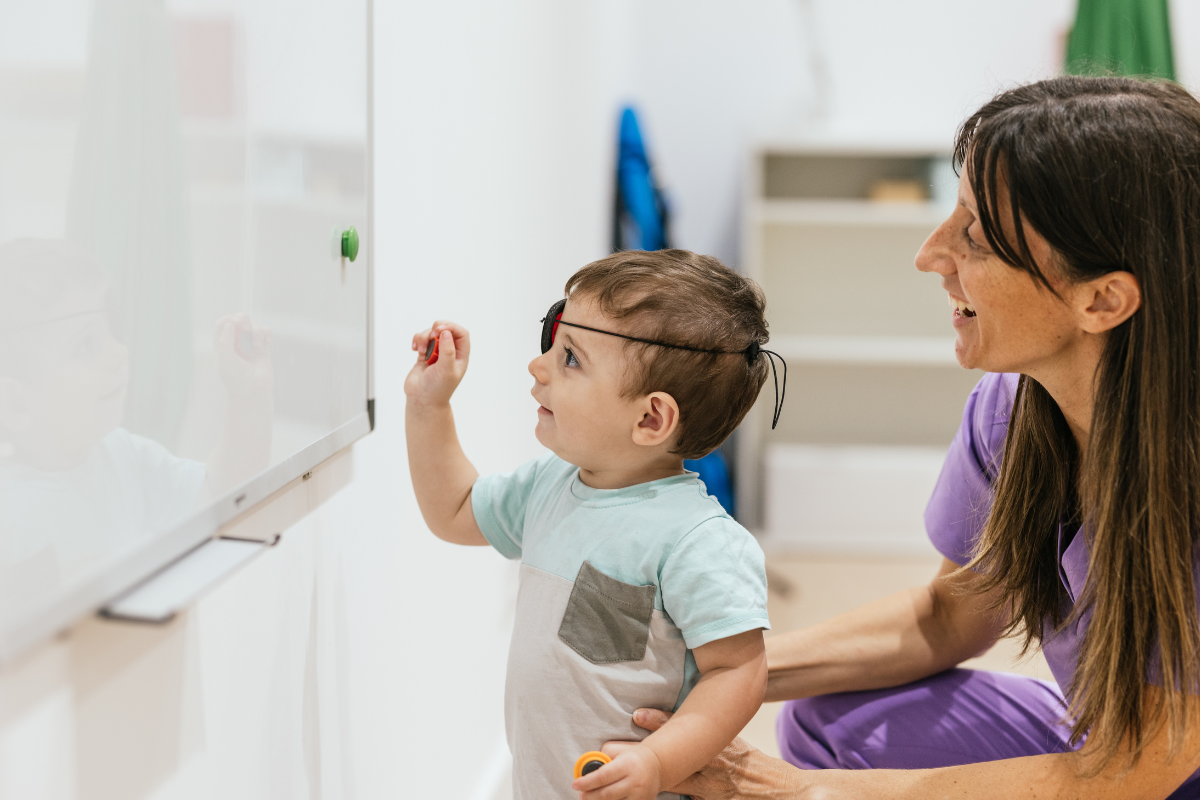
When thinking about how to teach 2 year old at home without pressure India, it’s important to first understand what a child’s brain can realistically handle at this age. A 2-year-old’s brain is not designed for formal instruction. The prefrontal cortex, the part responsible for attention, rule-following, and impulse control, is still developing. Expecting a toddler to sit still, focus on a worksheet, and give correct answers is asking their brain to do something it simply isn’t ready for.
This is exactly why the approach behind how to teach 2 year old at home without pressure in India matters so much. When you push a child beyond their developmental capacity, the brain goes into stress mode. Cortisol floods in, slowing down memory (hippocampus) and activating fear (amygdala). The child doesn’t learn the alphabet; they learn that learning feels stressful. And that feeling can stay for years.
Research from the National Institute of Mental Health and Neurosciences in Bangalore reinforces this idea. Children raised with pressure-free learning routines scored 23% higher in school readiness. This clearly shows how to teach 2 year old at home without pressure is not just a parenting preference; it’s backed by science and leads to better long-term outcomes.
8 Pressure-Free Ways to Teach Your 2-Year-Old
Way 1: Narrate Everything
The simplest and most powerful teaching tool is your voice. Narrate your actions throughout the day. Now I am washing the red tomatoes. One, two, three tomatoes. They feel smooth and cool. Can you feel them? This running commentary exposes your child to vocabulary, sentence structure, counting, colour names, textures, and temperatures, all without any formal instruction.
Research shows that children who hear 2,000 or more words per hour develop vocabularies that are 30% larger by age 3 compared to children in quieter environments. You do not need flashcards. You need to talk.
Way 2: Follow Their Interest
If your child is obsessed with cars, teach through cars. Count the wheels. Name the colours. Line them up by size. Compare big and small. Create a car-wash sensory bin. Read books about vehicles. This is a great example of how to teach 2 year old at home without pressure, because following a child’s natural interest ensures intrinsic motivation they want to learn because the topic fascinates them, not because an adult is making them.
Ready to make learning more meaningful at home?
Blueberry workbooks & box sets help children learn, create, and grow with joy.
🛒 Shop Now: https://hashtageducation.in/collections/box-set
Way 3: Embrace Messy Play
Finger painting, playdough squishing, water pouring, sand digging, rice bin exploring, and messy play is where the deepest learning happens at age 2. The multi-sensory input creates stronger neural connections than any screen or worksheet. Yes, it requires cleanup. The cleanup takes 5 minutes. The neural development it produces lasts a lifetime.
Way 4: Read Together Daily
Not as a lesson. Not with comprehension questions. Just as a warm, close, shared experience. Point to pictures. Name things. Make animal sounds. Let your child turn pages even if they skip half the book. The goal is not reading instruction. It is creating a positive emotional association with books that will drive independent reading motivation for years to come. Our Dino series picture books are designed for exactly this age, with bold illustrations, minimal text, and thick pages sized for toddler hands.
Read Also: Indian Festivals Activities for Kids: 9 Powerful Yet Ignored Ways
Way 5: Sing Songs and Rhymes
Musical learning is one of the most effective and least pressured forms of education. Nursery rhymes teach counting (One Two Three Four Five, Once I Caught a Fish Alive), vocabulary (Twinkle Twinkle Little Star introduces words like wonder, diamond, and sky), phonological awareness (rhyming patterns build the sound discrimination needed for reading), and memory (melody creates stronger recall than spoken repetition). Our Go Learn Rhymes and Stories courses use this approach with age-appropriate, animated musical content.
Way 6: Let Them Help With Real Tasks
A 2-year-old can put clothes in the laundry basket, wipe a table with a sponge, put toys back in a box, water a plant, and hand you items while cooking. These are not chores; they are practical life activities that build motor skills, sequencing ability, responsibility, and confidence. A child who helps feels capable. A child who is excluded from real tasks feels that their contribution does not matter.
Way 7: Play Together on the Floor
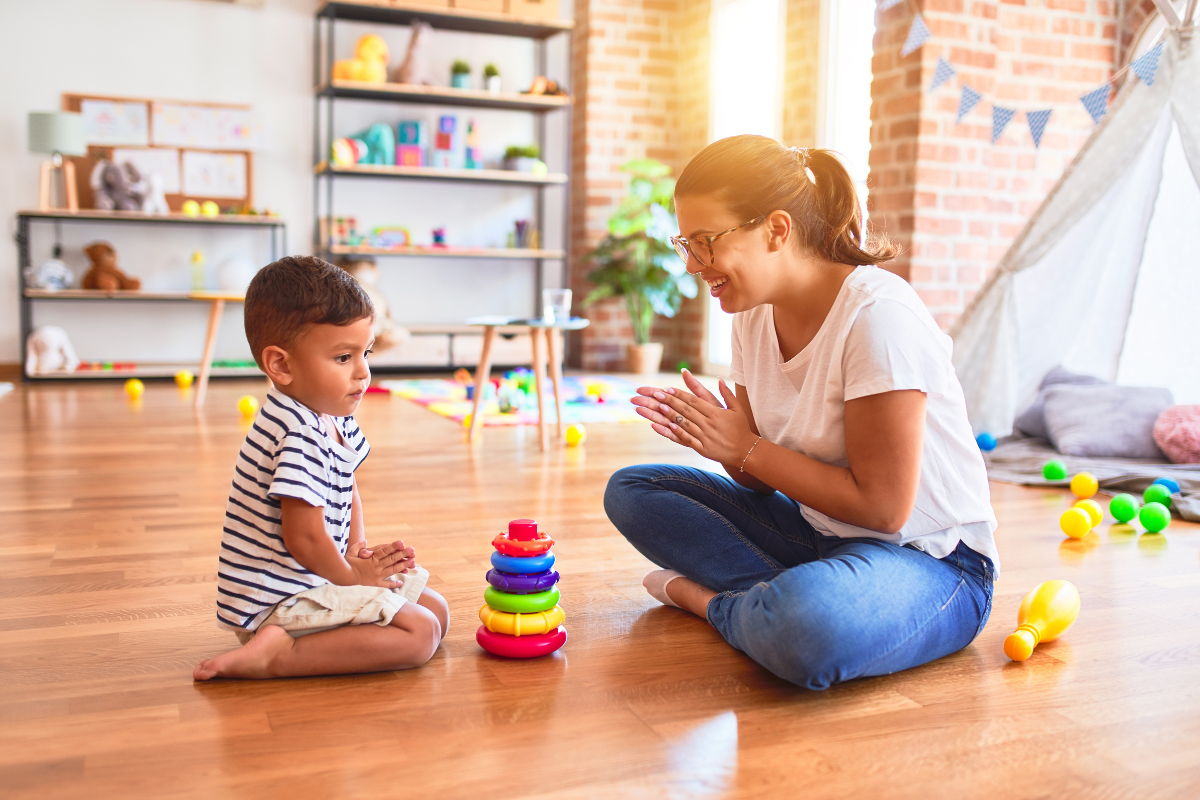
Get down to their level. Build a block tower and let them knock it down (cause and effect). Roll a ball back and forth (turn-taking). Hide a toy under a cup and find it (object permanence). Chase each other around the room (gross motor development). Floor play is where attachment, learning, and joy intersect. Ten minutes of fully present floor play teaches more than an hour of instructional video.
Way 8: Use Workbooks as Play, Not Tests
Our Blueberry Level A and Dino series workbooks are designed for parent-guided interaction at this age. Sit together. Open a page. Point to the pictures. Trace the lines together (guiding their hand gently, not forcefully). Colour wherever they want, even outside the lines. Close the book when they lose interest. The workbook is a play tool, not an exam paper. If your child enjoys it, do another page. If they do not, try again tomorrow. Zero pressure. Always.
What Pressure-Free Teaching Is NOT
When understanding how to teach 2 year old at home without pressure in India, it’s important to clear common misconceptions. It is not neglect. You are still actively providing structured learning opportunities, you are just doing it through play, conversation, and everyday life rather than drills and tests.
It is not permissive parenting. In ” How to teach 2 year old at Home Without Pressure”, you still set routines, create learning environments, and guide activities you simply do not force outcomes.
It is not slower. Children raised with how to teach 2 year old at home without pressure in India are not behind; research consistently shows they are ahead. They retain more, resist less, and develop a genuine love of learning that naturally accelerates everything.
Read Also: Activities for children to learn at home
The Daily Rhythm That Works
When thinking about how to Teach 2 Year Old at home without pressure, a simple daily rhythm works best. Morning can include 10 minutes of sensory play or light workbook time, followed by outdoor exploration. Afternoon is ideal for stories and songs, while evenings can involve simple tasks like helping with dinner or tidying toys.
This is the essence of how to teach 2 year old at home without pressure; learning spreads naturally across the day, not forced into one session. Total structured time should be around 30 to 40 minutes.
The beauty of how to teach 2 year old at home without pressure is that there is no need for drills. Instead, learning happens through routine, play, and interaction. When you follow this approach, how to teach 2 year old at home without pressure in India becomes easy to sustain. In the end, how to teach 2 year old at home without pressure in India is about keeping learning simple, natural, and stress-free.