

 Team Hashtag
Kitchen Activities for Toddlers: Turn Everyday Moments into Learning
Kitchen activities for toddlers are one thing that most parents do not fully comprehend. The kitchen is a place that is always full of activities, which can result in injuries or even messes. It is only natural that we keep our toddlers from entering such an area.
However, what many parents do not know is that the kitchen is among the most ideal places for your toddler to learn.
How is that possible? Each time you prepare your meal, you use measurements, count the number of ingredients, mix them, and see how they change. That is mathematics, chemistry, and physics all mixed up in one place.
All this becomes possible when you allow your toddler to participate in certain activities safely.
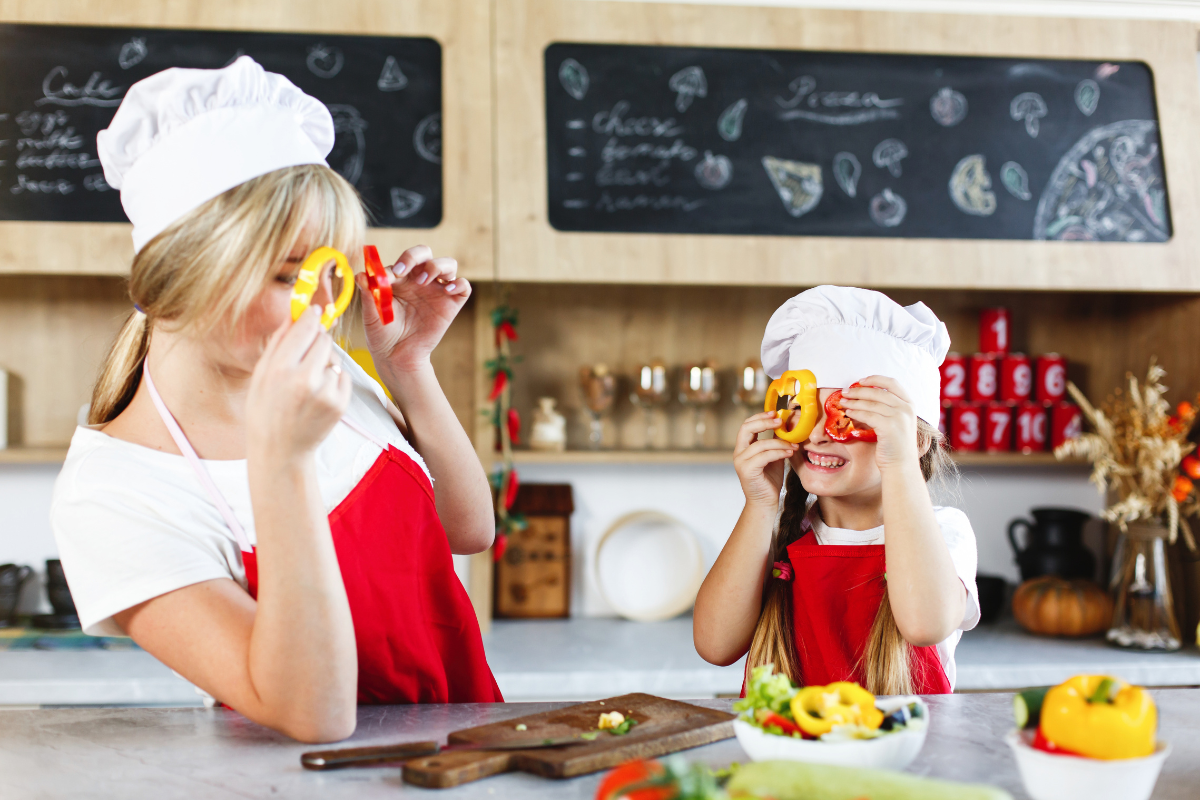
Why Kitchen Activities For Toddlers Are So Powerful
Children do not learn from commands; they learn by doing.
And that is precisely why Toddler Kitchen Activities are so effective. When they pour, measure, sort, and count, they engage all their senses at once. They touch, see, hear, and even taste.
It is a powerful way to learn.
They will not be memorising things; rather, they will comprehend concepts. They will not hear about transformations; instead, they will witness those changes.
And perhaps most importantly, they will feel engaged. They will feel valuable.
9 Kitchen Activities For Toddlers That Teach Real Skills
Let’s look at simple, practical ways you can turn everyday cooking into meaningful learning.
1. Counting Ingredients
Before you start cooking, take a moment to involve your child.
“Let’s count the potatoes one, two, three!”
This simple step builds early number understanding. It may seem basic, but this is where maths truly begins.
With Kitchen Activities for Toddlers, numbers are not abstract; they are real and useful.
2. Measuring and Pouring
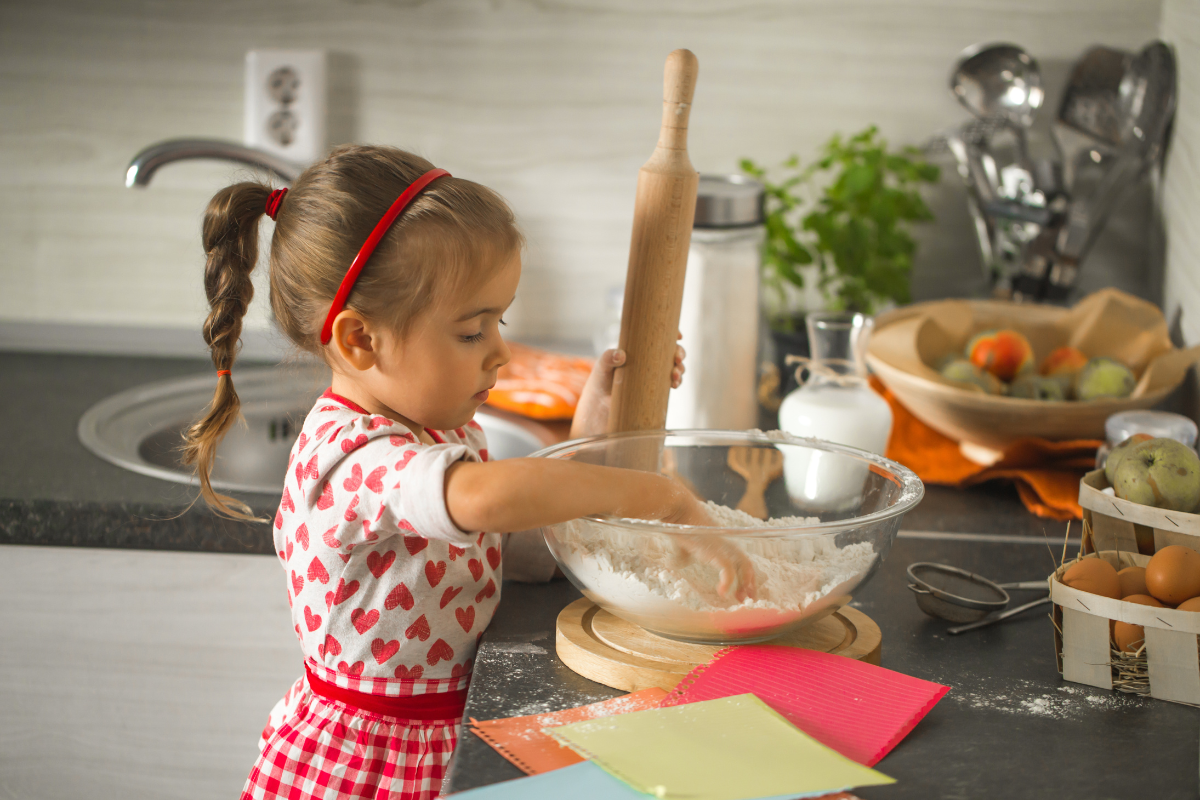
Give your child a small cup and some rice or dal. Let them pour it into a bowl.
They might spill a little, and that’s okay.
What they’re learning is far more valuable:
Quantity
Volume
Control
These are early maths and motor skills combined in one simple activity.
Inspired by these ideas? Let your child bring them to life through play!
Explore Blueberry workbooks that turn learning into fun, engaging activities.
🛒 Shop Now: https://hashtageducation.in/collections
3. Sorting Vegetables
Empty a basket of vegetables and ask your child to group them.
“All tomatoes here… all potatoes there…”
Then try sorting by colour or size.
This builds classification skills, which are essential for logical thinking.
And because it’s part of Kitchen Activities for Toddlers, it feels like play, not learning.
4. Kneading Dough
Give your child a small piece of dough while you make rotis or chapatis.
Let them squeeze, press, and roll it.
This activity is amazing for hand strength and coordination. The same muscles they use here will later help them hold a pencil and write.
It’s messy, yes, but incredibly valuable.
5. Simple Science: What Dissolves?
Take a glass of water and try adding different things:
Sugar
Salt
Oil
Flour
Ask your child: “What do you think will happen?”
Then watch together.
This is science in its purest form: prediction, observation, and discovery all through Kitchen Activities for Toddlers.
6. Exploring Temperature
Let your child safely touch:
A cold cucumber
A warm roti
An ice cube
Ask simple questions:
“Which one is cold?”
“What happens to the ice?”
This builds awareness of temperature and naturally introduces basic science concepts.
7. Following Simple Steps
Give your child a small task with steps:
“Put the banana in the bowl, mash it, then add honey.”
Following instructions builds focus and sequencing skills.
These are the same skills children need later in school, but here, they learn them without stress.
8. Estimation Games
Before filling a cup with dal, ask:
“How many spoons do you think it will take?”
Let them guess, then count together.
This builds number sense, something even many adults struggle with.
With Kitchen Activities for Toddlers, it becomes intuitive.
9. Pattern Making with Food
Arrange food like:
Carrot – cucumber – carrot – cucumber
Ask your child:
“What comes next?”
Patterns are the foundation of maths and logic.
And when the activity ends with something they can eat, it becomes even more exciting.
Safety First (But Keep It Simple)
Safety is certainly important. It does not, however, imply that kids must be left entirely out of the kitchen.
Just observe a couple of key points:
Constant supervision
No exposure to heat sources
No access to sharp equipment
Light utensils only
This will ensure that kitchen activities for toddlers are both fun and safe.
Why This Works Better Than Traditional Learning
It’s essential to note that children do not require any additional “lessons.”
They require more experience.
Workbooks and applications teach concepts in isolation. However, Kitchen Activities for Toddlers link knowledge to practical situations.
The child understands the significance of counting, measurements, and sequences.
This knowledge remains with the child for a much longer time than anything memorised.
Read Also: UNICEF Kitchen Experiments
The Long-Lasting Effect
When you engage your child with Kitchen Activities for Toddlers on a consistent basis, you are doing more than just instructing them in the art of cooking.
You are encouraging them to grow into individuals who are:
Confident
Independent
Problem-solvers
Inquisitive about their surroundings
Conclusion
Kitchen Tasks for Toddlers are not meant to be gourmet cooking sessions or the acquisition of advanced culinary skills. Kitchen Tasks for Toddlers are simply meant to be fun activities that can be shared and which provide valuable lessons.
No additional time is required, no fancy kitchen equipment is needed, and no planning needs to take place before your toddler joins in the fun.